

A sunken commercial slab doesn’t automatically need to be replaced. The cost of foam jacking for commercial slabs depends on the area being lifted, the slab’s condition, and the project scope; pricing is provided after a quote request. The repair may lift and level existing concrete without replacing the affected section.
Cost is only one part of the decision. You also need to know whether lifting suits the slab, how the process works, and what the foam does beneath the concrete.
This article explains the factors that shape a project estimate, where commercial polyurethane lifting can be used, and how the process works. You’ll also learn how foam fills voids and supports settled concrete, so you can understand the repair before deciding on a next step.
Key Takeaways
- Compare foam lifting with mud jacking by considering the smaller injection holes, lighter material, and reduced cleanup involved.
- Assess settled commercial concrete in places such as warehouse floors, walkways, and other slab areas to see where lifting may apply.
- Understand the basic process: technicians inspect the slab, drill injection holes, and carefully raise the concrete as foam expands beneath it.
- Learn how high-density polyurethane foam can fill voids and support settled concrete without replacing the entire slab.
- Foundation Werks offers polyurethane concrete raising for commercial slabs that need lifting or stabilization.
1. How Much Does Slab Jacking Cost?
Foam slab jacking costs vary with the area, slab condition, soil support, and amount of lifting required. For a commercial project, the price depends on the case and is provided after a quote request. A warehouse floor with widespread settlement needs a different scope from one sunken walkway panel.
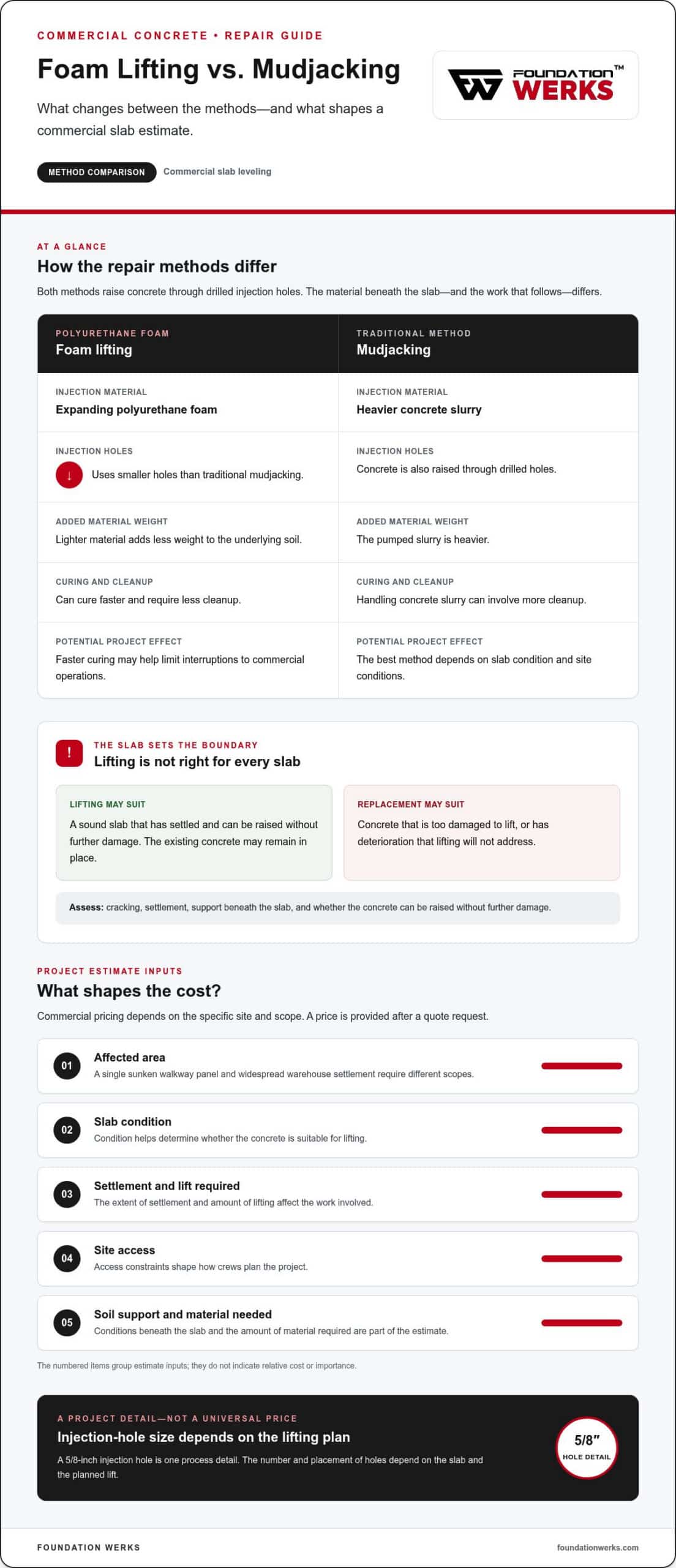
Compared with traditional mudjacking, foam lifting uses smaller injection holes and lighter material. It can also cure faster, create less cleanup, and avoid replacing concrete that remains usable. Those differences may reduce disruption, but the best method depends on the slab and the conditions beneath it.
The Concrete Channel’s video compares foam lifting with traditional concrete repair methods:
Foam jacking for commercial slabs raises concrete without replacing the slab. Technicians inject expanding polyurethane beneath settled concrete and monitor its movement as it rises. When the existing surface is suitable for lifting, it stays in place. This can avoid the replacement work required when the slab cannot be lifted.
Traditional mudjacking also raises concrete through drilled holes, but pumps a heavier slurry beneath the slab. Foam uses smaller injection holes than traditional mud, and the lighter material adds less weight to underlying soil. Foam slab jacking can require less cleanup than handling concrete slurry, while its faster curing can help limit interruptions to commercial operations.
Replacement may be more appropriate when concrete is too damaged to lift or has deterioration that lifting will not address. For a sound slab that has settled, lifting may preserve more of the existing concrete. The decision depends on condition and scope: assess cracking, settlement, support beneath the slab, and whether it can be raised without further damage.
Businesses can compare local commercial proposals by matching the same project details: affected area, slab condition, access, lift targets, and repair method. Look for clear descriptions of the work, including where injection occurs and how the crew will control lifting. Experience, qualifications, references, and examples of previous commercial work are useful comparison points. A quote covering a single walkway section cannot be compared fairly with one addressing an entire warehouse floor.
For a project estimate, the main cost factors are the size and condition of the slab, the extent of settlement, site access, and the amount of material needed. A 5/8-inch injection hole is one process detail, but the number and placement of holes depend on the slab and lifting plan. These specifics shape the work involved; a broad per-area figure can’t capture every commercial site’s conditions.
2. Where to Use Polyurethane Lifting for Industrial and Commercial Slab Foam Leveling?
Commercial polyurethane lifting is used for concrete that has settled and can be raised. In a warehouse, that may be a floor section near a loading area. Other applications include commercial sidewalks, driveways, and foundation slabs. The project assessment considers the slab’s condition and the soil and voids beneath it.
Industrial and public sites can involve large areas. A typical concrete slab may cover 2,000 to 3,000 square feet, so a small sunken section and widespread settlement call for different scopes. Slab jacking can also be used on roads, highways, and airports. Each setting changes access, work planning, and how crews approach the concrete.
For warehouse floor leveling, first identify where settlement affects use. Look for uneven transitions, gaps beneath the slab, or areas crossed by equipment. A settled panel along a forklift route may call for a different repair scope from a sunken pedestrian sidewalk. Mapping affected sections helps define the work area and lifting plan.
Commercial foam jacking also involves more than the slab itself. The injection material and equipment must suit concrete lifting. Crews use slab-jacking-specific polyurethane foam and a specialized injection gun designed to manage back-pressure. Those requirements matter when evaluating project setup, but they don’t establish a universal equipment budget. Project costs depend on the affected area, slab condition, access, and scope of lifting.
For projects in the United States, identify any permit and building-code requirements that apply to the site and work scope. When assessing a project, consider relevant contractor qualifications, insurance, and experience with slab jacking. Examples of previous commercial work can help show whether the proposed approach fits a warehouse or public facility.
The method has limits. Foam can raise settled concrete, but lifting alone doesn’t restore a slab that can’t be raised intact. If concrete has extensive damage, replacement may be a more suitable repair. Water intrusion, soil erosion, or poor compaction can contribute to settlement, so understanding the site conditions helps determine whether lifting addresses the slab’s needs.
Before planning work, record the affected locations, access constraints, and how the settled concrete affects facility use. That information helps define the scope and cost factors without assuming every floor needs the same treatment. For commercial areas requiring lifting or stabilization, explore commercial concrete raising as a potential next step.
3. Polyurethane foam slab lifting process
Polyurethane slab lifting follows a controlled sequence: inspect the concrete, plan injection points, drill, inject, and monitor movement. The aim is to raise the existing slab gradually rather than force it upward all at once. A warehouse floor and a sidewalk need different layouts because their size, settlement, and access differ.
- Inspect and prepare. The crew examines the concrete, notes uneven areas, and clears debris or obstructions. This helps identify where the slab has settled and where injection points can reach the space beneath it. Surface preparation matters before drilling begins.
- Plan the hole pattern. Technicians mark locations intended to distribute lifting pressure while minimizing visible impact. They drill 5/8-inch-diameter holes through the slab. Hole placement depends on the area being raised and the pattern needed to support an even lift.
- Inject the foam. A specialized injection gun delivers polyurethane foam through the drilled holes. The materials mix and expand below the concrete, filling space and creating upward pressure. Technicians work in measured stages, watching how the slab responds rather than relying on a single injection point.
- Monitor and adjust. As foam expands, the concrete rises toward the target level. The crew checks the surface during injection and adjusts placement or volume as needed. For example, a settled corner may require a different sequence from a long, uneven floor section.
The expansion happens quickly, so careful control matters. Slab-lifting foam typically has a cream time of 20-30 seconds and a rise time of 1-2 minutes. Cream time describes the interval before the mixed material begins to expand; rise time describes the expansion period. For thicker applications, cream time can exceed a minute, while rise time can be 4-6 minutes.
Technicians control injections in stages because expanding foam can affect nearby areas as it enters beneath one part of a slab. Monitoring the concrete throughout the lift helps the crew respond to movement. The process is not simply filling every void: injection placement and controlled expansion guide the slab’s position.
Project duration varies with the slab and scope. Some polyurethane lifting projects can be completed in as little as 45 minutes, while some uneven slabs take 1 to 2 hours to raise. These examples describe different project conditions, not a fixed schedule for every commercial floor. Area size, access, settlement, and lifting needs all influence the work.
After injection, the foam sets and cures quickly, allowing the lifted slab to support its intended use without a long wait at the site. The crew’s final checks focus on the concrete’s position and the areas addressed. For a commercial facility, documenting the repaired sections can also help property teams track changes across the floor over time.
4. Slab jacking with high-density polyurethane foam
Polyurethane foam lifts and stabilizes sunken concrete by expanding beneath the slab. The material fills voids between soil and concrete, then creates pressure that raises the surface. This lets crews address both the empty space and the uneven slab above it. The foam’s role differs from simply patching a surface crack.
Weight is one reason foam is used for lifting. Polyurethane material weighs 2% as much as mud-jacking slurry, so it adds less weight beneath a settled slab. That difference can matter where soil support is already weak. The foam expands into gaps, helping compact loose soil while lifting the concrete, rather than relying on a heavier slurry to fill the space.
Placement matters because the foam expands. Technicians inject it at selected points beneath the slab, where it spreads into voids and pushes upward. A sunken corner may need injection near that area, while settlement across a larger section calls for a broader pattern. Controlled placement directs lifting pressure toward the sections that need support.
Foam can lift a few tons per square foot, according to the research facts provided for this article. That capacity helps explain its use beneath slabs exposed to substantial loads. A commercial floor, for example, may need support where settlement affects equipment movement. The specific lifting plan still depends on the slab, the voids below it, and the load conditions at the site.
Voids and gaps can create pathways for water or air. Foam can fill those spaces and help reduce water movement beneath concrete. For example, filling a gap beneath a slab may limit water passing through that opening. It does not replace addressing the source of ongoing water intrusion, but it can stabilize support beneath the concrete.
Surface preparation remains part of the work. The area should be cleaned and leveled before foam is applied, so debris does not obstruct the process. After injection, the expanding material fills space and raises the slab; crews monitor the surface as it moves. This combination of void filling, soil support, and lifting is why high-density foam serves more than one purpose in slab jacking.
5. Which commercial slabs are suitable for polyurethane foam jacking?
Polyurethane foam jacking is an option for commercial concrete that has settled and remains suitable for lifting. Common applications include warehouse floors, sidewalks, driveways, and foundation slabs. The key question is whether the slab can be raised while retaining its useful condition. A settled section with voids beneath it presents a different repair need from concrete that has broken apart.
Start by mapping where the slab has dropped and how that affects the property. A warehouse manager might note an uneven floor along a material-handling route. A facilities team might identify a sunken sidewalk near an entrance. These observations help define the affected area and show whether settlement is local or spread across adjoining concrete.
Next, consider what may have contributed to the movement. Soil erosion, poor compaction, and water intrusion can leave gaps or reduce support beneath concrete. For example, recurring water flow near a driveway may relate to settlement in that area. The slab’s position matters, but understanding the underlying condition helps assess what support the repair needs to address.
Different commercial locations bring different practical concerns. A warehouse floor may need attention where uneven concrete affects equipment movement. A sidewalk may have a raised transition between settled panels. A driveway or loading approach may have settled sections that affect vehicle access. In each case, the affected slab, site access, and intended use shape the project assessment.
Foam lifting is not suited to every concrete problem. A slab that cannot be raised intact may need replacement rather than lifting. Settlement linked to ongoing water intrusion also calls for attention to the water issue, not only the concrete’s position. Distinguishing a liftable slab from concrete that needs another repair helps keep the proposed work aligned with the actual condition.
For a practical assessment, record the location of each sunken section, visible changes across nearby panels, and how each area is used. Photos and a simple site map can help describe whether the concern involves a warehouse floor, sidewalk, driveway, or foundation slab. This gives the evaluation a clear starting point without assuming every settled area needs the same treatment.
Foundation Werks: Polyurethane Concrete Raising
Foundation Werks provides polyurethane concrete raising for commercial slabs that have settled but remain suitable for lifting. The work can help property teams address uneven warehouse floors, walkways, and other commercial concrete without defaulting to replacement. Its polyurethane foam is made from recycled materials and supports lifting, leveling, and stabilization.
If a slab’s condition calls for a different approach, Foundation Werks also provides concrete replacement. For concrete cracks or joint issues, commercial concrete crack and joint repairs address a different part of the problem. The right approach depends on the slab’s condition and the site concern.
Share the affected area and what you’ve observed to discuss the next step. Contact Foundation Werks to talk about your commercial concrete project.
Plan the Next Step for Your Commercial Concrete
Uneven concrete is also an operations concern. Note where settlement affects access, equipment routes, drainage, or nearby joints. Then prioritize the areas causing the greatest disruption. This gives a project discussion a practical starting point and connects the repair scope to how your facility operates.
For foam jacking for commercial slabs, the central question is whether lifting suits the concrete’s condition and the site’s needs. Foundation Werks provides polyurethane concrete raising for commercial slabs. If the concrete has other damage, commercial concrete crack and joint repairs or concrete replacement may better fit the work required. The goal is to match the next step to the condition you’ve observed.
Share which areas have settled and how they affect daily use. That information can help frame a focused conversation about your commercial concrete project.
A clear starting point can make your next concrete decision feel more manageable.
Frequently Asked Questions
How Much Does Slab Jacking Cost?
Commercial slab jacking is priced by project scope, not one universal rate. An estimate depends on the area to lift, settlement, concrete condition, site access, and the amount of foam required. A narrow walkway and a broad warehouse floor involve different work. For properties in Dallas and nearby communities such as Frisco, McKinney, and Allen, sharing affected locations and site conditions helps define the project scope.
How Much Weight Can Concrete Raising Foam Lift?
Polyurethane lifting foam can lift a few tons per square foot, but that describes foam capacity, not a guaranteed safe load for every slab. Slab thickness, support beneath it, injection pattern, and the load being carried all matter. A warehouse floor supporting equipment needs assessment in context. The planned lift and underlying soil conditions also influence how crews apply pressure.
What Are The Top 10 Benefits Of Polyurethane Concrete Lifting?
Ten potential advantages are smaller drill holes, lighter material, void filling, soil stabilization, controlled slab raising, less slurry cleanup, fewer materials, less need to replace sound concrete, support for commercial floors, and quick curing. The value depends on the slab and site conditions. Consider the benefits together: lifting can address support beneath concrete as well as its surface level.
Where Can it be Used?
Slab lifting can be used on settled concrete in residential and commercial settings, including sidewalks, driveways, patios, and foundation slabs. Broader applications also include roads, highways, and airports. Suitability depends on the concrete’s condition and the intended repair. Evaluate each slab by its use, condition, and settlement pattern, rather than assuming every concrete surface needs the same approach.
Where to Use Polyurethane Lifting for Industrial and Commercial Slab Foam Leveling?
Commercial and industrial applications include warehouse floors, commercial walkways, driveways, and foundation slabs. A facility manager can map uneven areas and note how each affects equipment movement, pedestrian access, or daily operations. That record helps define which sections need evaluation and how the work area functions. The slab’s condition and the project scope guide whether polyurethane lifting fits the repair.
What is foam jacking for commercial concrete slabs, and how does it work?
Foam jacking raises settled concrete by injecting expanding polyurethane beneath the slab. Foundation Werks uses patented, eco-conscious, closed-cell, two-part foam for concrete lifting. The material expands into voids and creates pressure that raises the existing surface. Technicians seal the injection holes with a concrete patch. The method lifts and supports concrete without requiring replacement of sound slab sections.
What does commercial foam jacking cost per square foot or slab?
There is no single per-square-foot or per-slab price that fits every commercial project. The estimate depends on the slab’s area, condition, settlement, site access, and required lifting scope. A per-square-foot figure may not reflect the difference between isolated sunken panels and broader floor areas. For a useful comparison, look at what each proposed scope includes, not just its unit of measurement.
What are the steps in a commercial polyurethane foam slab lifting project?
A commercial project typically moves through site inspection, surface preparation, injection planning, drilling, foam injection, and checks on slab movement. The crew clears debris, marks injection locations, and monitors the concrete as foam expands. Foundation Werks states that its foam cures in 20 minutes, and the repaired surface is usable immediately after that cure. The service area includes Dallas, McKinney, Prosper, Fairview, Southlake, Irving, North Dallas, and DFW.