

A crack in a warehouse floor may signal movement beneath the slab, not just a surface issue. Choosing industrial floor crack repair starts with understanding what the crack may indicate. Its width, pattern, changes over time, and the condition of the surrounding slab can help distinguish a surface crack from movement, a void, or settlement.
It’s understandable to consider safety, ongoing operations, and whether repairs will require closing an aisle or replacing concrete. But not every crack calls for the same approach, and replacement isn’t the only option. The right decision depends on the slab’s condition and what needs to be addressed.
This guide explains what to assess before choosing a repair, how crack and joint repairs differ from void filling, stabilization, and concrete raising, and when replacement may make sense. You’ll also learn how to plan work around warehouse access and daily operations. Foundation Werks provides commercial crack and joint repairs, along with lifting and stabilization for eligible slabs affected by settlement across Dallas-Fort Worth, including Frisco, McKinney, Dallas, Prosper, Allen, Fairview, Southlake, Irving, and North Dallas.
Key Takeaways
- For industrial floor crack repair, assess crack patterns, width, slab movement, and nearby settlement before selecting a method.
- Match the approach to the problem: crack and joint repair addresses cracks, while raising and void filling address eligible slabs affected by settlement.
- Map cracks and note changes over time to give the repair plan a clearer picture of the floor’s condition.
- Plan work zones around warehouse traffic and access needs to help limit disruption to daily operations.
- Foundation Werks’ foam raising uses recycled material, weighs approximately 2 lb per cubic foot, and requires drill holes approximately 5/8 inch wide.
Industrial Floor Crack Repair: Identify the Crack Before Choosing a Method
Industrial floor crack repair addresses a crack in a commercial concrete floor based on the crack’s condition and the slab around it. The visible line is only part of the assessment. A narrow crack may occur in a slab with no obvious unevenness, while a crack beside a settled area may indicate a broader floor concern. Appearance alone doesn’t establish the cause or determine the right repair.
A warehouse floor is a concrete slab that supports daily use, so both the surface condition and the support beneath it matter. Before choosing a method, note the crack’s width, direction, location, and pattern. Record whether it crosses the floor, follows a joint, branches, or appears near a column, doorway, or other change in the floor layout. These observations help frame an assessment, but a photograph alone can’t diagnose the slab.
What can an industrial concrete floor crack indicate?
A crack may relate to the concrete’s condition, movement in the slab, a nearby joint, or changes in underlying support. Surface cracking may be limited to the concrete surface. Other cracks occur alongside unevenness, a low area, or a deteriorated joint. Track visible changes over time and note whether the crack’s edges are level or one side appears higher. These details are useful clues, not proof of a specific cause or structural severity.
Photos can document a crack’s appearance and location, but they can’t show the full slab condition or confirm what’s happening below the floor. An in-person assessment helps connect visible signs to the condition of the surrounding concrete.
When is a crack repair question also a floor stabilization question?
Look beyond the crack itself. If the slab is uneven, appears to have settled, or may have a void beneath it, the repair discussion may also need to address support. Commercial crack and joint repairs address the crack or joint. Concrete raising and void filling are distinct services for eligible slabs with settlement-related concerns. Raising isn’t a crack-filling method, and not every cracked slab is suitable for lifting.
Keep a simple record of where cracks appear and whether nearby areas change. For a deeper look at commercial repair considerations, see Commercial Concrete Crack Repair: The 2026 Facility Manager’s Guide.
How Industrial Floor Crack Repair Options Differ
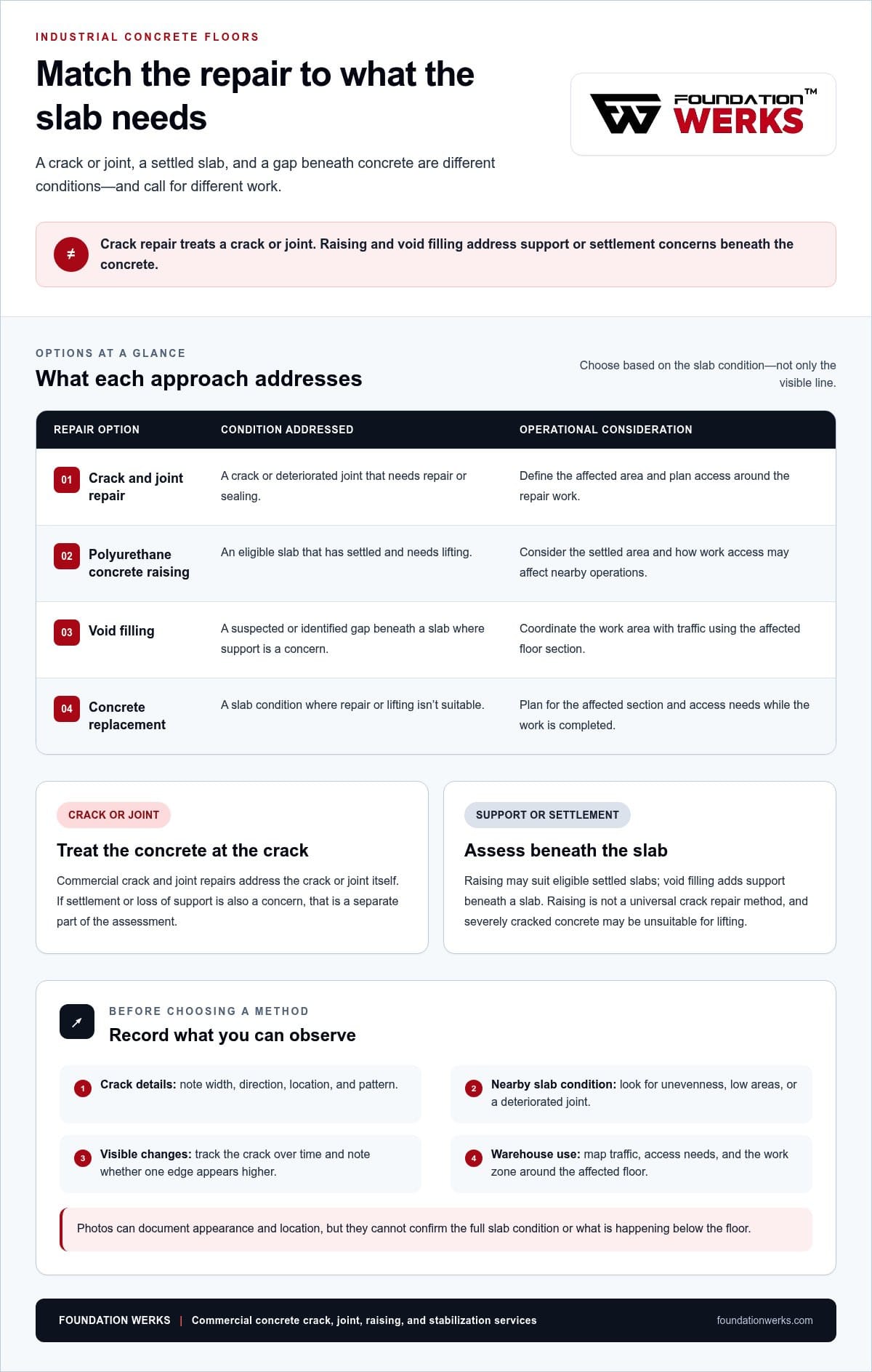
Different floor conditions call for different work. Crack and joint repair addresses the damaged crack or joint. Polyurethane raising lifts an eligible settled slab, while void filling adds support beneath a slab. Replacement may be considered when the concrete is too damaged for repair or lifting. In short, crack repair treats a crack or joint, while slab stabilization addresses a support or settlement concern beneath the concrete.
These options also affect how you plan work areas and warehouse access. A repair may focus on a defined crack or joint, while raising or void filling may involve a broader area around a settled slab. Consider how equipment and foot traffic move through the affected zone and how work can be coordinated to maintain safe access. OSHA’s walking-working surfaces standard addresses keeping work surfaces free of hazards, so include floor conditions in your facility’s hazard planning.
| Option | Condition it addresses | Operational considerations |
|---|---|---|
| Crack and joint repair | A crack or deteriorated joint that needs repair or sealing. | Define the affected area and plan access around the repair work. |
| Polyurethane concrete raising | An eligible slab that has settled and needs lifting. | Consider the settled area and how work access may affect nearby operations. |
| Void filling | A suspected or identified gap beneath a slab where support is a concern. | Coordinate the work area with traffic using the affected floor section. |
| Concrete replacement | A slab condition where repair or lifting isn’t suitable. | Plan for the affected section and access needs while the work is completed. |
Crack and joint repair versus concrete raising
Commercial crack and joint repairs address the concrete at the crack or joint. Raising is a separate service that may be relevant when settlement or loss of support accompanies a crack, but it isn’t a universal crack repair method. The slab’s condition matters, and severely cracked concrete may be unsuitable for lifting. The proposed method should match the condition being addressed, not just the visible line.
When void filling or replacement enters the decision
Void filling is relevant when support beneath the slab is part of the concern. It doesn’t replace crack repair when the crack itself also needs attention. If the slab is too damaged for repair or lifting, replacement may be an option to assess. Foundation Werks provides commercial concrete crack and slab services in Dallas-Fort Worth, including crack and joint repairs, raising, and stabilization.
How to Evaluate an Industrial Floor Crack Repair Plan
A useful industrial floor crack repair plan starts with clear records, not guesses about the cause. Document what you can observe and how the affected area is used before discussing the project scope. This gives the assessment practical context and connects the floor condition to access, traffic, and scheduling needs.
What facility details help define the repair scope?
Build a simple floor record before planning work. Mark affected areas on a facility map, take dated photos, and note changes you observe. Keep direct observations separate from assumptions about what caused them.
- 1. Map cracks and joints. Record each crack’s location, direction, and nearby joints. Note whether cracks connect or appear in a particular work area.
- 2. Mark uneven areas. Identify visible height differences, low spots, or areas where slab edges don’t appear level. Describe what you see without assuming there’s a void beneath the floor.
- 3. Track changes. Add dates to photos and notes. Record whether a crack looks wider, extends farther, or appears alongside a change in the surrounding slab.
- 4. Describe floor use. Note where forklifts, other equipment, and regular foot traffic travel, and whether the affected area is a route, staging space, or active work zone.
How can repairs be planned around facility operations?
Before discussing scope, identify access routes, active work areas, and scheduling constraints. Consider how employees and equipment can move around the affected zone and which areas need to remain accessible. These details help shape a practical work plan without assuming every repair has the same timeline or access needs.
Polyurethane raising work typically takes a few hours from start to finish, though project timing depends on scope. Raised concrete can be used the same day after the work is completed. Those timing details apply to raising, not automatically to crack or joint repairs.
If unevenness is part of the concern, the related guide Uneven Warehouse Floor Repair in Dallas: The 2026 Guide to Industrial Stabilization explores leveling considerations. Use your observations and operational notes to frame the discussion, then keep the proposed scope tied to the floor’s assessed condition and your facility’s operations.
Choosing Industrial Floor Crack Repair in Dallas-Fort Worth
Choosing a repair in Dallas-Fort Worth starts with matching the work to the floor condition. A crack or deteriorated joint may call for commercial concrete crack and joint repair. A settled slab or suspected void beneath it may call for raising, stabilization, or void filling. These services address different problems, so the scope should reflect what’s happening across the affected area, not just the visible crack.
Match the service to the floor condition
Foundation Werks provides commercial crack and joint repairs, polyurethane concrete raising, void filling, and slab stabilization for commercial facilities in DFW. If a slab has settled, raising may be appropriate when the concrete is suitable for lifting. Severely damaged slabs may not be suitable candidates, so replacement can be considered when repair or lifting doesn’t fit the slab’s condition.
Polyurethane foam is used to raise and stabilize eligible sunken concrete. It weighs approximately 2 lb per cubic foot, and raising work uses drill holes approximately 5/8 inch wide. Those details apply to foam-based raising, not to every industrial floor crack repair. A crack that needs repair still requires an approach suited to the crack or joint itself.
What does a project estimate help clarify?
A project discussion brings together the locations and condition of affected areas with the facility’s access needs and daily operations. Sharing photos, notes about visible changes, and information about traffic routes can help define the scope. The goal is to identify which areas need crack or joint repair and whether settlement, void filling, stabilization, or replacement should also be considered. Scope and timing depend on the specific project, so one floor’s plan shouldn’t be treated as a template for another.
For joint-specific decisions, including how raising and replacement differ, see Warehouse Floor Joint Repair in Dallas: Raising vs. Replacement. A clear estimate can help turn your observations into a practical scope for your facility.
Foundation Werks’ Approach to Industrial Floor Crack Repair
Foundation Werks matches the work to the floor condition. Commercial crack and joint repairs address cracks or deteriorated joints. Polyurethane concrete raising and stabilization serve a different purpose: they lift or support eligible settled slabs. Void filling addresses concerns about support beneath the concrete. These services may relate to the same floor, but foam raising isn’t a crack-filling method, and it isn’t suitable for every slab.
What to expect from polyurethane concrete raising
For eligible settled concrete, polyurethane foam is injected to raise or stabilize the slab. Foundation Werks uses a patented foam made from recycled materials. It weighs approximately 2 lb per cubic foot, and raising work uses drill holes approximately 5/8 inch wide. The targeted process requires fewer holes than traditional mudjacking and creates minimal patchwork. It also avoids concrete or grout splatter, wash-down, and heavy equipment crossing lawns or landscaping, helping keep the work area clean.
Raised concrete can be used the same day after the work is completed. This timing applies to concrete raising, not automatically to crack or joint repairs. The condition of the slab guides the approach. Severely cracked concrete may not be suitable for lifting, so the method should be matched to the slab rather than assumed to suit every crack.
This distinction matters when planning industrial floor crack repair. A crack may need direct repair, while settlement or a void may call for raising or stabilization as a separate part of the scope. An assessment can help clarify whether the floor has one concern or several related ones.
Take the next step for your facility floor
For a useful project discussion, bring the crack locations, nearby joints, visible unevenness, and any changes you’ve observed. Also note how forklifts and other equipment use the area, which routes need to stay accessible, and any work-zone or scheduling constraints. These details connect the floor’s condition with the needs of your Dallas-Fort Worth facility.
Foundation Werks provides commercial concrete crack and joint repairs, polyurethane raising, void filling, and slab stabilization for DFW facilities. A free estimate is a practical next step to discuss the affected areas and a project scope suited to your floor and operations.
Plan the Right Repair for Your Warehouse Floor
A crack’s appearance is only one part of the decision. Record its location and changes, look for unevenness or nearby settlement, and consider how the affected area supports daily warehouse traffic. These details help shape an industrial floor crack repair plan around the actual slab condition and your facility’s operations.
Foundation Werks provides commercial concrete crack and joint repairs alongside concrete raising and stabilization. The approaches address different needs: crack and joint repairs treat the damaged area, while raising and stabilization are options for eligible slabs affected by settlement. For raising, Foundation Werks uses lightweight polyurethane foam made from recycled materials.
Whether your facility is in Frisco, McKinney, Dallas, Prosper, Allen, Fairview, Southlake, Irving, North Dallas, or elsewhere in the DFW area, start with the details you’ve documented and the access needs your team must manage.
With a well-matched plan, you can move forward with greater clarity and confidence in your warehouse floor decisions.
Frequently Asked Questions
What causes cracks in industrial concrete floors?
Industrial floor cracks can result from changes in the concrete, slab movement, joint deterioration, or shifts in support beneath the slab. A crack beside an uneven area may raise different questions than an isolated surface crack, but appearance alone can’t confirm the cause. In Dallas-Fort Worth warehouses, recording the crack’s location, pattern, and changes over time gives a useful starting point for assessment.
How do you determine the right repair for an industrial floor crack?
The right industrial floor crack repair depends on the crack and the condition of the surrounding slab. Assess its width, direction, pattern, and changes over time, and note nearby joints, unevenness, or signs of settlement. Crack and joint repairs address those concrete features directly. Raising, stabilization, or void filling may be considered if settlement or support is also a concern. Severely damaged slabs may need replacement rather than lifting.
Can polyurethane foam repair cracks in a warehouse floor?
Polyurethane foam is used to raise or stabilize eligible settled concrete, not as a universal crack-filling treatment. If a crack is associated with settlement or a suspected void, lifting or void filling may be part of the broader repair scope, while the crack itself may need separate attention. Severely cracked slabs may be unsuitable for lifting. An assessment helps distinguish the slab’s support needs from direct crack or joint repair.
When should an industrial concrete floor be repaired instead of replaced?
Repair may be suitable when the slab’s condition allows the damaged crack or joint to be addressed, or when an eligible settled slab can be raised or stabilized. Replacement may be worth assessing when the concrete is too damaged for those approaches. The decision depends on the affected area and the slab’s condition, not simply on the presence of a crack. A site assessment helps clarify which scope fits.
How long does industrial floor crack repair take?
Timing depends on the repair type and project scope. Polyurethane raising typically takes a few hours from start to finish, but that timeframe shouldn’t be applied to every crack or joint repair. The size and condition of the affected area, along with warehouse access needs, shape the work plan. Sharing traffic routes and operational constraints can help frame scheduling for a Dallas-Fort Worth facility.
Can a warehouse floor be used the same day after concrete raising?
Raised concrete can be used the same day after the raising work is completed. This timing applies to concrete raising, not automatically to commercial crack or joint repairs or other work. For warehouse planning, identify the affected area and discuss how equipment and staff access will be managed around the work. That helps facility teams plan operations without assuming every repair has the same return-to-use timing.
How much does industrial floor crack repair cost in Dallas-Fort Worth?
Cost depends on the affected areas, slab condition, and the work needed, so there isn’t one project price that fits every Dallas-Fort Worth warehouse. Crack or joint repair differs from raising, stabilization, or void filling, and the appropriate scope depends on the floor assessment. Foundation Werks offers a free estimate to discuss the observed conditions and facility needs. Call 800-464-9684 to request one.