

A slab can be lifted without fixing what caused it to sink. That’s why mudjacking problems in Texas often come down to more than the injection material: moisture, shifting soil, and the condition of the concrete all affect whether the repair suits the site. Mudjacking can work for some slabs, but it isn’t the right choice for every one.
If you’re weighing a repair, consider whether added material will suit the support beneath the slab and whether foam raising or replacement makes more sense. The answer depends on the slab’s cracks and stability, the voids beneath it, and how water moves around the area.
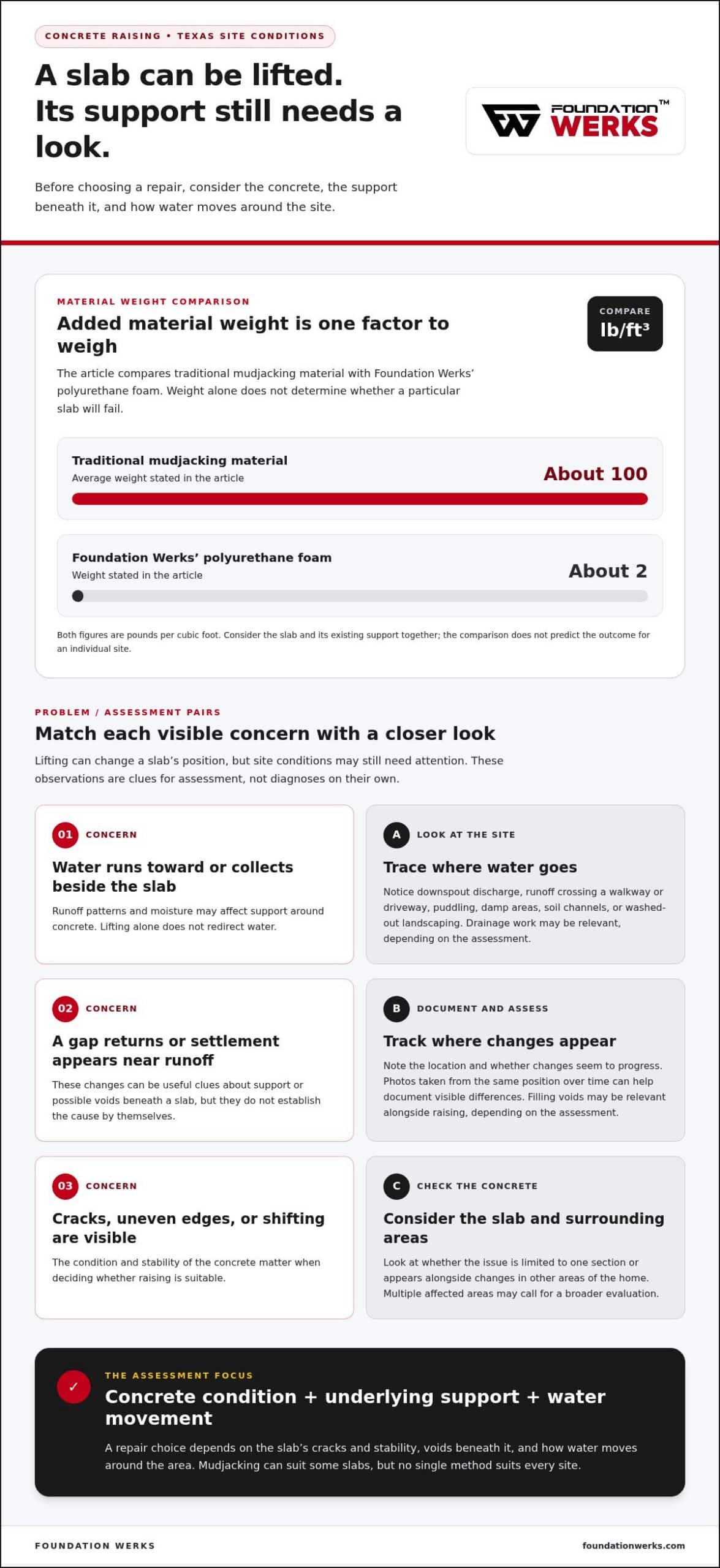
This article explains where mudjacking can fall short, which site and slab conditions matter, and how to compare repair options. You’ll also learn when polyurethane concrete raising may be an alternative. For context, traditional mudjacking material averages about 100 pounds per cubic foot, while Foundation Werks’ polyurethane foam weighs about 2 pounds per cubic foot.
Key Takeaways
- Mudjacking problems in Texas can reflect site conditions, not a method that fails every time.
- Check slab cracks, movement, drainage, and nearby surfaces before weighing repair options.
- Compare mudjacking, polyurethane raising, and replacement based on the slab’s condition and what each approach involves.
- Recurring settlement makes it important to consider voids beneath a slab and how water moves around it.
- A condition-based assessment can help determine whether concrete raising, stabilization, or another option fits the site.
What mudjacking does, and why problems can arise in Texas
Mudjacking lifts a sunken concrete slab by pumping slurry beneath it through drilled access holes. As the material fills space under the slab, pressure raises the concrete toward a more level position. The process can correct a height difference, but it doesn’t automatically resolve every condition beneath or around the slab. That distinction puts mudjacking problems in Texas in perspective: a possible limitation deserves assessment, but it doesn’t mean every mudjacking job fails.
A repair’s suitability depends on more than whether the concrete can be lifted. The slab’s condition, the support below it, and water movement around the area all matter. If drainage or soil movement continues to affect support, raising the surface alone may leave that concern unaddressed. The outcome can vary from one site to another.
The video below shows an example of previous mudjacking work being restabilized and illustrates why repair conditions matter.
How mudjacking raises a sunken concrete slab
A crew drills access holes through the concrete, then pumps slurry through them into the open space below. As the material spreads and builds pressure, it can lift the slab and occupy some of the void beneath it. Hole placement, equipment, and application details vary by project, so this is a general description rather than a specification for every job.
Which reported problems deserve a closer look?
One consideration is added weight. Traditional mudjacking material averages about 100 pounds per cubic foot, compared with about 2 pounds per cubic foot for Foundation Werks’ polyurethane foam. That difference matters when considering the existing support, but it doesn’t prove that weight will cause a particular slab to fail. The slab and site conditions need to be considered together.
Water and ongoing ground movement deserve attention, too. Lifting concrete changes its position; it doesn’t redirect runoff or prevent soil conditions from changing. For example, if water keeps collecting beside a walkway or flowing toward a slab, that path may still affect the site after lifting. Depending on the assessment, drainage work or filling voids may be relevant alongside concrete raising.
A raised slab doesn’t inevitably settle again. The practical question is whether the repair suits the slab and whether contributing support or water concerns also need attention. Looking at those factors helps distinguish a method’s limitations from the assumption that the method cannot work.
How North Texas soil and water conditions can affect mudjacking
Texas properties don’t all have the same soil, drainage, or moisture exposure. Even nearby slabs can sit beside different runoff paths, landscaping, downspouts, or grades. Those details matter because settlement is a visible symptom, while the cause may involve changing support below the slab or water moving around it. A lifted surface may look level, but that alone doesn’t show whether the conditions contributing to movement have changed.
A sound Texas slab assessment considers where water goes, what supports the concrete, and whether those conditions may change over time. This keeps mudjacking problems in Texas in context: soil and water are important considerations, but neither a location nor one visible crack is enough to diagnose the cause.
Why drainage and moisture belong in the assessment
Water that runs toward a slab, collects beside it, or travels through disturbed ground may affect support around the concrete. In some circumstances, moving water can carry soil away or contribute to a void beneath an edge. The pattern and extent vary by site, so look for evidence rather than assume erosion is happening.
Notice where downspouts discharge and whether roof runoff crosses a walkway or driveway. Look for channels in soil, washed-out landscaping, puddling, or areas that stay damp. These observations don’t establish the cause, but they help describe the setting in which settlement appeared. If drainage is central to the concern, a French drain guide for North Texas can help explain how water management may fit into the discussion.
What local signs can suggest changing support?
Uneven slab edges, a gap that returns after it has been filled, or settlement close to a runoff route can be useful clues. Record where the changes appear and whether they seem to be progressing. A photo taken from the same position over time can help document visible differences. These signs point to questions for an assessment, not a diagnosis on their own.
Also consider whether the issue appears limited to one section of concrete or occurs alongside changes in the building. An uneven patio or walkway is not automatically evidence of a structural foundation problem. Cracks or shifting in multiple areas of a home may call for a broader evaluation rather than treating the slab as an isolated concern.
Before choosing a repair method, note the slab’s location, nearby drainage features, and visible signs of soil loss. A site review can connect those observations to the concrete’s condition and support needs. For Dallas-area property owners weighing concrete raising, Foundation Werks assesses concrete and drainage concerns as part of a condition-based approach.
Mudjacking or polyurethane raising: compare the trade-offs
Both methods can raise suitable concrete, but they use different materials and create different work areas. The table compares general characteristics. Project methods and requirements can vary, and neither option suits every slab. The concrete’s condition, the repair goal, and site conditions should guide the choice.
| Factor | Mudjacking | Polyurethane raising |
|---|---|---|
| Material | A traditional slurry is pumped beneath the slab. | Polyurethane foam is injected beneath the slab. |
| Material weight | The injected material is substantially heavier than polyurethane foam. | The foam is lightweight, though weight alone doesn’t determine whether the method suits a site. |
| Access holes | Access holes are generally larger, often around 1 to 2 inches. | Foundation Werks uses holes approximately 5/8 inch in diameter. |
| Cleanup and patching | Larger access holes require larger patches at injection points. | Smaller holes reduce the amount of patching at injection points. |
| Use timing | Timing depends on the project and material conditions. | Raised concrete can be walked on, driven on, or played on the same day the work is completed. |
These differences explain what each process involves, but they don’t replace an assessment. A slab with extensive cracks, broken edges, or unstable support may call for a different approach than a sound slab with a localized low area. Water management and intended use matter, too. A driveway, patio, or commercial surface can have different access and use requirements.
Polyurethane raising offers smaller access holes and less patching around those points. The foam’s lighter weight is another factor to consider, not a guarantee of a particular result. Raising or stabilizing suitable concrete typically costs about half as much as full replacement. Explore polyurethane concrete raising as an option for suitable concrete.
Where mudjacking may be a reasonable option
An intact slab that can be lifted may be a candidate for mudjacking, depending on site conditions and the repair objective. For example, a sound walkway with one settled section presents a different situation from concrete with widespread cracking. The method should suit the slab and its support. Avoid judging suitability by the repair name alone or assuming a specific lifespan.
What polyurethane raising changes
Polyurethane raising uses a different injection material and smaller access holes than traditional mudjacking. Those characteristics can affect the work area and the amount of patching. However, severely cracked concrete may be too damaged to lift with either method. In that case, replacement may need consideration. Compare how each option fits the slab’s condition and the repair goal, rather than looking for a method that is universally best.
How to assess a sunken Texas slab before choosing a repair
Before comparing repair methods, gather a clear picture of the concrete and its surroundings. A few observations can help explain what needs attention, but they can’t establish the cause on their own. Repair choice starts with the slab’s condition and the cause of lost support.
Check the slab and the surrounding area
Walk the area carefully and record what you see. Photos from consistent angles can help track changes and make uneven transitions easier to describe. Note whether the issue appears limited to one slab or connects with drainage, adjacent concrete, or changes in the building.
- Slab condition: Record cracks, broken or crumbling edges, and sections that appear intact. Severe cracking may mean the concrete isn’t suitable for lifting.
- Movement: Note raised or sunken edges, trip points, gaps beneath the slab, and differences in height where concrete meets a path, step, or threshold. Document a gap before filling it.
- Water paths: Look for downspouts, runoff routes, standing water, soft ground, or visible soil loss near the slab. Record where water appears to flow after rain without assuming it caused the settlement.
- Use: Identify whether the concrete is a driveway, walkway, patio, or commercial floor. How the area is used can shape the repair objective and access needs.
- Adjacent surfaces: Check nearby slabs, joints, walls, and transitions for similar changes. Note whether the problem seems isolated or appears alongside broader building symptoms.
Match the repair to the observed problem
Concrete lifting addresses uneven slab position. It isn’t the same as correcting a drainage issue, repairing a crack or joint, or assessing a broader foundation concern. Your observations can help distinguish these questions, but they aren’t a diagnosis. Mudjacking problems in Texas are easier to evaluate when the concrete, water paths, and surrounding surfaces are considered together rather than focusing only on the height difference.
A sound, liftable slab may be a candidate for raising. Severely cracked or badly broken concrete may not be stable enough to lift, so replacement may need consideration. If the concern involves a warehouse or other commercial floor, the intended use and condition across the work area also matter. This warehouse floor repair guidance discusses industrial floor conditions and stabilization.
Keep your notes factual: where the crack is, which edge is uneven, and where water travels. That record supports a focused assessment without turning a visible clue into a conclusion.
A practical next step for mudjacking concerns in the Dallas area
If you’re concerned about a settled slab, start with its condition and the site rather than choosing a repair method by name. The same uneven surface can have different contributing factors, from an isolated void to water moving through the area. A condition-based assessment helps match the repair to the concrete and its support, and identify when lifting alone may not address the concern.
When foam raising may suit the project
Polyurethane concrete raising can lift and stabilize suitable concrete, including driveways, sidewalks, patios, pool decks, and commercial slabs. The process uses small access holes, which limits patching at injection points. It also avoids concrete or grout splatter and doesn’t require heavy equipment to cross lawns or landscaping. Raised concrete can be walked on, driven on, or played on the same day the work is completed. Suitability still depends on the slab’s condition and the site’s needs.
Foam raising addresses concrete elevation and support; it doesn’t automatically resolve every drainage or structural foundation issue. If water is moving toward a slab, drainage work may be relevant. If concrete is severely cracked, lifting may not be appropriate. Separating these concerns makes it easier to consider raising, void filling, drainage work, or concrete replacement based on what the site needs.
What to expect from a Foundation Werks assessment
Foundation Werks serves the Dallas metropolitan area from McKinney, including Frisco, Dallas, Prosper, Allen, Fairview, Southlake, Irving, and North Dallas across the DFW area. An assessment considers the slab’s condition, the pattern of settlement, and relevant site conditions, such as visible voids or drainage concerns. Those details help determine whether polyurethane raising or stabilization suits the concrete, or whether another repair approach deserves consideration.
Before the assessment, gather photos of cracks and uneven transitions, note when you first noticed the change, and point out where water flows near the slab. These details can focus the discussion. A free estimate gives Dallas-area property owners a way to discuss the work and possible options without assuming that every slab needs the same repair.
For concerns about mudjacking problems in Texas, consider whether visible settlement is the whole issue or a clue to changing support or water conditions. Foundation Werks provides polyurethane concrete raising, void filling, and French drain installation where relevant to the site. A clear evaluation of the concrete and its surroundings helps identify an appropriate next step.
Call 800-464-9684 to discuss your concrete concerns.
Take the next step with a clear repair goal
Before deciding how to address a settled slab, define what you need the repair to accomplish. Is the priority a safer transition, a more usable driveway, or understanding why the concrete shifted? A clear goal keeps the discussion focused on your property and the result you need, rather than choosing a method by name.
If you’re still weighing mudjacking problems in Texas, bring your observations and questions into an assessment. A useful recommendation accounts for the slab’s condition and site factors that may affect its support. If the concrete is too damaged to raise, replacement may be worth considering.
You don’t need to diagnose the cause yourself. Photos, notes about when you noticed changes, and a description of how you use the area provide a useful starting point. From there, you can consider a repair approach with a clearer understanding of its purpose and limits.
Request a free estimate from Foundation Werks
A thoughtful next step can make a stressful concrete concern feel more manageable.
Frequently Asked Questions
Is mudjacking still used for concrete repair in Texas?
Yes. Mudjacking remains one method for raising settled concrete, though its suitability depends on the slab and repair goal. A sound slab with a localized low area differs from one with widespread cracking or drainage concerns. For an older driveway, consider whether the goal is simply to correct elevation or whether other site conditions also need attention.
Can mudjacking leave visible holes in a concrete slab?
Yes. The drilled access points are patched after injection, and patches may remain visible because their color or texture can differ from the surrounding concrete. On a weathered driveway, that contrast may be less noticeable than on a newer, uniform surface. Consider the slab’s age and finish when appearance matters.
Does mudjacking damage landscaping around a driveway?
Landscaping can be disturbed, but damage isn’t inevitable. Site access, equipment placement, and the proximity of planting beds or irrigation lines can affect the work area. Before work begins, photograph nearby beds and edging, and note irrigation components close to the concrete. The amount of disruption depends on the property and repair process.
What happens if a concrete slab is too cracked to lift?
If the concrete is too fractured to act as a stable piece, lifting may not be suitable. Replacement may be considered when the damage prevents effective raising. A narrow crack alone doesn’t determine whether a slab can be lifted. Record crack locations and note whether sections move independently. These observations provide useful context, but they aren’t a diagnosis.
Can mudjacking fill a void beneath a concrete slab?
Yes. Injected material can occupy open space beneath a slab as the concrete is raised. The visible gap may not reveal the full extent or cause of the void. If soil support has been lost or water movement is involved, filling the space alone may not address all relevant conditions. An assessment can help determine whether the project calls for void filling, lifting, drainage work, or a combination.
How soon can I use concrete after it is raised?
Timing depends on the repair material and work performed, so there isn’t one schedule for every raised slab. With polyurethane raising, concrete can be walked on, driven on, or played on the same day the work is completed. Plan access around the affected area while work is underway, especially if it serves as an entrance, parking space, or equipment route.
Is mudjacking appropriate for commercial concrete in Dallas?
Sometimes. Mudjacking may suit an intact commercial slab with a localized elevation issue, but the slab’s condition and intended use matter. A warehouse aisle carrying equipment, a loading area, and a pedestrian path have different operational needs. Consider traffic patterns, joints, and cracks, as well as whether the objective is lifting, stabilization, or replacement. No single method fits every commercial floor.