

Persistent puddles after storms, water pooling near a building, soggy ground, and soil erosion can all signal a drainage problem. Commercial drainage solutions in McKinney can redirect surface runoff and subsurface water to reduce standing water around buildings and paved areas. Clay-heavy soil can slow water absorption, making these issues more noticeable after heavy rain.
A puddle may seem minor, but recurring water can affect landscaping, hardscapes, and building foundations over time. This guide covers warning signs, how McKinney’s rain and clay soil affect drainage, and how surface drains and French drains move water away from problem areas. It also explains what a drainage assessment considers so you can plan a practical next step.
Key Takeaways
- Trace roof runoff from downspouts to see whether water is being discharged beside the foundation or carried away from it.
- Match the drain to the water problem: surface drains collect visible runoff, while French drains intercept water below ground.
- Account for clay soil’s wet-and-dry cycles when assessing moisture around a commercial building.
- For parking-lot ponding, channel drains, area drains, or regrading can help direct water toward a suitable outlet.
- When drainage concerns overlap with cracked or uneven concrete, explore how French drain installation and commercial concrete repairs may address related site issues.
Why is drainage system installation needed so often in McKinney?
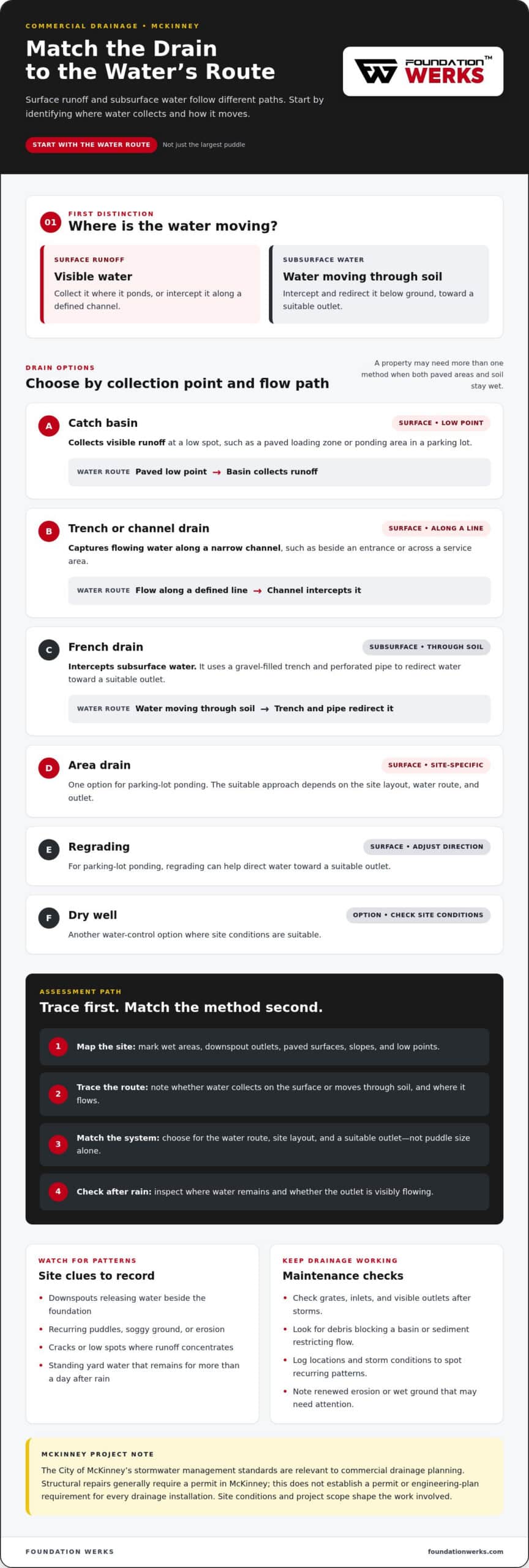
McKinney’s stormwater management standards are relevant to commercial drainage installation because water must be directed across a site without creating new runoff problems. A French drain manages water below the surface, while a catch basin collects visible runoff. Some properties may need both when parking areas pond and soil stays saturated near a building. The right system depends on where water gathers and how it travels.
French drains use a gravel-filled trench and perforated pipe to redirect subsurface water. Planning starts by tracing the flow from wet areas toward a suitable outlet. A catch basin collects surface runoff at low points, such as paved loading zones. Trench drains capture water along a narrow channel, such as beside an entrance or across a service area. These systems manage different water routes, so one may not replace another.
Commercial drainage projects must account for local standards, site layout, and the scope of work. The City of McKinney provides stormwater management standards relevant to professional installation. Structural repairs generally require a permit in McKinney, and historic districts may have additional review. This rule concerns structural repair; it does not establish a permit or engineering-plan requirement for every drainage installation. Site conditions and project scope shape the steps involved.
For incentives, the relevant local framework is the City’s stormwater management standards. Businesses should plan for runoff management rather than build a budget around an assumed incentive. A drainage assessment can map roof discharge, paved surfaces, slopes, and low points. For example, a catch basin may collect parking-lot runoff, while a French drain addresses water moving through soil. A dry well is another water-control option where site conditions suit it.
Heavy rain can reveal drainage gaps that are less visible in dry weather. Runoff may collect at a dock, flow toward a foundation, or wash soil from a landscaped edge. A catch basin captures water at a low point; a trench drain intercepts flow along a defined line. A French drain intercepts subsurface water. Choose a system by tracing the water’s route, not simply by looking for the largest puddle.
Maintenance affects how well a drainage system performs. Debris can block a surface basin, while sediment can restrict flow. Check grates, inlets, and visible outlets after storms, and note where water remains. Recurring wet ground or renewed erosion can indicate that a French drain needs attention. Keep a simple site log of locations and storm conditions to spot patterns.
McKinney commercial sites often combine roofs, pavement, landscaped strips, and compacted soil, each directing water differently. Drainage planning should consider the whole property. Mark ponding areas, downspout outlets, and erosion, then match each issue to a surface or subsurface method. This helps avoid installing a drain that collects water but sends it toward another vulnerable area.
Commercial properties need to direct runoff without creating new drainage problems. The approach should reflect site conditions, layout, and project scope. Structural repairs generally require a permit, but that does not establish a permit or engineering-plan requirement for every drainage installation.
How do I know if my commercial property needs a drainage system?
Look for recurring patterns, not just one wet patch after rain. Texas A&M AgriLife Extension advises preventing water infiltration around foundations to help maintain structural integrity.
Downspouts, Clay Soil, and Foundation Moisture
Check where each downspout releases roof water. Discharge beside a foundation can saturate nearby clay, which swells when wet and shrinks when dry. Look for damp soil, recurring puddles, or water stains near the building. A simple site sketch can mark downspout outlets and moisture-prone areas, making water routes easier to assess after rain.
Foundation Protection and Water Damage Prevention
Proper drainage helps manage water before it reaches vulnerable building areas. Pooling near a foundation can increase hydrostatic pressure and contribute to cracks or leaks over time. Note whether water flows toward the building, remains beside it, or drains away. Also check nearby paved surfaces for cracks and low spots, which can show where runoff concentrates.
Diagnosing and Fixing Drainage Problems
Start diagnosis by mapping wet areas, roof discharge points, slopes, and runoff routes. Identify whether water collects on the surface or moves through soil. The remedy should address that route, followed by an inspection during or after rain. This sequence can distinguish a blocked outlet from a broader site drainage problem.
Watch for signs that persist after a storm: standing water, soggy ground, erosion, musty odors, or water stains. Yard water that remains for more than a day after rain may indicate a need for a French drain. Record where it collects and whether it is near a foundation, entrance, or paved work area. These details help show whether the issue affects one low point or several parts of the site.
Foundation and drainage warranties can cover different work and conditions. Read the written terms for covered work, exclusions, and stated maintenance requirements. Check whether the document addresses drainage installation, foundation work, or both. Keep inspection and maintenance records to track changing moisture conditions and support informed follow-up.
- Mark downspout outlets and recurring wet areas on a site plan.
- Photograph puddles, stains, or erosion after rain to compare locations.
- Note whether water stands for more than a day after rainfall.
- Review written warranty terms alongside the scope of completed work.
For another practical reference, explore commercial drainage information as you assess the site’s water patterns.
Commercial drainage systems and water redirection
Commercial drainage systems manage water across roofs, pavement, and landscaped areas. Matching each drain to its collection point helps direct runoff toward a suitable outlet.
Standing Water, Erosion, and Flooding
Standing water shows where runoff collects faster than it can drain. At a loading area, repeated pooling can soften nearby soil and carry sediment toward a paved edge. Check for muddy patches, washed-out landscaping, exposed roots, or water crossing walkways. These signs show where drainage should intercept or redirect flow before erosion spreads.
Walk the site after rainfall. Mark where water enters, slows, and exits. A catch basin collects surface runoff at a low point, while an area drain manages water across a defined surface. A French drain intercepts water below grade. The drainage design should connect these collection points to an appropriate outlet.
Site Grading and Water Diversion
Grading shapes the ground so runoff flows away from buildings and toward planned collection areas. Look for settled sections, reverse slopes, and landscaped borders that funnel water toward a doorway. For example, regrading beside a warehouse can direct surface flow toward a drain. The goal is controlled water movement, not simply shifting runoff to another part of the property.
Map the water route before selecting drainage equipment. Note building edges, pavement slopes, landscape beds, and places where runoff crosses the site. Identify whether water needs to travel along the surface or through soil. Channel drains can intercept visible flow across paved areas, while subsurface drains address water moving below ground. The outlet location also shapes the plan.
Parking Lot Pooling and Slip Hazards
In a commercial parking lot, pooling often forms in settled pavement or near low curbs. Standing water can make walking surfaces slippery and obscure pavement defects. Mark recurring puddles after rain, especially near entrances, accessible routes, and loading zones. Channel or area drains can collect visible runoff, while regrading can direct it toward a suitable outlet.
Keep drainage functional by checking grates, inlets, and outlets after storms. Leaves, litter, and sediment can restrict surface flow, so clear visible debris and record where water remains. The EPA notes that drainage systems can control runoff and minimize pollution in local waterways. A planned water route helps manage site runoff and the sediment it may carry.
Match the remedy to the problem: surface collection for visible ponding, grading for misdirected runoff, and subsurface drainage for water moving through soil. A parking-lot puddle and an eroded landscape edge may need different approaches, even if both appear after the same storm.
Drainage issues associated with heavy rain and dense clay soil
McKinney commercial sites commonly experience puddling, surface runoff, erosion, muddy areas, and oversaturated landscaping. Heavy rain can overwhelm weak drainage paths, while clay-heavy soil slows infiltration and leaves water on the surface.
Clay affects how a site handles moisture. North Texas expansive clay swells when wet and shrinks when dry, creating seasonal movement around buildings and paved areas. Texas A&M AgriLife Extension publishes guidance on managing expansive soils around Texas foundations, including limiting water infiltration and managing moisture around buildings.
Rainfall reveals how water moves across a property. A sloped parking area may send runoff toward a loading dock, while a landscape bed may remain saturated after pavement drains. Observe the site during and after storms. Mark where water enters, where it collects, and which surfaces remain wet.
A drainage plan should account for soil composition, lot size, slope, water-flow patterns, and landscaping. These factors interact. A flat lot with compacted clay may hold surface water, while a sloped section may carry runoff toward a building. Drainage design should also consider local rainfall patterns and the outlet route.
Commercial drainage systems in McKinney need to manage heavy rainfall and remain functional during dry spells. Planning for changing conditions matters more than designing around a single storm. A system focused on one wet corner may miss runoff from a roof, paved yard, or neighboring slope. Mapping site-wide flow helps reveal these connections.
Oversaturated soil can stress landscape plants and wash soil from beds or embankments. Look for muddy ground, exposed roots, leaning edging, or sediment at the bottom of a slope. These signs help distinguish a local watering issue from runoff moving across the property. Adjusting water routes can protect planting areas and nearby hardscapes.
Drainage should suit each area’s role. A channel drain may fit a paved route with concentrated runoff; a subsurface drain may help where soil stays wet. Landscaping matters too: edging, planting beds, and compacted paths can redirect water unexpectedly. Review these features and trace water routes before choosing a system or changing grades.
Use a simple inspection sequence after rainfall: record ponding locations, note how long the soil stays saturated, and photograph erosion or landscape damage. Compare those observations across storms. If the same low area repeatedly collects runoff, the pattern can help define where drainage should intercept water and how it should be routed.
Good water management avoids sending runoff from one problem area into another. Diverting water away from a building, for example, should not leave a landscape bed continuously saturated. A coordinated plan considers soil, topography, rainfall, and existing landscaping together to create a practical route for water in wet and dry conditions.
Commercial drainage services in McKinney and North Texas
A commercial drainage evaluation should connect site conditions with business operations. Recurring water can affect access, loading areas, landscaping, and maintenance. Identify where runoff disrupts daily use, then trace its route across the property. A puddle near a customer entrance calls for a different assessment than saturated soil beside a warehouse wall.
A useful assessment examines the whole site, not just the most visible puddle. Review roof discharge, pavement, grading, soil, landscaping, and existing drains. Note where water enters, collects, and leaves the property. A wet landscape strip, for example, may receive roof runoff, irrigation, or water redirected from pavement. Identifying the source helps narrow the response.
Document conditions after rainfall and during routine site use. Record recurring ponding, erosion, muddy access routes, and areas that require repeated cleanup. These observations show whether a problem affects one isolated spot or several connected areas. They also help prioritize work, such as keeping a loading route usable before addressing a less-used landscape edge.
A practical evaluation can follow these steps:
- Map wet areas, downspouts, slopes, drains, and site entrances.
- Note where standing water affects employees, customers, or deliveries.
- Check whether irrigation or grading contributes to oversaturated ground.
- Compare drainage needs across parking, loading, and landscaped zones.
Drainage planning should account for heavy rainfall and dry spells. A system designed for one low point may not manage runoff from the rest of a commercial property. Soil, topography, lot size, and existing landscaping all shape water routes. The outlet matters too: redirected runoff should flow toward a suitable destination, not another vulnerable area.
In McKinney and across North Texas, inadequate drainage can add maintenance work and disrupt business operations. An assessment helps identify problem areas and suitable responses. Treat recurring water as a site-wide issue: document its path, the areas it affects, and the conditions that trigger it. This information supports a focused plan rather than repeated spot fixes.
Foundation Werks: Polyurethane Concrete Raising
Foundation Werks helps address drainage concerns that overlap with uneven or damaged commercial concrete. Polyurethane Concrete Raising lifts settled concrete, while Commercial Concrete Crack and Joint Repairs address cracks and joints. Concrete Replacement is another option when a slab needs a different approach. For water management, French Drain Installation can redirect subsurface water. Drainage issues call for attention to water flow, while uneven slabs and damaged joints need concrete work. These services address related site concerns but solve different problems. Reviewing where water collects alongside concrete changes can help clarify the next step.
Make Your Next Site Review Count
Include recurring water in your property’s maintenance planning, rather than noting it only after a storm. Assign a team member to record site changes, areas that affect daily operations, and items needing follow-up. A consistent record can help focus a drainage discussion on the property’s priorities.
Before a review, gather photos, maintenance notes, and reports of interrupted access or site use. Share the areas most important to your business, such as customer routes, loading zones, or building entrances. This context helps connect drainage decisions to how the property operates.
Choosing commercial drainage solutions in McKinney starts with understanding your site and discussing a suitable next step. Foundation Werks can help assess drainage alongside related concrete concerns, so your plan reflects the conditions you have observed.
A clear next step can make site planning manageable. Start with what you have observed, then move forward with a focused plan.
Frequently Asked Questions
What is a French drain, and why do I need one?
A French drain is a gravel-filled trench with a perforated pipe that redirects water through soil. It can help when ground stays saturated after surface runoff has moved away. A persistently wet strip beside a commercial building, for example, may point to subsurface water. Its usefulness depends on the water source, trench route, and discharge point.
How does drainage affect my foundation?
Drainage affects moisture conditions around a foundation. In North Texas, expansive clay swells when wet and shrinks when dry, so uneven moisture can contribute to soil movement near a building. Watch for recurring damp ground, water stains, or new foundation cracks. Texas A&M AgriLife Extension advises preventing water infiltration around foundations to support structural integrity.
What commercial drainage solutions are available in McKinney, TX?
Commercial drainage solutions in McKinney can include French drains, catch basins, channel drains, area drains, dry wells, and grading changes. Each manages a different water route: a basin collects runoff at a low point, while a French drain intercepts water below ground. A commercial site with a wet landscape edge and a ponding paved area may need separate collection points connected to a suitable outlet.
Which McKinney contractors specialize in commercial drainage installation and repair?
Foundation Werks installs French drains for commercial properties in McKinney. Its commercial services also include concrete crack and joint repairs, which may be relevant when drainage concerns coincide with damaged concrete. A site with recurring subsurface water and a cracked paved area, for example, may need both drainage and concrete repair considered. The appropriate scope depends on site conditions.
How do French drains, catch basins, channel drains, and underground storm drains compare for commercial sites?
French drains intercept water below ground; catch basins collect runoff at surface low points. Channel drains capture surface flow along a narrow line, such as across a paved entrance. Underground storm drains convey collected runoff through buried piping toward an outlet. A site may combine these methods, depending on where water originates, how it travels, and the layout of paved and landscaped areas.
How can commercial properties prevent flooding and standing water in McKinney?
Start with roof runoff: check whether downspouts discharge beside the building, then route water away through an appropriate drain line. Keep surface inlets clear of visible leaves and debris, and watch for settled pavement or landscape edges that redirect runoff. After rain, record where water remains and whether it affects access or deliveries. Those observations help target grading or drainage changes to the right locations.
What risks can poor commercial drainage cause to buildings, parking lots, and landscaping?
Poor drainage can allow water to infiltrate near buildings, contribute to soil erosion, and leave landscape areas muddy or oversaturated. In a parking lot, recurring ponding can interfere with vehicle and pedestrian movement and obscure pavement damage. Persistent moisture around a building can contribute to cracks, leaks, or structural concerns over time. The affected areas and water’s route help show which risks need attention first.