

The cheaper concrete repair quote sitting on your counter might actually be the most expensive mistake you make for your property. When evaluating the cost of polyjacking vs mudjacking, the lower initial estimate for traditional slurry often looks like an easy win. It’s completely natural to question why high-density polyurethane foam commands a higher initial price when both methods claim to lift an uneven patio, sidewalk, or driveway back into position.
Nobody wants heavy cement trucks tearing up their landscaping, only to watch heavy grout drag the slab down into shifting soil a few seasons later. You deserve a durable repair that protects your home without creating recurring bills. In this guide, you’ll discover how polyjacking and mudjacking compare in upfront cost, long-term durability, and overall property value. We’ll break down the real lifetime expense of each method so you can confidently choose the most cost-effective slab repair for your budget.
Key Takeaways
- Evaluate the true cost of polyjacking vs mudjacking by looking past the initial estimate to account for long-term durability and repeat repair risks.
- Learn why ultra-lightweight polyurethane foam protects vulnerable subsoils from re-settling under the crushing weight of traditional cement slurry.
- Discover how non-invasive foam injection uses dime-sized 5/8-inch access holes to preserve the visual appeal of decorative patios, sidewalks, and pool decks.
- Spot hidden contractor expenses and vague bid language before signing, ensuring your quote includes proper site preparation and complete void filling.
- Find out which high-value concrete surfaces yield the strongest return on investment when lifted with fast-curing polymer expansion.
Polyjacking vs Mudjacking Cost: Initial Investment and Lifetime Value
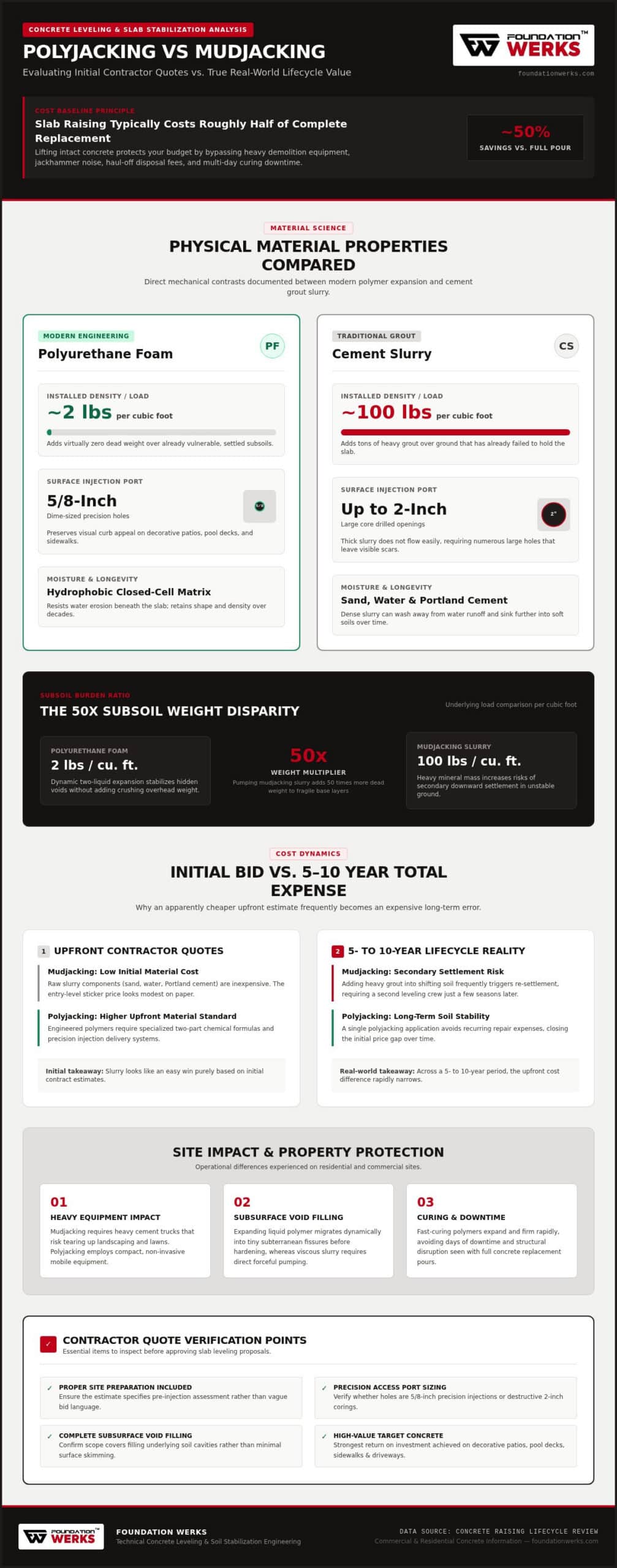
A contractor quote for mudjacking often catches the eye because the initial number looks modest. Traditional mudjacking relies on an inexpensive slurry of sand, water, and Portland cement, keeping entry-level material costs low. In contrast, polyjacking uses advanced closed-cell polymers engineered for precision and durability. When property owners compare the true cost of polyjacking vs mudjacking across a five- to ten-year lifecycle, that initial price gap rapidly narrows.
Understanding these mechanical differences helps clarify where your investment actually goes. If you are asking what is concrete leveling and how modern methods improve on older practices, seeing the equipment and physical materials side by side provides helpful clarity.
To better understand how these two lifting techniques work in the field, watch this helpful comparison:
Upfront Contractor Quotes vs Real-World Lifecycle Value
Mudjacking quotes look attractive on paper because raw slurry components are cheap. The hidden catch lies beneath the surface. When weak underlying soils sink, pumping tons of heavy grout over that same ground frequently causes secondary settlement. Property owners often find themselves paying for a second leveling crew just a few seasons later.
High-density polyurethane foam represents a higher initial material standard. The polymer expands dynamically to fill hidden subterranean voids without placing unnecessary burden on shifting subsoils. Because hydrophobic polymers resist moisture erosion and retain their shape over decades, a single polyjacking application avoids the recurring expenses and headache of repeat repairs.
The Replacement Baseline: Why Concrete Raising Saves Money
Evaluating the cost of polyjacking vs mudjacking makes even more sense when measured against the baseline of total slab replacement. Pouring new concrete requires heavy demolition equipment, jackhammer noise, haul-off fees, and days of curing downtime. Raising or stabilizing existing slabs typically costs roughly half of complete concrete replacement, protecting your operating budget while preserving sound masonry.
For facility directors overseeing commercial parking areas or industrial walkways, combining slab lifting with commercial concrete crack repair seals surface fractures, blocks surface water penetration, and extends structural pavement life at a fraction of demolition costs.
Material Science Behind the Price: Polyurethane Foam vs Mudjacking Slurry
The upfront price discrepancy between lifting methods comes down to what happens at the molecular level. Mudjacking relies on mechanical hydraulic pressure to force a dense mixture beneath the surface. Polyjacking depends on a controlled chemical reaction where two liquid components combine, expand, and solidify. When assessing the cost of polyjacking vs mudjacking, comparing these physical characteristics reveals why high-density polymers deliver superior mechanical performance.
Material Weight: 2-Pound Foam vs 100-Pound Slurry
Weight is often the deciding factor in whether a lifted slab stays put. Consider the numbers:
- Polyurethane foam: Weighs approximately 2 pounds per cubic foot once fully expanded.
- Mudjacking slurry: Weighs roughly 100 pounds per cubic foot.
Underneath sunken concrete, soil has already proven it cannot support the existing load. Pumping tons of dense sand and cement over unstable subgrade adds crushing burden directly to the weak zone. Polyurethane adds virtually zero dead weight, stabilizing voids without overloading fragile soils.
Drill Hole Footprints: 5/8-Inch Precision vs 2-Inch Cores
Installation methods leave radically different marks on your concrete. Mudjacking requires drilling large access ports up to two inches in diameter. These wide circles leave visible scars across porches, pool surroundings, and walkways. Because the thick slurry does not flow easily, crews must drill numerous large holes across the surface to spread the grout.
Polyjacking requires access holes just 5/8 of an inch wide, roughly the size of a penny. Expanding liquid foam travels freely into microscopic cracks and empty pockets before hardening, requiring fewer injection ports overall. Once patched with color-matched cement, these small entry points blend into the existing finish, preserving decorative surfaces.
Water Resistance, Erosion, and Material Density Retention
Water movement beneath slabs ruins traditional repairs. Slurry mixtures contain organic soil, sand, and cement that soften when submerged. Over successive rainy seasons, subterranean water flow erodes the slurry, creating new hollow pockets underneath the masonry.
Closed-cell polyurethane cures into an impermeable, hydrophobic barrier that repels moisture. It will not wash out, leach into the soil, or lose compressive density during heavy downpours. Property owners looking for dependable slab support can consult the team at Foundation Werks to see how structural polymer lifting preserves property value across delicate soils.
The Hidden Expenses of Mudjacking: Why Cheap Bids Cost More Long-Term
Low upfront quotes rarely tell the whole financial story. Mudjacking contractors can present smaller invoices because their raw materials cost very little. However, looking strictly at the upfront line item misses downstream expenses that emerge after the crew leaves. When you weigh the full cost of polyjacking vs mudjacking over several seasons, secondary structural settlement, landscaping damage, and downtime frequently flip that balance sheet upside down.
Expansive Clay Soils and Secondary Re-Settlement Risks
Highly active clay soils make cheap lifting methods a risky gamble. In regions like North Texas, clay contracts sharply during hot droughts and swells dramatically during heavy rain. Adding thousands of pounds of heavy limestone and cement slurry onto this active base creates immense downward pressure. As seasonal shifting begins, the subbase compresses under that added bulk, pulling the lifted slab downward again. Paying a second crew to fix the same patio or driveway erases any initial savings from a bargain mudjacking bid.
Yard Disruption, Heavy Equipment, and Cleanliness
Property disturbance brings real restoration costs that rarely appear on a contractor’s initial bid. Mudjacking requires heavy mixer trucks parked curb-side and loaded wheelbarrows running across turf to feed mechanical pumps. Consider the collateral impacts on your yard:
- Turf and soil rutting: Heavy wheelbarrows create deep ruts through soft turf, requiring aeration, topsoil, and fresh sod installation.
- Grout splatter: Pumping pressurized wet slurry creates airborne overspray across exterior siding, brickwork, and foundation plantings.
- Landscape preservation: Polyurethane systems utilize self-contained rigs that stay parked in the street, feeding lightweight materials through a single garden-sized hose with zero yard damage.
Downtime Costs: Immediate Usability vs Multi-Day Curing
Cure time directly shapes convenience and operational revenue. Slurry mudjacking mixtures contain significant amounts of water that must evaporate and harden. This process requires 24 to 72 hours before the surface can bear vehicle weight, forcing homeowners to park on streets and businesses to cordon off customer parking stalls. High-density polyurethane cures within roughly 15 minutes, allowing immediate same-day vehicle and pedestrian traffic.
For commercial facilities, lost operational access carries severe financial consequences. The logistics and warehouse floor workflows highlighted in industrial floor stabilization guides demonstrate how fast-curing polymer expansion prevents costly dock closures, keeping heavy forklifts moving without halting plant operations.
Evaluating Contractor Estimates: How to Read Leveling Quotes in 2026
Deciphering bids from multiple concrete repair contractors can feel overwhelming. Line items often vary wildly, and companies rarely use identical terminology. When evaluating proposals to determine the true cost of polyjacking vs mudjacking, learning how to spot omissions protects you from unexpected charges once work begins.
Step 1: Verify the Injected Material and Equipment Footprint
Review the exact material listed on the estimate. A reputable polyjacking quote specifies high-density, expanding structural polymers rather than generic foam or standard grout mixtures. Look closely at site prep specifications:
- Drill hole diameters: Confirm injection ports measure 5/8 of an inch or smaller. Anything larger indicates mudjacking equipment.
- Access requirements: Verify there are no surprise fees for long hose runs, limited access gates, or tight side yards.
- Site restoration: Check that hole patching, cleanup, and surface washing are explicitly included in the base price.
Step 2: Scrutinize Warranty Coverage and Void Filling Scope
A contractor’s warranty reveals their confidence in the repair method. Mudjacking contractors frequently provide limited one-year warranties because slurry remains vulnerable to erosion and subsoil movement. Polyurethane contractors typically offer multi-year coverage backing both material stability and lift retention.
Read the scope of work to ensure the crew addresses total void filling beneath the slab. Lifting the sunken edge of a slab without stabilizing the hollow cavern beneath creates an unsupported bridge that eventually snaps under traffic loads.
Step 3: Review Joint Sealing and Water Mitigation Inclusions
Unsealed joints invite surface runoff straight under concrete, restarting erosion cycles. Dependable proposals often incorporate joint sealing or mastic installation alongside lifting to shield fresh repairs from surface water intrusion. In commercial spaces, specialized warehouse floor joint repair techniques protect heavy-traffic slab edges from chipping under constant forklift movement.
Always examine your downspouts and exterior grading before signing a contract. Diverting roof water away from lifted slabs ensures your repair remains stable for years to come.
Maximizing ROI: When Polyurethane Concrete Raising Is the Right Choice
Certain concrete surfaces demand far greater precision than a blunt slurry pump can provide. Assessing the true cost of polyjacking vs mudjacking requires looking at the value of the surrounding property you need to protect. When dealing with intricate outdoor living spaces, sensitive plumbing lines, or revenue-generating logistics pathways, the return on investment from polymer lifting quickly outpaces older methods.
High-Value Slabs: Pool Decks, Stamped Patios, and Driveways
Pool surrounds present unique engineering challenges because buried PVC circulation lines run directly beneath the deck. Forcing tons of heavy cement grout into these fragile sub-slab spaces risks crushing plumbing lines or blowing out coping stones. Polyurethane expands gently around existing underground conduits, filling empty voids without stressing pool infrastructure.
Decorative, stamped, or stained concrete also warrants high-precision treatment. Patching two-inch mudjacking holes ruins textured patterns and custom surface colors. The penny-sized ports used in polyurethane raising preserve curb appeal, protecting home equity while removing dangerous trip hazards along driveways, patios, and front walkways.
Commercial Facilities and High-Traffic Industrial Floors
In commercial facilities, physical downtime directly eats into profit margins. Sinking warehouse slabs create uneven transitions that cause forklift mast damage, spill pallet loads, and present serious workplace safety liabilities. Excavating and re-pouring interior floors can shutter a facility for weeks.
Polyurethane concrete raising levels busy loading docks and warehouse paths without disrupting ongoing shift work. Because technicians can work section by section and the foam reaches load-bearing strength almost immediately, facility managers can stabilize high-traffic floors without closing down production or rerouting distribution corridors.
Selecting a Professional Foam Leveling Specialist in DFW
North Texas properties face harsh soil conditions that require local expertise. When evaluating the real-world cost of polyjacking vs mudjacking, partnering with a contractor experienced in local clay environments makes all the difference.
Look for specialists who utilize high-density polyurethane derived from recycled materials to provide strong, environmentally conscious support. A reputable contractor will perform an honest on-site evaluation to verify whether your sunken slabs are structurally intact for lifting, helping you resolve settling issues before costly replacement becomes the only option.
Choose the Smarter Long-Term Path for Your Concrete
Deciding how to level sunken slabs is an important investment in your property’s safety and curb appeal. When you weigh the cost of polyjacking vs mudjacking, the true return on investment lies in preventing recurring settlement. High-density structural foam weighs just two pounds per cubic foot, supporting your concrete without overloading vulnerable subsoils. Utilizing eco-conscious foam formulated from recycled materials, this approach avoids the heavy equipment, destroyed turf, and messy washout associated with traditional slurry.
Fast-acting polymers cure in minutes to deliver immediate same-day usability for driveways and walkways. You don’t have to tolerate hazardous trip ledges or repeat repairs. With the right engineering underneath your masonry, you can enjoy smooth, level surfaces that protect your property value for years to come.
Frequently Asked Questions
Why is polyjacking initially more expensive than mudjacking?
Polyjacking carries a higher upfront price because the injected materials consist of advanced, high-density polymers rather than basic sand, water, and cement. When weighing the initial cost of polyjacking vs mudjacking, the foam’s specialized chemistry requires precision equipment and trained technicians. While slurry is cheaper initially, it lacks the longevity and controlled expansion of closed-cell polymers engineered to resist underground moisture and prevent secondary settlement.
Does polyurethane concrete leveling really last longer than mudjacking?
Polyurethane concrete leveling provides significantly greater longevity than traditional mudjacking. Cement slurry breaks down easily when exposed to underground moisture and routinely compacts the weak subsoil underneath due to its extreme weight. High-density polyurethane foam cures into a hydrophobic barrier that repels water and retains its compressive density indefinitely. This durable stability prevents the recurring sinking cycles that frequently trouble older slurry repairs.
How much cheaper is polyurethane concrete raising compared to replacement?
Raising and stabilizing sunken slabs with polyurethane foam typically costs roughly half the expense of complete concrete replacement. Total replacement demands disruptive demolition equipment, haul-off fees, site re-grading, and lengthy curing delays. Polyurethane concrete raising achieves the same structural alignment and load capacity using your existing masonry, saving property owners substantial money while protecting surrounding landscaping from heavy demolition machinery.
Can all sunken concrete slabs be repaired using polyurethane foam?
Most solid, structurally intact slabs can be successfully lifted and stabilized using polyurethane foam. The process works exceptionally well for driveways, patios, pool decks, and sidewalks. However, if a concrete slab has shattered into tiny fragments or suffered extensive surface crumbling, lifting won’t restore structural integrity. In those severe cases, full concrete replacement represents the safer, more practical solution for your property.
Will mudjacking or polyjacking damage my lawn and landscaping?
Mudjacking frequently damages lawns and landscaping because crews must push heavy, loaded wheelbarrows across turf and operate heavy pumps near the work zone. Grout splatter also stains nearby siding and plants. In contrast, polyjacking operates from a self-contained mobile unit parked in your driveway or street. Technicians run a single lightweight hose directly to the slab, leaving your turf, flowers, and landscaping completely untouched.
How quickly can I park cars on concrete after polyjacking?
You can drive and park vehicles on concrete raised with polyurethane foam immediately on the same day. The specialized polymer expands and reaches full load-bearing strength within roughly 15 to 30 minutes of injection. Traditional mudjacking slurry requires anywhere from 24 to 72 hours of curing before it can support heavy vehicular traffic, creating inconvenient delays for homeowners and parking disruptions for commercial properties.
Why do North Texas soils make mudjacking less effective?
North Texas cities like Dallas, McKinney, Frisco, and Plano feature expansive clay soils that shrink during hot summers and swell during heavy rains. Adding traditional mudjacking slurry, which weighs approximately 100 pounds per cubic foot, overburdens this sensitive subsoil and accelerates secondary settlement. In this challenging soil environment, the cost of polyjacking vs mudjacking favors lightweight two-pound foam that levels slabs without adding crushing weight to active clay subgrades.