

A sunken driveway panel may not need replacement. For driveway leveling in McKinney, TX, polyurethane foam lifting can raise and support a solid slab, while severely damaged concrete may need a different repair. Drainage matters too: tracing where water collects and flows helps determine whether lifting fits the site.
A level driveway is only part of the goal; it also helps to understand what contributed to settlement. This article explains how foam lifting works and what to consider when assessing the slab, drainage, and access. You’ll also see how concrete raising can apply to patios, sidewalks, garage floors, and other slabs, and what to expect from local service in McKinney.
Key Takeaways
- Use panel condition, cracks, drainage, and access to judge whether lifting or replacement better fits your driveway.
- Track where water collects and flows after rain or irrigation before deciding how to address a settled slab.
- Compare the driveway’s tire paths, joints, and elevations near the garage and curb to clarify the areas that need attention.
- Learn how concrete leveling can apply to patios, sidewalks, garage floors, and other slabs, with service coverage centered on McKinney and the Dallas-Fort Worth area.
- See when polyurethane concrete raising, joint repairs, French drain installation, or concrete replacement may address the problem.
Need a pro for your concrete leveling project in Mckinney, TX?
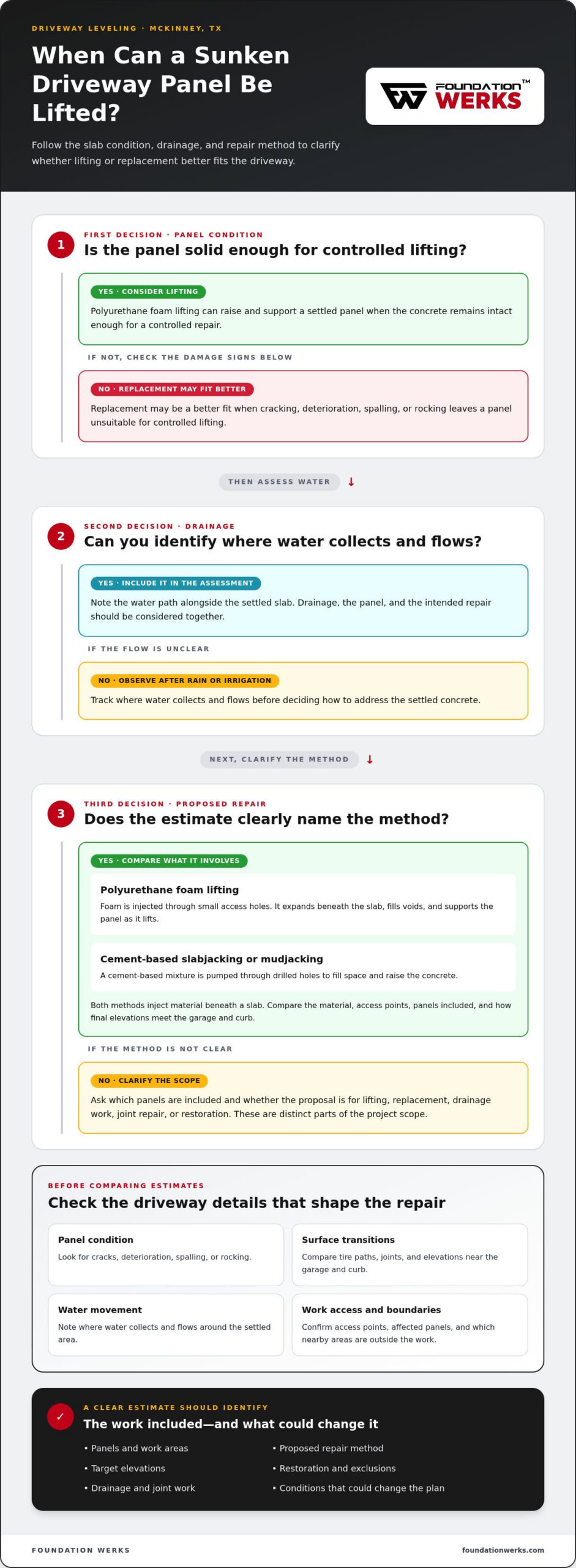
Polyurethane foam lifting can raise sunken concrete when driveway panels remain intact enough for controlled repair. The right method depends on panel condition, drainage, and whether replacement better fits the damage.
This video shows foam injection being used to fill voids and raise slabs:
Polyurethane Foam Leveling
Foam leveling raises an existing slab by injecting polyurethane through small access holes. The expanding foam fills voids beneath the concrete and supports the panel as it lifts. For a driveway, consider whether the affected sections are solid, how adjoining panels meet, and where water flows. These details help define a practical repair.
Slabjacking and Foam Method Comparison
How does concrete slabjacking compare with polyurethane foam leveling for driveways? Both methods inject material beneath a slab to fill space and raise concrete, but they use different materials. Polyurethane foam expands beneath the panel; slabjacking typically pumps a cement-based mixture through drilled holes. Compare the proposed method, access points, panels included, and how the final elevations meet the garage and curb.
McKinney Leveling and Mudjacking Providers
What driveway leveling methods are available in McKinney, TX? Options include polyurethane foam lifting, cement-based slabjacking or mudjacking, and concrete replacement when panels are too damaged to lift. A provider serving McKinney should explain which panels are included and distinguish lifting from replacement, drainage work, joint repair, and restoration. For permit questions, don’t assume the method alone decides the requirement. Confirm with the City of McKinney based on the project scope, particularly if the work includes replacement or changes to the driveway.
Reviews and Contractor Credentials
Reviews can show how a contractor handles a project, not just whether a surface looks level afterward. Look for examples involving driveways or patios, clear explanations of the repair method, and communication about the work included. Ask for a written scope that identifies panels, target elevations, restoration, exclusions, and conditions that could change the plan.
Concrete leveling may suit intact panels with settlement or uneven joints. Replacement may fit better when cracking, deterioration, spalling, or rocking leaves a panel unsuitable for controlled lifting. Compare estimates by separating leveling from replacement and noting drainage, joint work, and restoration. The cost depends on the case and is given after a quote request; panel condition, repair area, access, and included work shape the comparison.
Service coverage in McKinney and the Dallas-Fort Worth area
Project location matters because a driveway, commercial entrance, and warehouse floor face different demands. In McKinney and the Dallas-Fort Worth area, define the property, slab, and work area before comparing estimates.
Estimates in McKinney
An estimate for a McKinney property should identify the concrete slabs included and the proposed repair. It should separate lifting from replacement, drainage, joint work, restoration, and third-party services. That breakdown helps homeowners and commercial property managers compare scopes rather than relying on one total. For a cracked driveway, check that the estimate names affected panels and explains how the surface will relate to the garage and curb.
Foundation Werks offers free estimates. Review what the estimate covers, including the site assessment, repair method, work areas, and any conditions that could change the plan. For a sinking patio or commercial walkway, note whether the proposed work addresses the concrete alone or also related drainage and joints. A clear scope makes it easier to compare proposals for the same McKinney property.
Residential and commercial projects differ in how the concrete is used. A home driveway may involve garage access, tire paths, and sidewalk transitions. A commercial entrance or warehouse floor may need attention to operating surfaces and nearby joints. Describe the area and its use so the estimate identifies the affected slabs and separates them from nearby concrete outside the work.
Nearby Service Area
Foundation Werks serves McKinney and the Dallas metropolitan area, including Frisco, Prosper, Allen, Fairview, Southlake, Irving, North Dallas, and the wider DFW area. Projects vary by property and slab: a McKinney home may need driveway or patio leveling, while a commercial site may need warehouse floor stabilization or concrete joint repairs. Location and slab type both shape the project scope.
A ZIP code helps identify a property, but include the full street address and exact work area when requesting an estimate. Note whether the concrete is at a home, business entrance, warehouse, or shared sidewalk. For example, a sidewalk managed by an association may need separate coordination. Naming the property and surface makes it easier to discuss service in McKinney and nearby communities.
Before requesting an estimate, gather a few practical details: the property address, the surface that is cracked or sinking, and which panels concern you. Add photos showing the slab’s edges and nearby transitions. Those steps help describe a project clearly across McKinney and the Dallas-Fort Worth area. To explore concrete leveling options, use the service information relevant to your property and surface.
Driveway, patio, sidewalk, garage-floor, and foundation slab leveling
In McKinney, soil moisture, poor compaction, and erosion can contribute to settled concrete. A useful evaluation considers the slab, its use, and drainage together.
Driveway and Walkway Leveling
For a driveway, look at tire paths, panel joints, cracks, and elevations near the garage and curb. These details show how uneven sections affect vehicle access and surface drainage. Concrete lifting can raise a suitable slab; mudjacking is another slab-raising method. On sidewalks, check the transitions between panels and note whether the surface is public or association-controlled, as that may require coordination.
Patios and pool decks need attention to nearby steps, doors, and edges. A sunken patio panel beside a doorway affects a different transition than one along a garden border. At a pool deck, consider how settled sections meet the pool edge and nearby slabs. Include visible cracks, drainage paths, and access around the area in the assessment.
Evaluate a garage floor in relation to its threshold and adjoining driveway, not just its own surface. Note where water collects and whether the floor has cracked or settled near a wall. Concrete lifting may work for a solid slab that can be raised in a controlled way. Damaged or deteriorated concrete may need another repair approach, including replacement.
Project Timing and Driveway Use
How long does driveway leveling take, and how soon can the driveway be used? In McKinney, leveling may take from 1 hour to most of the day, depending on the repair area. The corrected concrete area can be walked on immediately after leveling. Ask the project scope to identify the panels being raised and the work sequence, so you can plan around vehicle access.
Foundation slabs need a separate assessment from exterior concrete. A sunken sidewalk or driveway can affect surface drainage without showing that the building slab has moved. If you’re also concerned about interior floors, walls, doors, or windows, document those signs separately. This keeps an exterior concrete project focused on the slab being repaired rather than treating different symptoms as one issue.
Before an evaluation, photograph uneven joints from several angles and include a fixed reference, such as a garage, step, curb, or pool edge. Note where water travels and which sections feel unstable underfoot. For a McKinney driveway, these observations make the project easier to describe and help compare proposed elevations across adjoining panels.
Drainage, runoff, and grading assessment
In McKinney, soil moisture changes, poor compaction, and erosion can contribute to cracking and settlement. Water moving beneath a driveway can carry supporting soil away, leaving sections uneven or sunken. Runoff may also collect beside a slab. If water pools there, trace its path before choosing between concrete raising and replacement.
Start by tracking the water. After rain or irrigation, note where runoff enters the driveway area, where it collects, and where it flows next. Check whether the same pattern appears beside the garage, curb, or patio edge. These observations help distinguish a settled panel from a drainage pattern affecting nearby surfaces. A wet spot shows where water remains, but not necessarily where it came from.
Then inspect the driveway in dry conditions. Look for low spots, open joints, cracks, and edges where soil appears washed away. Check whether puddles follow the slab’s slope or gather along one side. A sunken panel can direct runoff toward a garage or walkway, while erosion may contribute to further settlement. Record any tripping edge separately from drainage concerns.
A grading assessment considers how the surrounding ground meets the concrete and where runoff can flow. Compare the driveway edge with nearby soil, the curb, and the garage threshold. A proposed lift should account for those relationships, not just the height of one panel. If raising the slab would leave water without a clear path away, include drainage in the project plan.
Choose a repair approach after considering both the slab and water movement. Concrete raising can adjust a suitable panel, but it does not redirect runoff across the property. Drainage may need separate work. Replacement may suit a panel that is too damaged to raise. The assessment should identify what is driving the issue and distinguish concrete work from drainage work.
Bring useful observations to the evaluation. Note when water appears, whether irrigation changes the pattern, and which direction it flows. Photograph pooling beside the slab and any nearby low point. Point out tripping edges, garage access, and the condition of the surrounding ground. These details help define the repair method and target elevations.
Polyurethane foam driveway lifting and leveling
Polyurethane foam lifting can raise settled driveway panels by filling voids beneath the concrete. In McKinney, it can suit solid sections where controlled lifting can restore practical transitions to the garage, curb, or walkway. Assess the slab and water path before choosing a repair.
A sound plan begins with the surface. Identify the panels that have settled, inspect their edges and cracks, and note how each section meets neighboring concrete. A panel that remains suitable for controlled lifting presents a different project from concrete that is badly cracked, deteriorated, spalling, or rocking. In those cases, replacement may be more appropriate than lifting.
During foam lifting, technicians drill access holes through the affected slab and inject polyurethane below it. The expanding material fills voids and supports the panel as it rises. The goal is not simply to make one spot higher. The target should account for nearby panels and practical transitions at the garage, curb, and walkway.
Before work begins, define the repair area. Identify the included panels, access around vehicles or landscaping, and any joints needing separate attention. Then consider drainage. If water collects at the driveway edge, raising concrete alone will not redirect it. The water’s route and destination should inform the repair plan.
During lifting, controlled adjustment matters. The slab should meet its intended elevation without creating an abrupt edge beside adjoining concrete. Compare the driveway panel with the garage threshold and sidewalk transition. These reference points help define a usable surface and reduce uneven joints across the repaired area.
Concrete leveling in McKinney may take from 1 hour to most of the day, depending on the repair area. The corrected area can be walked on immediately after leveling. Vehicle access should follow the project’s instructions, particularly if work covers the route between the street and garage. Plan the work area so parked cars and stored items don’t obstruct access.
Keep expectations grounded in the site. Soil moisture, erosion, and drainage patterns can affect surrounding ground over time. A durable result depends on choosing a suitable slab, setting practical target elevations, and considering water movement. Foam lifting supports concrete from below; it cannot prevent future changes in site conditions.
For an evaluation of settled concrete and a repair plan, explore polyurethane concrete raising.
Foundation Werks: Polyurethane Concrete Raising
Foundation Werks provides Polyurethane Concrete Raising for suitable settled driveway and other concrete slabs. It can help when panels remain intact and controlled lifting fits the site. If concrete is badly cracked or deteriorated, Concrete Replacement may be more appropriate. Drainage concerns can call for French Drain Installation, while Commercial Concrete Crack and Joint Repairs address commercial concrete joints and cracks.
When requesting an estimate, describe the settled panels, how they meet the garage or curb, and where water collects. These details help define whether concrete raising, drainage work, joint repairs, or replacement fits the project.
Contact Foundation Werks to discuss your concrete leveling project.
Choose a Clear Next Step for Your Driveway
The next useful step is deciding what a successful surface needs to do for your property. For driveway leveling in McKinney, TX, consider how the driveway connects to the garage, sidewalk, and street. Identify the transitions that matter for everyday access. This gives the evaluation a practical reference beyond appearance.
Keep the decision focused on the concrete and its surrounding needs. If a solid panel is suitable for controlled lifting, raising it may fit. If it is too damaged, replacement offers another option. Drainage, commercial joints, and nearby slabs can also shape the scope. A clear outline of your priorities helps keep the project discussion specific.
Foundation Werks offers Polyurethane Concrete Raising, Commercial Concrete Crack and Joint Repairs, and Concrete Replacement. These services address different needs, from raising settled concrete to repairing commercial joints or replacing damaged slabs.
With a clear project goal, you can move forward with greater confidence in the next step.
Frequently Asked Questions
Does expanding foam lift concrete?
Yes. Polyurethane foam injected beneath a concrete slab expands into voids and raises the supported section. Foundation Werks uses closed-cell polyurethane foam containing over 40% recycled materials. The foam cures in approximately 20 minutes, and the repaired surface is usable immediately after that cure. For example, a sunken driveway panel can be raised without replacing the entire slab when its condition suits lifting.
How long does polyjacking last?
Foundation Werks uses closed-cell polyurethane foam that does not break down over time. That describes the foam itself, not a promise that soil or drainage conditions will never change. Site conditions can affect concrete movement, so consider what contributed to settlement, such as runoff or soil moisture. Keep a record of the repaired area, nearby joints, and drainage concerns noted during the assessment.
How much does concrete leveling and void filling cost?
The project estimate depends on the repair scope, including the area being raised, access, and whether the work includes void filling or other concrete repairs. A small void beneath one slab differs from stabilization across a larger surface. Foundation Werks provides clear estimates based on the project rather than one price for every property. Compare the work included and any exclusions so you understand the scope.
Need Concrete Repair?
If concrete has settled, cracked, or developed a void beneath it, first identify the affected area and how it is used. Foundation Werks offers Polyurethane Concrete Raising, Commercial Concrete Crack and Joint Repairs, and Concrete Replacement. A commercial joint repair, for example, is different from raising a settled driveway panel. Matching the repair to the condition helps define a clear project scope.
How much does driveway leveling cost in McKinney, TX?
Driveway leveling costs in McKinney depend on the number and condition of affected panels, access to the work area, and whether the project includes related joint or drainage work. A driveway with a few settled sections may need a different scope from one requiring broader repairs. Identify the panels and note the garage and curb transitions to help define the estimate.
What is the average cost per square foot for driveway leveling in North Texas?
A single average per-square-foot figure can mislead because the work depends on more than surface area. Panel condition, voids beneath the slab, access, and repair method all affect the scope. Two driveways of similar size may need different work if one has isolated settlement and the other has broader damage. Compare estimates by the panels and repair tasks included, not area alone.
Which driveway leveling companies serve McKinney, TX, and how do their reviews compare?
Foundation Werks serves projects in McKinney and nearby communities, including Frisco, Dallas, Prosper, Allen, Fairview, Southlake, Irvin, North Dallas, and DFW. Its website displays a 4.9 out of 5 Google rating based on Trustindex-verified reviews. When reading feedback, focus on comments about similar work, such as driveway lifting, communication, and completion quality. Reviews about a different concrete project may not match your needs as closely.
How long do driveway leveling repairs last, and what warranties are offered?
Foundation Werks’ closed-cell polyurethane foam does not break down over time, while site conditions can still influence concrete movement. Warranty coverage is separate from material durability. Read the written project terms for the work covered, exclusions, and how the document addresses future movement. Keep the estimate and completion details with those terms to understand the repair scope and its documentation.