

A sunken garage floor doesn’t automatically need replacement. The cost of garage floor leveling in Dallas depends on the area, slab condition, extent of settlement, and whether void filling is needed. Foundation Werks provides a clear estimate based on the project. Severely damaged concrete may need a different repair approach.
An uneven garage floor can complicate parking and create trip hazards. Before choosing a repair, it helps to understand what affects the estimate and whether the slab can be lifted. This guide covers common causes of settling, repair methods, and practical ways to compare proposed work.
You’ll also learn why Dallas garage floors can settle or crack, how polyurethane foam lifting compares with mudjacking, and what to look for in a warranty. The goal is to help you understand the options and the factors behind a repair estimate, without confusing a general cost guide with a project-specific quote.
Key Takeaways
- Understand which project details shape a leveling or void-filling estimate, so you can make sense of the scope behind a quote.
- Learn how Dallas soil changes, runoff, vehicle weight, and other conditions can contribute to settling or cracks.
- Compare polyurethane foam lifting with mudjacking to see how the methods differ beneath the slab.
- Know what to look for in warranty coverage, including which work and conditions the terms address.
- Use the slab’s condition and the problem’s cause to understand when leveling may suit a garage floor and when replacement may be more appropriate.
How much does concrete leveling and void filling cost?
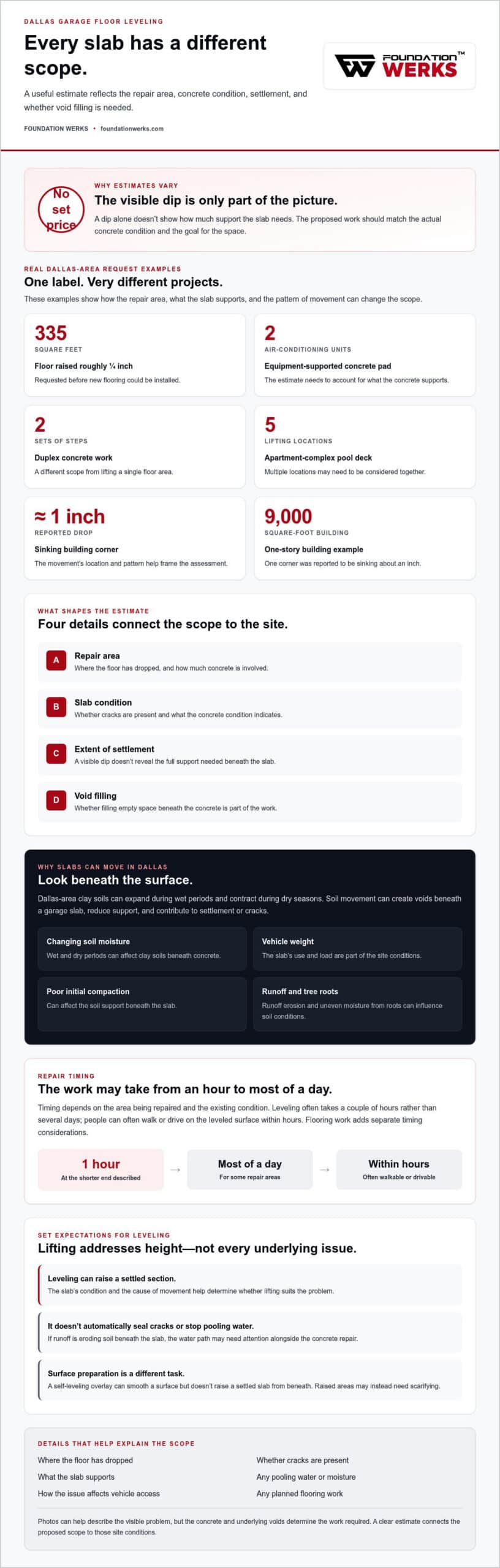
There isn’t one set price for every Dallas garage floor. The estimate depends on the repair area, concrete condition, amount of settlement, and whether void filling is needed. A visible dip alone doesn’t show how much support the slab needs, so the proposed work should reflect the actual conditions.
Dallas customer requests show how varied the work can be. One request involved raising a floor roughly 1/4 inch across 335 square feet before new flooring could be installed. Another concerned a concrete pad supporting 2 air-conditioning units. These examples show why estimates need to reflect both the repair area and what the concrete supports.
Other local requests involved 2 sets of steps at a Dallas duplex, 5 lifting locations on an apartment-complex pool deck, and a building corner sinking about an inch. Each describes a different scope. A single settled corner may call for a focused assessment, while multiple locations require the contractor to consider how the areas relate.
For a useful estimate, a Dallas-Fort Worth contractor needs to understand the slab’s condition and the repair goal. Share where the floor has dropped, whether cracks are present, and what sits on the slab. Photos can help explain the visible problem, but the concrete and underlying voids determine the work required. The estimate should connect the proposed scope to those conditions.
Residential and commercial projects differ in use and scale. A residential garage may involve vehicle access and an uneven parking surface. Commercial concrete work can involve steps, pool-deck locations, or a pad carrying equipment. Those examples help clarify why the estimate must reflect the actual site, not just the label “leveling.”
Which Dallas contractors specialize in garage floor leveling, and how do their reviews compare? Concrete-lifting and void-filling contractors are the relevant specialists to compare. Reviews are most useful when they describe similar concrete work, clear estimates, communication, and follow-through, rather than relying on star ratings alone.
To discuss an estimate, identify the affected slab, describe your goal, and note any cracks or equipment it supports. For properties in Frisco, McKinney, Dallas, Prosper, Allen, Fairview, Southlake, Irvin, North Dallas, and DFW, these details help Foundation Werks understand whether you need a residential garage or commercial concrete repair, and whether lifting or void filling fits the concern.
What Causes Concrete to Settle or Crack in Dallas?
Dallas-area clay soils can expand during wet periods and contract during dry seasons. This movement may create voids beneath a garage slab, reducing support and contributing to settlement or cracks. Vehicle weight, poor initial compaction, runoff erosion, and uneven moisture from tree roots can also affect the soil. These factors influence support beneath the slab, not just its visible surface.
Signs to watch include a floor that slopes or feels uneven, widening cracks, pooling water, or a garage door that no longer operates smoothly. An uneven surface can also make parking harder and create trip hazards. A reported Dallas example involved a one-story building measuring 9,000 square feet, with one corner sinking about an inch. The location and pattern of movement help distinguish a local slab issue from broader foundation concerns.
Permit and building-code requirements depend on the repair scope. The key distinction is whether work addresses an existing concrete surface or also changes structural elements or drainage. Identify the planned work before scheduling so the relevant local requirements can be considered.
Leveling can raise a settled section, but it doesn’t automatically seal cracks or stop water pooling. If runoff is eroding soil beneath the slab, the water path may need attention alongside the concrete repair. The repair plan should consider crack patterns, slab movement, and moisture sources to determine whether lifting fits the problem.
Concrete repair timelines depend on the area, existing condition, and flooring system. Leveling may take from 1 hour to most of a day, depending on the area being repaired. It usually takes a couple of hours rather than several days, and people can often walk or drive on the leveled surface within hours. Flooring work adds separate timing considerations.
Garage, basement, retail, warehouse, and exterior floors have different demands. A garage supports vehicles, while a warehouse floor may need to accommodate ongoing operations. Basement surfaces can be affected by moisture, and exterior concrete faces runoff and weather. Retail flooring may need a smooth base for its finish. Match the repair plan to how the space is used.
For some uneven or damaged floors, a self-leveling concrete overlay can create a smoother surface. It doesn’t raise a settled slab from beneath or resolve the source of its movement. Raised areas may instead need concrete scarifying, which grinds down high spots. The prepared surface profile must suit the flooring system, since an overlay or finish needs an appropriate bond and base.
Start by noting where the floor slopes, where cracks appear, and whether moisture or pooling is present. Consider how the issue affects the garage door, vehicle access, and any planned flooring. These observations help clarify whether the concern involves surface preparation, slab leveling, drainage, or a broader foundation issue.
Polyurethane foam lifting compared with mudjacking
Polyurethane foam lifting and mudjacking both raise settled concrete from below. Polyurethane foam is injected through small holes beneath the slab, where it expands to fill voids and lift the concrete. Mudjacking pumps a cement-based slurry through access holes. The methods differ in material and approach.
With polyurethane foam lifting, technicians place injection points where the slab needs support. The expanding foam fills voids and applies upward pressure to help bring the concrete toward its intended position. For a garage, the repair plan should account for slab movement, cracks, and the area needing support.
Mudjacking also works beneath the slab: a crew pumps slurry through drilled openings to fill space and raise concrete. The material and injection approach differ from polyurethane foam, so the method should suit the slab, the voids, and the repair goal. Neither method repairs every crack or addresses every cause of settlement.
Is concrete slab jacking or self-leveling concrete better for a garage floor? Slab jacking is used when concrete has settled and needs support from below. Self-leveling concrete addresses surface variation by adding material above the existing slab. The right approach depends on whether the problem is lost support underneath or an uneven surface.
Garage floor repair in Dallas may involve polyurethane foam injection, mudjacking, or a surface overlay. Foam injection and mudjacking lift concrete from below, while an overlay smooths the surface. A proper assessment considers where the slab has dropped and whether cracks or voids affect the repair.
Separate concrete leveling from garage-floor finishing. A polyurea flake coating adds a decorative finish, but it doesn’t raise a settled slab. Applying a coating over uneven concrete can leave the slope or unsupported area unresolved. The concrete should be suitable for the chosen coating system.
Start with the slab’s condition and intended use. Note where the floor dips, whether cracks cross the area, and whether the garage door or vehicle access is affected. Then decide whether your goal is to restore support, improve surface flatness, or prepare the floor for a finish.
For example, a sunken slab section with a void may need lifting from beneath. A stable slab with minor surface variation may instead need preparation for an overlay or coating. These are different repairs, even if both can improve how the garage floor looks or functions.
Ask for a clear explanation of the proposed method, injection locations, and intended result. A sound plan relates the repair to the slab’s condition rather than assuming one material suits every garage. This helps homeowners compare leveling approaches and understand what each method is intended to do.
Work warranties and coverage
A written warranty explains what work is covered and under which conditions. For a garage slab, distinguish concrete leveling from any crack repair or floor finish. Coverage for one part doesn’t automatically include the others. Review the written terms alongside the estimate before work begins.
The words “lifetime warranty” don’t define coverage on their own. The document should specify whose lifetime applies, which repair is covered, and what conditions limit coverage. For example, workmanship coverage may not address later soil movement or water erosion. The written terms determine what the warranty means.
Review these details in the estimate and warranty:
- Covered work: Identify the exact slab area and repair method.
- Covered issues: Distinguish lifting performance from cracks, drainage, or coating concerns.
- Limits: Note conditions that may affect coverage, such as changes outside the repaired area.
- Claim steps: Find how to document a concern and what information the warranty requires.
This distinction matters when a garage has both a settled slab and a separate surface finish. If an estimate includes lifting but not coating, the finish may fall outside the lifting warranty. Likewise, a coating warranty may not cover movement beneath the concrete. Keep the repair scope and coverage descriptions aligned.
Commercial properties need the same clarity. A warehouse repair may cover a defined floor section while nearby joints or cracks remain outside the scope. The written estimate should identify the repair area and describe the work, helping property managers distinguish covered work from damage elsewhere.
Safety concerns also deserve clear documentation. A raised edge or uneven surface can create a hazard, but a warranty doesn’t replace a clear repair scope. Record the location, visible condition, and intended outcome. Before-work photos can help document the original condition.
Before accepting an estimate, match each proposed task to the warranty language. Check whether lifting, crack work, and a floor finish are described separately. Keep the final estimate, warranty, and repair records together so the coverage is easier to understand if questions arise later.
For garage floor leveling in Dallas, don’t compare warranties by duration alone. Read what the written coverage protects, which conditions it excludes, and how the repair scope is defined. This gives homeowners and commercial property managers a practical way to understand the terms without assuming they cover every future slab issue.
Garage floor leveling in Dallas
Across Dallas, an uneven garage slab can affect parking, foot traffic, and garage-door operation. Start by identifying which sections have moved and how you need the floor to function after repair. A level-looking surface alone doesn’t show whether the slab has lost support underneath.
Use these steps to prepare for a useful assessment:
- Map the affected area. Mark dips, raised edges, and visible cracks across the garage floor.
- Note how the space is used. Record vehicle parking, storage, and regular traffic patterns.
- Describe the practical problem. Include a door that catches or water that collects after rain.
- State the intended result. Explain whether you need safer access, improved drainage, or preparation for a floor finish.
These details help distinguish a localized slab issue from a wider concern. A garage door that binds near one corner, for example, may point to movement in that area. Cracks alone don’t show how far a slab has shifted. Their location and pattern matter.
Water management is also worth considering in Dallas. Runoff reaching a garage edge can erode supporting soil, while moisture changes affect expansive clay. If water pools, note where it starts and collects. Leveling can address settled concrete, but a repair plan should also consider the water source.
Driveways and garage slabs serve different traffic needs. A driveway meets outdoor runoff and vehicle entry, while a garage floor supports parked vehicles and indoor use. A durable plan considers the affected concrete and how people use it. It should also clarify whether the goal is leveling alone or preparing the surface for a finish.
Concrete leveling in Dallas may take from 1 hour to most of a day, depending on the area being repaired. The work may take a couple of hours rather than several days, and people can often walk or drive on the surface within hours. The project’s area and concrete condition influence the schedule, while a separate flooring installation can affect the overall timeline.
For a settled garage section, prioritize restoring support and considering any related runoff. If the slab is stable but rough, surface preparation may be more relevant than lifting. This helps avoid choosing a finish to solve a movement problem or expecting leveling to resolve every drainage concern.
In Dallas, a clear scope identifies the affected concrete, explains the proposed repair, and describes the intended result. Use your notes about traffic, cracks, water, and door operation to explain the issue accurately.
Foundation Werks: Polyurethane Concrete Raising
Foundation Werks provides polyurethane concrete raising for settled slabs and voids beneath concrete. This can suit a garage floor that has dropped and needs lifting. The Quick Level system injects patented, eco-conscious polyurethane foam beneath the slab to help raise and support it.
The foam is made from recycled materials, and the method uses small injection holes. If cracks, drainage, or slab damage also need attention, the right scope may involve concrete crack and joint repairs, a French drain, or concrete replacement. Each addresses a different condition, so matching the work to the cause matters.
Share where the floor has settled, describe visible cracks, and note any pooling or drainage concerns. That gives the team useful context for discussing the repair approach. Contact Foundation Werks to talk about your garage concrete.
Plan the next step with confidence
A clear plan for garage floor leveling in Dallas starts with a practical goal: decide how you need the space to work after repairs. Consider vehicle access, storage, drainage, and any floor finish you may want later. Sharing those priorities helps focus the repair discussion on your garage, not just the visible dip.
Before reaching out, note where the floor has shifted, what you’ve noticed about cracks or water, and whether the garage door moves smoothly. Photos can help show the affected area. Ask about the proposed work, its intended result, and the written coverage.
Foundation Werks can discuss concrete concerns and the repair approach that fits the slab’s condition. A clear conversation is a useful next move, whether you’re planning a repair now or organizing your options.
With these details in hand, you can discuss the repair with greater clarity.
Frequently Asked Questions
What about DIY concrete raising?
DIY concrete raising is possible, but controlling the lift evenly can be difficult. One sidewalk project raised a slab about 3 inches, showing how much movement a do-it-yourself attempt can involve. That example isn’t a target for every slab. Before attempting a lift, consider the slab’s condition, nearby concrete, and how uneven pressure could affect the surface. A badly cracked slab may need a different repair approach.
Why should I choose concrete leveling instead of just replacing my concrete?
Concrete leveling may suit a solid slab that has settled but remains intact. Replacement may make more sense when the concrete is extensively damaged. One useful condition to assess: a slab may no longer be repairable if its cracked pieces are smaller than 3 feet square. The deciding point is whether the existing concrete can be lifted and supported, not simply whether cracks are visible.
How much does garage floor leveling cost in Dallas per square foot?
There isn’t one per-square-foot price for every Dallas garage. Foundation Werks provides a project estimate after reviewing the repair needs. A square-foot measurement describes the area, but not the slab’s condition, settlement, or whether void filling is needed. Those details shape the work and estimate.
What factors affect the cost of garage floor leveling in Dallas?
The estimate reflects more than the garage’s overall size. The affected area, slab condition, settlement, and need for void filling all shape the work. The repair goal matters too: raising a section for vehicle access differs from preparing a surface for flooring. Mention cracks, water erosion, and anything the slab supports when describing the project.
How long does garage floor leveling take, and when can vehicles return to the garage?
Timing depends on the area being repaired and the concrete’s condition. For Foundation Werks polyurethane foam raising, the foam cures in 20 minutes, and the repaired surface is usable immediately after that 20-minute cure. Clear vehicles and stored items from the work area beforehand. Ask how the repair plan affects access to your specific garage and when you can use the completed surface.
What warranties and risks should homeowners check before hiring a garage floor leveling contractor?
Read the written terms for covered work, exclusions, and the steps for making a claim. Check whether coverage applies to the repaired section and whether it transfers if the property is sold. Save the estimate and photos of the slab before work. For homeowners in Frisco, McKinney, Dallas, Prosper, Allen, Fairview, Southlake, Irvin, North Dallas, and DFW, clear records help document the agreed scope.
Which Dallas contractors specialize in garage floor leveling, and how do their reviews compare?
Concrete-lifting and void-filling contractors are the relevant specialists to compare. Look for reviews describing similar work, clear estimates, communication, and follow-through, rather than relying on star ratings alone.