What if the right industrial floor repair starts with the slab beneath the surface, not a new floor finish? Uneven or settling concrete can disrupt equipment access, employee movement, and daily operations, so it helps to understand the issue before planning work. Choosing industrial floor repair contractors Dallas facility managers can rely on means finding a team that can distinguish slab movement from cracks, joint damage, or a surface-finish issue.
This guide explains how to identify a repair approach that fits the concrete problem and what information helps shape a commercial project plan. You’ll learn when raising and stabilizing a slab may be appropriate, when crack or joint repair may be a better fit, and how these services differ from interior flooring work. We’ll also cover practical planning considerations for an active facility. Foundation Werks serves the Dallas area with commercial concrete raising, void filling, and crack and joint repairs. Its polyurethane foam process uses small access holes and avoids heavy equipment, helping keep the work area manageable. Raised concrete can be used the same day after the work is completed.
Key Takeaways
- Map uneven areas, cracks, damaged joints, and suspected voids to help clarify what your industrial slab may need.
- Match the repair to the problem: lifting and void filling address slab movement and support, while crack and joint repairs target localized damage.
- Slab condition matters. Solid concrete may be suitable for raising, while severe cracking can affect whether that approach fits.
- Document affected zones, access routes, equipment, and facility needs to make project planning more practical.
- Learn how industrial floor repair contractors Dallas, including Foundation Werks, can address commercial concrete raising, stabilization, void filling, and crack or joint repairs.
Industrial Floor Repair in Dallas: Identify the Slab Problem First
Uneven slab sections, visible cracks, damaged joints, changes in floor height, or areas that seem unsupported can all disrupt movement through an industrial facility. These signs deserve attention, but appearance alone can’t confirm what’s happening beneath the concrete. Record where each symptom occurs and note nearby equipment, travel paths, and work areas so a repair assessment has useful operating context.
The first question isn’t which finish to apply. It’s whether the concrete itself has moved, lost support, or sustained localized damage. Industrial floor repair contractors Dallas facility managers consider should distinguish slab repair from surface-finish work before recommending an approach.
Concrete joints can also affect day-to-day facility use. This video offers a closer look at joint problems in an industrial setting:
Signs an industrial concrete slab may need repair
Look for differences in height between adjoining sections, cracks that appear to change over time, and joints with damaged or uneven edges. A hollow-sounding area or a section that seems to flex may raise questions about support beneath the slab, but neither observation proves that a void is present. Note the location, approximate size, and whether the area affects forklift routes, storage, employee access, or other operations.
These records help connect visible symptoms to facility needs. They also give an assessment a clearer starting point without treating a crack or uneven surface as a diagnosis on its own.
Slab repair versus flooring installation
Concrete lifting and stabilization address movement or support beneath a suitable slab. Coatings, overlays, and finish installation address the concrete’s surface. One doesn’t automatically resolve the other: a new finish won’t raise settled concrete, while lifting a slab isn’t the same as installing a flooring system. Foundation Werks focuses on concrete repair, including commercial raising, stabilization, and crack and joint repairs.
Slab stabilization means supporting concrete that has lost support beneath it so the slab can be steadied and, when suitable, raised. For broader context on lifting methods and limitations, see this overview of concrete leveling. Facility teams reviewing warehouse conditions can also use a warehouse floor stabilization guide to frame questions about slab movement and support.
Industrial Floor Repair Methods: Match the Work to the Concrete
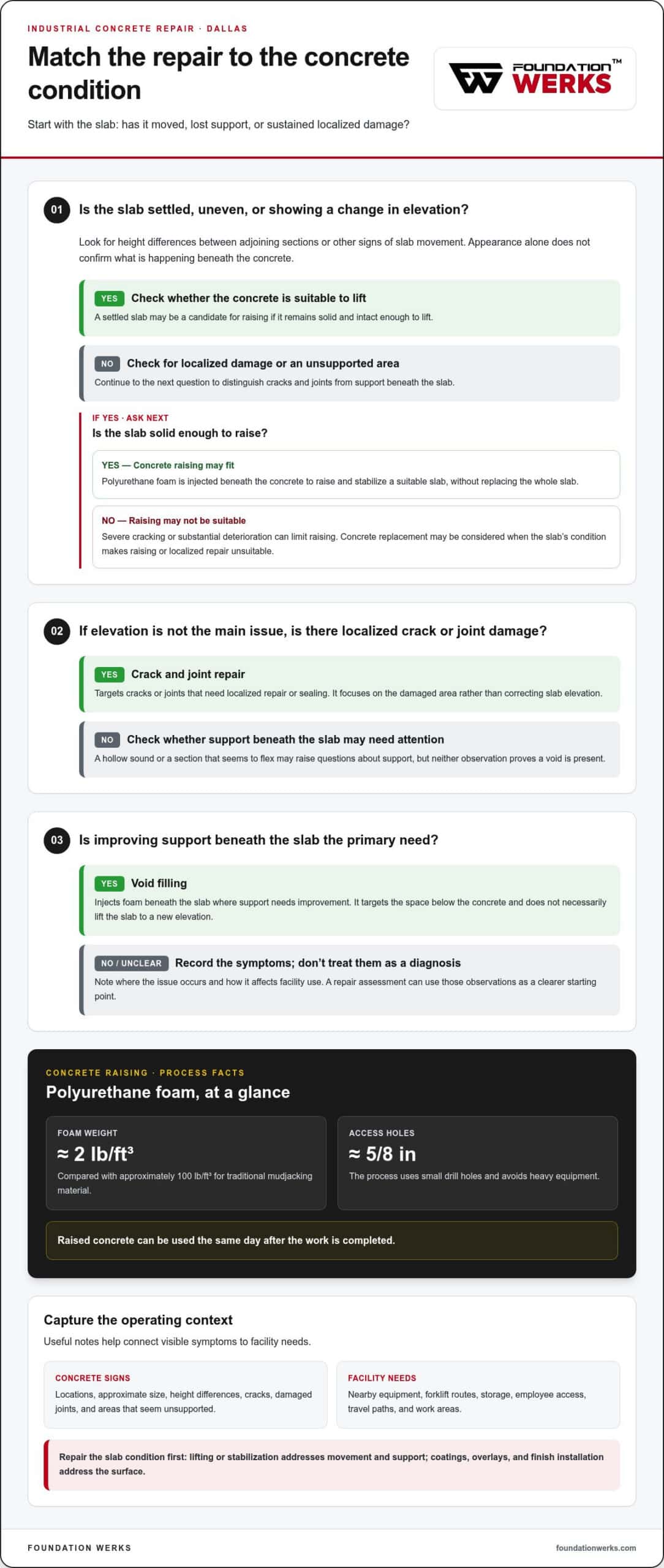
Once the slab issue is better understood, the repair method should match what the concrete needs. A settled but solid section may call for lifting. A crack, damaged joint, unsupported area, or severely deteriorated slab points to a different repair focus. The comparison below shows how these approaches differ.
| Method | Condition it addresses | Operational consideration |
|---|---|---|
| Concrete raising | A suitable slab that has settled or lost support and needs lifting. | Polyurethane foam is injected through small access holes, avoiding the need for heavy equipment. |
| Void filling | Unsupported space beneath a slab where support needs improvement. | Targets the space below the concrete; it doesn’t necessarily lift the slab to a new elevation. |
| Crack and joint repair | Cracks or joints that need localized repair or sealing. | Focuses on the damaged area rather than correcting slab elevation. |
| Concrete replacement | A slab section whose condition makes raising or localized repair unsuitable. | Involves replacing the affected concrete, so the work plan must account for the area’s use. |
When polyurethane concrete raising may suit an industrial floor
Raising may suit a solid slab that has settled but remains intact enough to lift. Polyurethane foam is injected beneath the concrete to raise and stabilize it without replacing the whole slab. The foam weighs approximately 2 pounds per cubic foot, compared with approximately 100 pounds per cubic foot for traditional mudjacking material. The process uses approximately 5/8-inch drill holes. Severe cracking can limit whether a slab is suitable, so its actual condition matters.
When cracks, joints, or voids need a different repair focus
Crack and joint repairs address localized damage; lifting and leveling address elevation or movement. Void filling injects foam beneath a slab where support needs improvement, even when raising isn’t the primary goal. These methods can address different parts of a facility’s concrete needs. For a closer look at localized damage, see the commercial concrete crack repair guide.
For facility managers comparing industrial floor repair contractors Dallas, the key is matching the proposed work to the observed concrete condition and operational priorities. Foundation Werks provides commercial concrete raising, stabilization, void filling, and crack and joint repairs for facilities across the Dallas metropolitan area. Its approach centers on repairing the concrete slab, while coatings and other finishes address the surface.
Is Concrete Raising Suitable for Your Dallas Industrial Floor?
Not every slab can be raised. Concrete raising may be an option when a slab has settled or lost support but remains solid enough to lift. Severe cracking or substantial deterioration can limit its suitability. A photo or one visible symptom can’t establish whether the concrete is sound beneath the surface, so the slab’s condition needs to guide the repair decision.
A slab’s ability to be raised depends on whether the concrete remains intact enough to lift and stabilize. That distinction helps facility teams weigh potential benefits against the floor’s condition, rather than assuming every low section can be corrected the same way.
What slab condition tells you about repair options
Visible cracks, broken edges, or uneven sections matter, but so does the slab’s overall integrity. A sound section with settlement may be a candidate for lifting. A heavily cracked slab may not be able to withstand the process as intended and could call for another repair approach. An assessment considers the affected area and the concrete’s condition together. A single photograph can show a symptom, but it can’t reliably determine whether the slab is suitable to raise.
That’s why industrial floor repair contractors Dallas facility managers consider should evaluate the concrete itself before settling on a method. The goal is to match the repair to the slab, not promise a particular result based on appearance alone.
How repair logistics affect facility operations
For a suitable slab, polyurethane foam is injected through small drill holes to raise and stabilize the concrete. The process avoids heavy equipment and uses approximately 5/8-inch holes. These smaller access points can help keep the work area more manageable. For outdoor concrete near a facility, less intrusive access may also reduce disruption to surrounding landscaping.
Projects typically take a few hours from start to finish, and raised concrete can be used the same day after work is completed. Those details can help managers plan around equipment routes and active work zones, though the schedule for a specific facility depends on the project. They don’t remove the need to assess the slab or coordinate access.
Foundation Werks uses polyurethane raising to address suitable settled commercial slabs. An assessment establishes whether the concrete can be lifted and stabilized or whether its condition points toward a different repair focus. A measured evaluation gives facility teams a clearer basis for planning work around employees, equipment, and ongoing operations.
Plan an Industrial Concrete Repair Project in Dallas
A clear project scope starts with useful observations from the facility team. Map affected areas, record visible symptoms, and connect each location to the work happening around it. This helps distinguish a repair need in a low-traffic corner from one that may affect a forklift route, loading area, or employee access.
Prepare useful information before a site assessment
Mark where the floor appears uneven, cracked, or potentially unsupported. Note how each area relates to daily traffic, equipment, storage, and active work zones. If known, include prior repairs or drainage concerns that may add context. Photos can help document locations, but they don’t replace an assessment of the slab itself.
- Map the affected areas: Mark symptoms on a facility plan or identify them by nearby equipment and work zones.
- Describe operational impact: Note access routes, equipment movements, and activities that may need to be considered during work.
- Share relevant history: Record past repairs or drainage observations when that information is available.
Foundation Werks scopes commercial concrete work around the project’s conditions, including slab concerns and facility needs. The uneven warehouse floor repair guide offers additional context for teams documenting changes across a warehouse floor.
Set expectations for work and follow-up
Before work begins, align the project plan with access routes, equipment, and areas that need to remain in use. Polyurethane concrete raising projects typically take a few hours from start to finish, but that’s a general project expectation, not a guaranteed schedule for every facility. The affected concrete can be used the same day after work is completed. Planning should still account for the specific work area and facility operations.
After the work, keep a record of the repaired locations and any observations relevant to future maintenance planning. If joints are the main concern rather than slab movement, the warehouse floor joint repair guide can help facility teams focus their planning on joint conditions.
For facility managers comparing industrial floor repair contractors Dallas, preparation makes the conversation more focused: document what you see, explain how the area is used, and clarify the access and operating needs that shape the project.
Choose Foundation Werks for Industrial Floor Repair Contractors in Dallas
Foundation Werks is based in McKinney and serves the Dallas metropolitan area with commercial concrete raising, stabilization, void filling, and crack and joint repairs. For facility managers comparing industrial floor repair contractors Dallas, the right fit starts with matching the service to the slab condition and the demands of the worksite.
What Foundation Werks brings to a commercial slab project
Foundation Werks uses polyurethane foam to raise and stabilize suitable concrete. The foam weighs approximately 2 pounds per cubic foot, compared with approximately 100 pounds per cubic foot for traditional mudjacking material. Installation uses approximately 5/8-inch drill holes and typically requires fewer holes than mudjacking, which can mean less patchwork afterward.
The process avoids heavy equipment and helps maintain a clean work environment without concrete or grout splatter. For an active facility, smaller access points and a more contained work area can make it easier to plan around equipment, staff, and daily operations. The work addresses slab movement and support, while commercial crack and joint repairs focus on localized concrete damage.
Customer testimonials praise the crew’s knowledge, professionalism, and work quality. That feedback reflects the value of clear communication and careful work on a commercial property, where repair planning needs to account for more than the concrete alone.
Take the next step for a Dallas-area facility
To begin planning, describe the affected floor areas and how they influence facility access, equipment movement, or routine work. Details about visible settlement, cracks, joints, or suspected voids can help frame the project conversation. Foundation Werks offers a free estimate, with project details guiding the proposed scope rather than a generic price assumption.
Call 800-464-9684 or request an estimate online.
Plan Your Industrial Floor Repair with Confidence
The right repair starts with understanding the slab problem. Concrete raising and stabilization may suit settled slabs that remain sound, while cracks, joints, and unsupported areas can call for a different focus. Documenting affected locations and facility needs helps shape a practical project plan.
Foundation Werks is based in McKinney and serves the Dallas metropolitan area with commercial concrete raising, stabilization, void filling, and crack and joint repairs. Its polyurethane process uses small access holes and avoids heavy equipment traversing landscaping, helping limit disruption around a facility. Customer feedback praises the crew’s knowledge, professionalism, scheduling flexibility, and work quality.
Choosing among industrial floor repair contractors Dallas facility managers can rely on is easier when the conversation begins with clear symptoms and operational priorities. Foundation Werks serves commercial properties in Frisco, McKinney, Dallas, Prosper, Allen, Fairview, Southlake, Irvin, North Dallas, and across DFW. Share which areas are affected and how they’re used to help focus the next steps.
Request a free estimate from Foundation Werks
A well-scoped repair plan can help your team move forward with greater clarity and keep facility needs in view.
Frequently Asked Questions
Can a sunken industrial concrete floor be raised instead of replaced?
Yes, a solid slab that has settled may be suitable for polyurethane concrete raising and stabilization. The method can address settlement without replacing the entire slab. However, the concrete’s condition matters: severe cracking may mean it’s too damaged to lift. An assessment considers the slab and project conditions before recommending an approach. A visible low spot alone isn’t enough to establish that raising is suitable or predict a specific result.
How long does industrial concrete floor repair take?
Polyurethane concrete raising typically takes a few hours from start to finish. The time needed for a specific facility depends on the work scope and site conditions, so this typical duration isn’t a guaranteed schedule. After the work is completed, the raised concrete can be used the same day. Facility teams can plan around the affected area and work activities, then coordinate operational needs based on the project plan.
Can a warehouse use its floor the same day after concrete raising?
Raised concrete can be walked on or driven on the same day the job is completed. This can help warehouse teams plan around repair work and limit disruption to facility routines. The affected area and project conditions still matter, so same-day usability doesn’t mean every operation across the facility will resume on an identical schedule. Discuss access routes, equipment movement, and work zones as part of planning.
How large are the drill holes for polyurethane concrete raising?
The access holes used for Foundation Werks’ polyurethane process are approximately 5/8 inch. The holes are described as nearly invisible, and the process typically requires fewer holes than mudjacking, which can mean less patchwork. Hole placement depends on the slab and repair plan, so every project won’t use an identical layout. These small access points can be a practical consideration for active commercial spaces.
Can severely cracked industrial concrete be raised?
Not always. Solid slabs may be raised and stabilized, but severe cracking can indicate that concrete is too damaged to lift. Cracks should prompt an assessment rather than an assumption that raising will work or cannot work. The appropriate repair depends on the slab’s overall condition and the damage present. A photograph or single symptom can help document a concern, but it can’t determine the repair approach by itself.
Does polyurethane foam add significant weight beneath an industrial slab?
Foundation Werks’ polyurethane foam weighs approximately 2 pounds per cubic foot. Traditional mudjacking material weighs approximately 100 pounds per cubic foot. These figures describe the materials used in the respective methods and show the difference in their weight. The comparison doesn’t determine whether a specific slab is suitable for raising; project decisions still depend on the concrete’s condition and the facility’s repair needs.
Does Foundation Werks serve industrial properties in Dallas?
Yes. Foundation Werks is based in McKinney and serves the Dallas metropolitan area with commercial concrete raising and stabilization, void filling, and crack and joint repairs. Facility managers looking for industrial floor repair contractors Dallas can discuss affected areas and operational concerns with the team. Call 800-464-9684 to request a free estimate.