

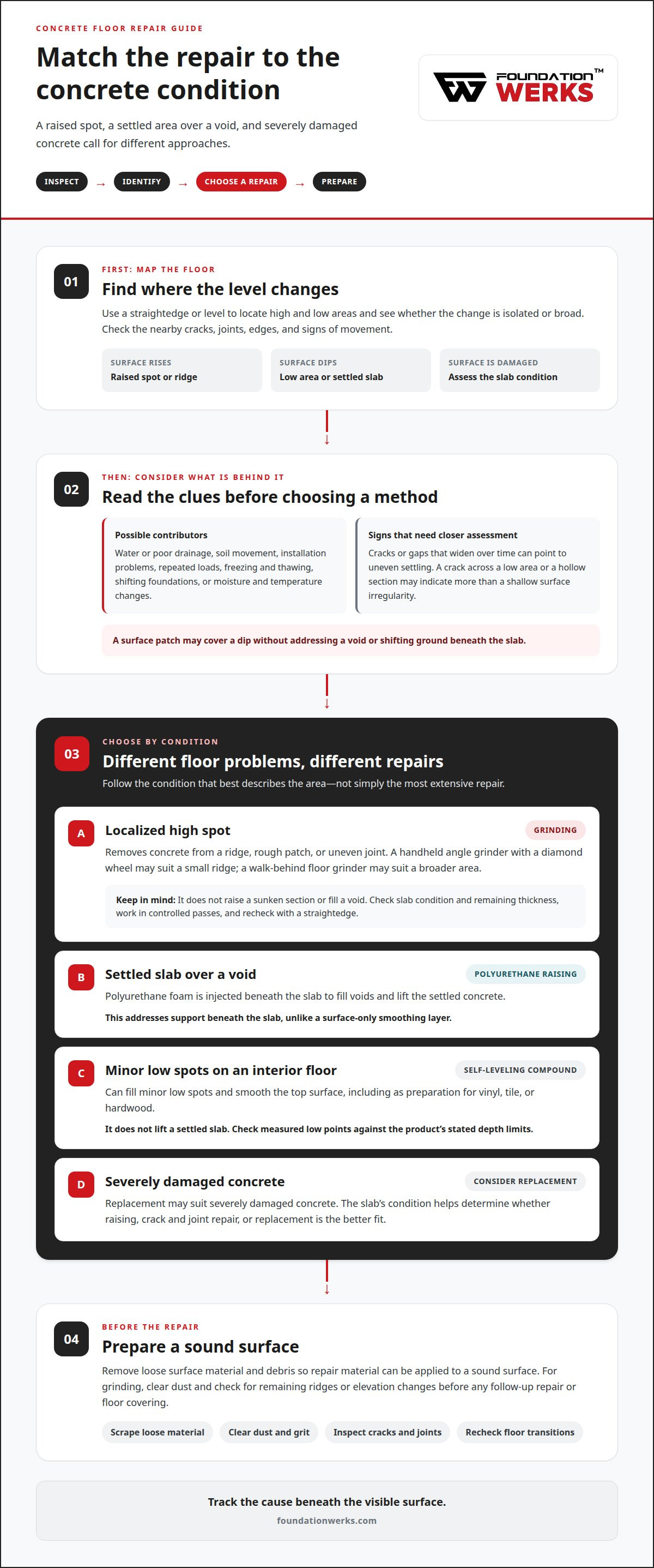
The most extensive repair is not automatically the right one. The best uneven concrete floor solutions depend on whether the issue is a raised spot, a settled area over a void, or more extensive slab damage. Grinding removes high spots, polyurethane concrete raising lifts settled slabs, and replacement may suit severely damaged concrete.
An uneven-looking floor can have several causes, so choosing a repair before understanding the problem may lead to the wrong solution. Learn what can make concrete shift or sink, and how grinding, slab lifting, and proper preparation address different conditions.
We’ll also explain the factors that help distinguish between surface correction, slab leveling, and replacement. That way, you can better understand which considerations matter for your floor and why the condition of the slab and the ground beneath it can shape the next step.
Key Takeaways
- Trace uneven areas to possible moisture, soil movement, installation issues, or changes beneath the slab before choosing a repair.
- Grinding may be an option for addressing high spots, but it removes concrete.
- Professional preparation includes removing loose surface material and debris so the repair can be applied to a sound surface.
- Widening cracks or gaps can signal uneven settling; surface patches may hide symptoms without addressing what is happening below.
- For warehouse floors, the condition of the slab helps determine whether raising, crack and joint repair, or replacement is the better fit.
1. Why Do Concrete Floors Become Uneven?
Water, soil movement, installation problems, and repeated loads can each change a concrete floor. A leaking pipe or poor drainage may weaken the ground beneath a slab, while continual machinery movement can wear down heavily used areas. Freezing and thawing, shifting foundations, and moisture or temperature changes can also affect floor levelness. The right repair depends on whether the problem is a high spot, a low area, or a void below the slab.
Leveling can improve how a floor looks and feels underfoot. Smoothing a raised edge or lifting a settled area can reduce trip hazards and create a more even route for equipment. For example, raising a low section of a warehouse floor addresses the dip that makes machinery travel unevenly. A more consistent surface can also improve the appearance of the floor.
Self-leveling compounds are used on interior floors, including as preparation for vinyl, tile, or hardwood. They can fill minor low spots and smooth the surface, but they do not lift a settled slab. A compound creates a smoother top layer; polyurethane concrete raising injects foam beneath the slab to fill voids and lift it. The type and extent of the unevenness help determine which approach fits.
There is no single nationwide permit rule for concrete floor leveling in the United States. Requirements depend on the local jurisdiction and scope of work, so structural changes may be treated differently from surface correction. Cost also varies with the floor’s area, condition, access, and repair method. A project estimate reflects those factors rather than a universal per-square-foot price.
A surface compound can correct minor variations, but its allowable thickness depends on the product instructions. Compare the floor’s measured low points with the compound’s stated depth limits to determine whether one application is suitable. DIY preparation commonly uses a scraper, stiff broom or vacuum, straightedge, mixing bucket, drill mixer, and smoothing tool. Remove loose material and debris before applying a compound.
Moisture can weaken the base or interfere with a surface repair, while cracks may reflect movement below. Cracks or gaps that widen over time can indicate uneven settling. Patch kits and added concrete layers may cover dips temporarily without addressing voids or shifting ground. Leveling can last as long as the original slab, but soil erosion and freeze-thaw cycles can affect its lifespan. Track the cause, not just the visible surface.
2. Grinding high spots
Grinding lowers a raised area by removing concrete from the surface. It can help with a ridge, rough patch, or uneven joint that creates a localized high spot. Place a straightedge across the floor to identify where the surface rises and how far the rise extends, then mark the area to define the work. Grinding corrects high points; it does not raise a sunken section or fill a void beneath the slab.
Before grinding, the repair plan should account for the slab’s condition and remaining thickness. Removing too much material can limit the options for further correction. A small, controlled pass is more appropriate than trying to flatten a broad area quickly. Recheck the surface with a straightedge as the high spot comes down. The goal is to blend the raised area into the surrounding floor, not create a new dip.
The equipment depends on the size and location of the high spot. A handheld angle grinder with a diamond wheel can address a small ridge, while a walk-behind floor grinder may suit a broader area. Dust extraction helps collect dust at the tool. Keep the work area clear and protect nearby walls, thresholds, and equipment. At a doorway, careful edge work helps keep the transition gradual.
Among practical uneven concrete floor solutions, grinding is best suited to excess material at the surface. It is a poor match for a floor that slopes because the slab has settled, or for a low area caused by missing support. Grinding surrounding high points may change the surface without addressing the cause. Cracks, hollow areas, and movement beneath the slab call for a closer assessment before material is removed.
After grinding, the surface should be checked for remaining ridges, loose particles, and changes in elevation. A vacuum or suitable cleanup method removes dust before any follow-up repair or floor covering. Choosing between uneven concrete floor solutions also means considering whether the surface needs additional preparation for another material. For a high spot beside a settled section, professional concrete repair guidance can help distinguish surface grinding from repairs that address movement below the slab.
3. Professional floor inspection and preparation
A professional inspection starts by mapping the floor, not selecting a repair material. A straightedge or level helps identify high and low areas and where the surface changes. For example, a warehouse aisle may have a localized depression beside a level loading area. Recording these transitions helps distinguish a broad slope from an isolated low spot. The inspection also considers cracks, joints, edges, and signs of movement around the affected section.
The floor’s condition and the likely cause should be considered together. Poor sub-base preparation, uneven pouring, or insufficient curing can contribute to an uneven slab. Water intrusion and changes in the ground beneath concrete can also matter. A crack across a low area or a gap that keeps widening gives different clues from a shallow surface irregularity. The pattern helps determine whether surface preparation is suitable or deeper repair is needed.
Preparation starts by removing loose surface material and debris. A scraper can lift flaking concrete, and a stiff broom or vacuum can clear dust and grit. Loose particles left beneath repair material can interfere with its bond to the floor. At a joint, expose sound edges rather than leaving crumbling concrete in place. Remove visible residue, oil, or other contamination before applying a surface material.
After cleaning, check the floor again to confirm the repair area and its edges. A straightedge helps show whether the planned work covers the actual low or raised section. Consider transitions to doorways, drains, equipment pads, and adjoining slabs, since they affect how the surface should meet nearby features. A repair that ignores a drain, for example, could alter how water moves across that part of the floor.
Professional preparation also means matching the method to the findings. A surface compound may address a shallow interior low spot, while a slab with a void beneath it needs a different approach. Extensive unevenness or structural concerns call for professional assessment rather than a DIY surface treatment. Adding material over active movement can hide symptoms without addressing the cause. The assessment should explain which condition the proposed repair is intended to correct.
Before work begins, clear stored items from the repair area so it is accessible for inspection and preparation. The work plan should identify the affected boundaries, surface condition, and any cracks or joints needing separate attention. If machinery operates nearby, its route across the floor can help show where repeated loading may be relevant. These observations make preparation specific to the slab rather than treating every uneven area alike.
4. Poor concrete installation
An uneven floor can begin before concrete hardens. Improper sub-base preparation may leave sections without consistent support, while uneven pouring can create high and low areas across the slab. For example, a floor that dips along one edge may reflect a problem in its base or placement, not wear at the surface. The visible shape helps guide an inspection, but it does not prove the cause by itself.
Sub-base preparation matters because the concrete rests on that layer. An uneven or poorly prepared base can cause the slab to settle inconsistently. A professional assessment considers the floor’s slope, localized dips, cracks, and nearby joints together. A broad slope differs from a small isolated depression, and that distinction helps determine whether the surface needs correction or movement beneath the slab also needs attention.
Uneven pouring can leave ridges, low sections, or inconsistent transitions. A straightedge can reveal where those changes occur, while checking doorways and adjoining slabs shows how the uneven area affects use. Grinding may suit a raised spot, but it cannot fill a low section. A surface compound can smooth minor interior unevenness, but it does not correct a void beneath a settled slab.
Curing is another part of installation. Concrete needs sufficient time to cure before a finish or repair is applied. Applying a finish or repair before the concrete has cured sufficiently can complicate the work. The required preparation depends on the material being applied and the slab’s condition. Loose surface material and debris should be removed before application, so the repair meets a clean, sound surface rather than dust or flaking concrete.
Look at the pattern, not just one mark. A single raised edge may indicate a surface irregularity, while several low areas or cracks may point to a broader issue. Gaps that widen over time can signal uneven settling. Adding a layer may hide the floor’s profile without addressing movement underneath. An inspection should relate the visible defects to the installation and support conditions.
Choose a repair based on the findings. Minor interior surface variations may suit a self-leveling compound, while a slab with voids beneath it needs an approach that addresses the space below. Extensive damage may call for replacement rather than surface treatment. Matching the method to the cause avoids treating every uneven floor as a pouring problem. The slab’s condition, crack pattern, and support guide the next step.
5. Settling and shrinkage
Concrete can shrink as it cures, while changes in the ground beneath a slab can cause uneven settling. Shrinkage occurs within the concrete; settling changes the slab’s position as its support shifts. A floor can show both, such as a crack crossing a low section near an exterior wall. The distinction matters because filling a visible crack will not restore support beneath a settled area.
Watch how cracks and gaps change over time. Widening cracks or gaps can indicate uneven settling, especially alongside a sloping surface or separated slab edges. A crack that remains unchanged differs from one that continues opening. Note where the change appears, such as beside a doorway, column, or floor joint. Its location helps relate the visible damage to nearby ground conditions and slab movement.
Use a straightedge to compare the floor on both sides of a crack. If one edge is higher, the slab has shifted vertically, rather than simply opening at the surface. A level can help show whether a nearby section slopes toward a drain or wall. These observations describe the floor’s condition but do not establish the cause by themselves. A leak or poor drainage can weaken soil support, and ground movement can also contribute.
The repair should address the observed condition. Filling a void beneath a settled slab and raising the concrete differs from applying a surface patch. Polyurethane concrete raising injects foam beneath an existing slab to fill voids and lift it. A patch or added concrete layer may temporarily mask a dip or gap, but will not address settling or missing support below. Extensive slab damage may call for replacement instead.
Ground and slab conditions still matter after a repair. Concrete leveling may last as long as the original slab, while soil erosion and freeze-thaw cycles can affect its longevity. For example, water that continues washing soil from beneath a slab can contribute to renewed movement. Addressing drainage concerns and observing changes in cracks can help identify conditions that may affect the floor again.
For a floor with widening gaps or a noticeable height difference, consider concrete leveling for settled slabs as part of assessing the repair approach.
Foundation Werks: Warehouse floors
Foundation Werks provides uneven warehouse floor solutions in Dallas and nearby communities, including Frisco and McKinney. The right approach depends on the slab’s condition. Low areas caused by voids may call for polyurethane concrete raising, while damaged cracks and joints may need separate repair. For extensive slab damage, concrete replacement may be a better fit.
These options address different problems. Raising lifts an existing slab; crack and joint repairs focus on damaged seams or fractures. Replacement suits concrete that cannot be adequately repaired through those methods. The work takes into account the affected floor area and how the warehouse uses its space.
If settling, voids, or damaged joints are affecting your warehouse floor in Dallas, contact Foundation Werks to discuss repair options.
Choose a repair plan that fits your floor
A useful next step is to describe how the uneven area affects daily use. In a warehouse, note whether equipment crosses the area, whether cracks interrupt a joint, or whether the floor’s condition limits how the space functions. These details help frame a repair around the slab and its use, rather than treating every surface change alike.
The right uneven concrete floor solutions depend on the condition and support of the concrete. Foundation Werks offers Polyurethane Concrete Raising, Commercial Concrete Crack and Joint Repairs, and Concrete Replacement. Each addresses a different type of floor issue, so the observed damage and intended use guide the conversation.
Share where the affected area is, what you have observed, and how it impacts operations. This gives the discussion a practical starting point without assuming one repair suits every floor.
A clear plan helps you move forward with confidence.
Frequently Asked Questions
So, What’s the Best Concrete Repair Option?
The best option depends on whether the problem is at the surface or beneath the slab. A raised ridge may suit grinding, while a settled slab over a void may need lifting. Extensive concrete damage may require replacement. For example, a level-looking surface with a slab that rocks under load points to a different repair need than a shallow rough patch. Match the method to the defect, not just its appearance.
Why Do Concrete Floors Become Uneven?
Concrete floors can become uneven because of moisture, soil movement, poor drainage, heavy use, or installation problems. A leaking pipe can affect the ground beneath a slab, while repeated machinery traffic can wear down a busy route. Tree roots and inadequate soil compaction can also contribute to sinking. Note where dips, cracks, or slope changes occur to help identify what to investigate before choosing a repair.
What causes an uneven concrete floor, and how can I tell whether it is settling or a surface issue?
Settling involves movement of the slab, while a surface issue affects the concrete’s top layer. A crack or gap that widens over time, or a noticeable height difference across a crack, can point to movement. A localized ridge without changing cracks may be a surface irregularity. Compare both sides of a crack and note whether the gap or height difference changes. These observations can guide a closer assessment.
When should you use concrete grinding, patching, or a leveling overlay?
Grinding can address a localized high spot, patching a small surface defect, and a leveling compound minor low areas on an interior floor. These methods treat the surface, not a void beneath a settled slab. For example, grinding a ridge near a doorway can smooth the transition, while a compound can prepare an interior floor for a finish. Choose based on the defect’s depth and extent, and whether the slab is stable.
Can an uneven concrete floor be fixed with mudjacking or polyurethane foam leveling?
Yes, both methods raise a slab by injecting material beneath it, but Foundation Werks offers polyurethane concrete raising, not mudjacking. Its patented foam contains over 40% recycled materials. The foam cures in 20 minutes, and the repaired surface is usable immediately after that cure. This approach can address sunken slabs and voids; the slab’s condition helps determine whether raising is suitable or another repair should be considered.
How do you choose the right repair for an uneven basement, garage, or interior concrete floor?
Start by considering the floor’s use, the pattern of unevenness, and whether cracks or gaps are changing. A garage slab with a settled section differs from an interior floor with minor surface variations. A leveling compound can smooth minor interior low spots, while a slab that has sunk over a void may need lifting. For a badly damaged slab, replacement may be considered. These distinctions help narrow down the repair approach.