

A sinking slab is usually a soil problem, not a concrete problem. What causes concrete to sink is often soil beneath it that can no longer support its weight. Poor compaction, soil shrinking during dry weather, or water washing soil away can leave gaps under the slab, causing it to settle, crack, or become uneven.
It’s understandable to wonder whether a dip or crack is only cosmetic. But uneven concrete can create a tripping hazard, and ongoing movement may point to a problem beneath the surface. This article covers common causes, signs that sinking concrete needs attention, and how lifting or replacement can help. You’ll also learn why the underlying soil and water conditions matter when choosing a repair, so you can assess the situation more confidently.
Key Takeaways
- Concrete can settle when soil shrinks, washes away, or was not compacted well enough to support the slab.
- Watch for growing cracks, uneven edges, pooling water, or trip hazards to judge when a sunken area needs attention.
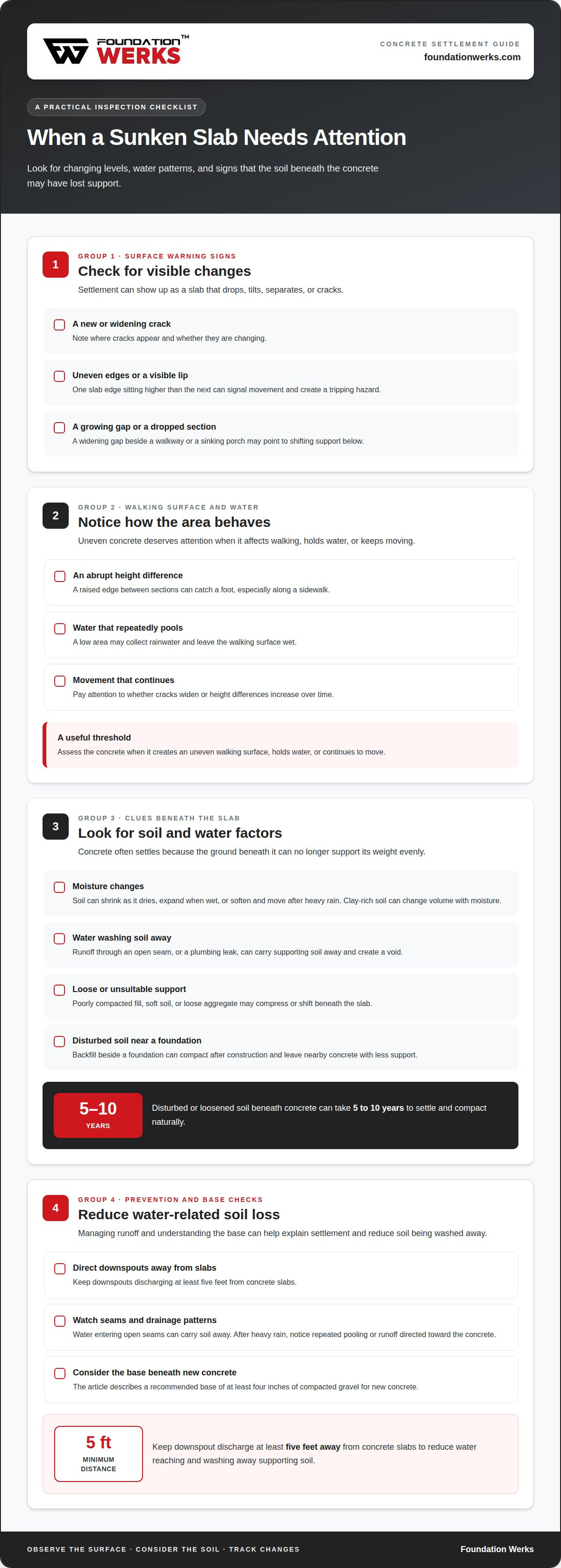
- Keep downspouts discharging at least five feet away from concrete slabs to help reduce water-related soil settlement.
- Leveling can raise supported concrete, while severe cracking or crumbling may call for replacement.
- Addressing the cause beneath the slab helps reduce the chance of continued movement after repair.
Should You Fix Your Sinking Concrete?
Address sinking concrete when it creates an uneven walking surface, holds water, or continues to move. The right response depends on the warning signs and what is happening beneath the slab.
Signs of Concrete Settlement
Concrete settlement shows up when a slab drops, tilts, separates, or cracks as its supporting soil moves. A sinking, cracked porch, a widening gap beside a walkway, or one slab edge sitting higher than the next can signal movement. These changes matter because settlement can worsen, so note where cracks or height differences appear and whether they are changing.
Settlement and Tripping Hazards
A settled slab can leave an abrupt height difference between sections, creating a place to catch a foot. On a sidewalk, a dropped section may also collect water after rain, making a familiar route harder to walk and leaving the surface wet. Treat a visible lip or water-holding depression as a reason to assess the concrete, not just an appearance issue.
Foundation construction can leave a band of disturbed soil around a home. The area is excavated wider than the foundation so workers can install and remove forms. When that backfill later compacts, nearby concrete, such as a walkway or porch, may lose support and settle. This can explain why concrete beside a foundation sinks after construction, even if the slab itself was poured correctly.
Disturbed or loosened soil beneath concrete can take 5 to 10 years to settle and compact naturally. That timeline means a slab may continue shifting well after nearby construction ends. Routine settling can make a porch sink and crack, while uneven movement can leave supported and unsupported portions at different heights. If the slab keeps dropping or cracking, waiting for natural compaction may leave the underlying problem unresolved.
Prevention starts with managing water around existing concrete. Direct downspouts at least five feet away from concrete slabs to reduce water reaching and washing away the supporting soil. Keep an eye on open seams and gaps, since water entering these openings can carry soil away beneath the slab. After heavy rain, notice whether water repeatedly pools on a sidewalk or beside a porch, and address drainage patterns that send runoff toward the concrete.
Replacing sunken concrete can disturb the soil again, potentially allowing a replacement slab to settle too. Repair decisions should account for the slab’s condition and the cause of its movement. A localized height difference or crack needs attention if it grows, creates a walking hazard, or repeatedly collects water. Focus on continued change rather than treating every small surface mark as the same problem.
Soil shrinkage and expansion from moisture changes
Moisture changes can make soil beneath a concrete slab shrink, swell, or wash away. When support becomes uneven, the slab may crack, tilt, or sink.
Moisture-Driven Soil Movement
Soil expands when wet and shrinks as it dries. Clay-rich soil can change volume with moisture, shifting the ground beneath a driveway or patio. Long dry periods can shrink soil and lower the slab, while heavy rain can soften or move soil in other areas. These repeated changes matter because different parts of one slab may move by different amounts.
Soil That Cannot Support a Slab
Soil that cannot support a slab compresses or shifts under the concrete’s weight. If only part of a slab loses support, that section may crack away from the stable area and leave an uneven surface. A driveway can therefore sink or crack even when the concrete remains intact elsewhere. The key issue is the soil’s ability to carry the slab, not just its appearance.
Water can reach the underside of concrete and carry supporting soil away. Heavy rain may flow through an open seam, while a plumbing leak can wash soil from one area continuously. As the ground loses material, the slab may settle toward the weakened spot. A recurring dip near a downspout or a damp patch above a suspected leak can help explain why movement is concentrated there.
Erosion beneath a slab often happens out of sight. Water entering a crack or joint can carry fine soil away, gradually creating a void below the surface. The concrete may bridge the gap for a time, but it can crack when the unsupported area can no longer bear its weight. Visible cracking and sinking may appear after water has already altered the soil beneath the slab.
Soil movement can also follow seasonal temperature changes. Clay-rich soil may freeze and expand in cold weather, then shrink as it warms. That cycle can leave gaps beneath concrete, especially where moisture varies across the slab. A corner that rises or drops while neighboring sections remain stable suggests uneven ground movement rather than the entire slab settling as one piece.
Causes often overlap: a dry period shrinks clay, then rainfall enters a joint and washes loose soil into a void. Recognizing this sequence can help distinguish moisture-related movement from a surface crack. The location of the sinking, nearby water sources, and changes after wet or dry periods all offer useful clues about settlement.
Poorly compacted or unsuitable base material
Yes, poor soil compaction can cause concrete to settle. If loose fill compresses beneath a slab, support becomes uneven, increasing the chance of sinking and cracks.
Unsuitable Base Material
Unsuitable base material shifts or compresses instead of supporting a slab evenly. Soft soil and loose aggregate can leave parts of a driveway or patio without dependable support. The resulting movement may appear as a sunken edge, a crack, or a low area. The type and condition of material beneath the concrete help explain why one section settles while the rest remains stable.
For new concrete, the recommended base described in the research is at least 4 inches of compacted gravel. That layer creates a more consistent platform than soft soil or loose fill alone. If the base is uneven or contains compressible material, the slab’s weight can press those areas down over time. A concrete panel above a soft patch may then settle differently from a panel over firmer ground.
Inadequate Soil Compaction
Inadequate soil compaction means the ground has not been made dense enough to carry the concrete’s load. When the load exceeds the soil’s capacity, the soil can compress, leaving the slab unsupported and prone to settling or cracking. A surface defect may therefore trace back to ground preparation during construction, not just the concrete itself.
Imagine a patio poured over loose soil that was never compacted evenly. The soil beneath one corner compresses under the slab, while the opposite side stays in place. That difference can pull the concrete out of level and create stress across the slab. A crack along the boundary between those sections may signal movement below, especially if the affected area continues to sink.
Settlement in Poorly Compacted Fill
Poorly compacted fill is soil placed to bring an area up to the needed grade but left loose beneath the concrete. As the fill compresses under the slab, it can leave gaps and uneven support. This is why newly built patios, walkways, or driveway sections over filled ground may settle after construction. The amount and placement of fill influence where movement appears.
A useful estimate of the risk starts with the pattern: a single low corner may point to localized support loss, while a longer sunken strip can follow a band of fill. Cracks and uneven joints help show where the slab is responding to ground movement. The surface alone cannot reveal every condition beneath it, but connecting the settling pattern to construction history can clarify what needs attention.
Replacing a sunken section without addressing compressible soil may leave new concrete vulnerable to the same movement. A repair decision should account for both the slab and its base. If the concrete remains in workable condition, lifting may restore its position; severe cracking or crumbling may make replacement more suitable. The underlying support remains central to choosing an effective response.
Burrowing pests and underground voids
Burrowing pests can displace soil beneath a concrete slab, creating voids that contribute to settling. The concrete may become uneven when sections lose support.
A burrow beneath a walkway can shift soil away from part of the slab, leaving a gap where the ground once supported the concrete. The slab may bridge the void at first, then crack or drop as support changes. A low spot beside a lawn, for example, may align with an area where soil has been disturbed.
The movement can affect more than the slab’s appearance. If one side settles while the other remains supported, the concrete can tilt or separate at a joint, and cracks may form under the uneven stress. A walkway leading toward a foundation could develop a height difference near one edge while the rest stays level. That pattern suggests localized support loss, though it does not identify the cause by itself.
Settlement related to burrowing can resemble other soil problems. A sinking corner might also result from water washing soil away or fill compressing beneath the concrete. Consider the location and pattern together: a void beneath one section differs from broad movement across an entire patio. These clues help distinguish concentrated support loss from more widespread ground movement.
Surface signs offer clues, not a view of what lies underneath. A crack, a hollow-sounding area, or a dropped slab may point to lost support, but none proves that pests created the void. For example, a sunken sidewalk beside a burrow opening warrants attention to the slab and surrounding ground, but the opening alone cannot explain the full extent of settlement.
Where a slab is uneven, the important question is whether the underlying space is still changing. Continued soil displacement can leave more concrete unsupported, increasing the chance that cracks widen or additional sections settle. A repair that only changes the slab’s position may not address an ongoing source of voids. Both the cause and the concrete’s condition matter when choosing how to respond.
Burrowing pests are one possible source of underground voids, but not the only one. Water can carry soil away, and loose fill can compress, so the same dip may have different causes. A walkway with a localized depression and nearby disturbed ground is a reason to examine the support beneath it. Understanding the difference helps guide an appropriate repair instead of treating every sunken area alike.
Concrete leveling and repair
Sunken concrete can often be lifted when the slab is intact enough to reuse. Repair should also address why support was lost, since untreated settlement can cause concrete to move again.
Concrete leveling raises a settled slab by filling the space beneath it. Holes are drilled through the concrete, then material is injected to fill voids and lift the slab into position. This can restore a more even surface without replacing the entire slab. The cause still matters: if water continues to wash away soil, new support may not resolve the source of movement.
With polyurethane concrete lifting, small holes allow expanding foam to be injected beneath the slab. The foam fills voids and raises the concrete as it expands. This approach can suit an uneven driveway or patio when the concrete remains usable. It restores support and position without removing and replacing the whole surface.
Timing varies by method and project. Concrete leveling repairs are usually completed in less than a day, and most polyurethane lifting projects take a few hours. Polyurethane-lifted concrete is typically ready for use the same day. These timeframes can help readers understand the general process, while the slab’s condition and the repair required determine the work involved.
Filling a void is only part of the decision. A slab may settle again if the underlying cause remains, such as water entering an open joint and carrying soil away. The repair approach should account for where support has been lost and whether the concrete can be raised without worsening existing damage. This helps distinguish leveling from repairs to cracks or joints.
Open cracks and joints can be sealed with polyurethane or silicone caulk. Large gaps can first be filled with backer rod. Sealing helps limit water entering through openings and washing away supporting soil. It does not raise a sunken slab, so sealing alone won’t correct an existing height difference or fill a void beneath concrete.
Grinding can reduce a trip hazard by lowering a raised concrete edge, but it doesn’t lift the lower slab. It can also expose concrete pores to freeze-thaw damage and leave the slab thinner and weaker. Grinding may suit a localized lip, but it does not restore lost support beneath sunken concrete.
Concrete replacement may suit slabs that are severely cracked or crumbling, or when a design feature such as a ramp is needed. Replacement can disturb the soil, leaving new concrete vulnerable to settlement if the base remains weak. The practical takeaway: choose leveling when the slab can be raised, and consider replacement when its condition or intended use calls for new concrete.
Foundation Werks
Foundation Werks helps address sinking concrete by matching the repair to the slab’s condition and the cause of lost support. Polyurethane Concrete Raising can lift concrete that remains suitable for reuse. Severely cracked or crumbling sections may call for Concrete Replacement, while Commercial Concrete Crack and Joint Repairs address damaged joints or cracks in commercial concrete.
Water management can matter when runoff contributes to soil loss. Foundation Werks provides French Drain Installation to help manage drainage around a property. If a slab is sinking, cracking, or holding water, Foundation Werks can help determine which concrete repair fits the problem. Contact the company to discuss your sinking concrete and request a free estimate.
Choose a Clear Next Step for Your Concrete
Understanding what causes concrete to sink gives you a better starting point for deciding what to do next. Connect the visible changes with what you’ve noticed around the slab, then consider a repair that addresses both the concrete and its support. This can help turn uncertainty into a practical plan.
Foundation Werks offers Polyurethane Concrete Raising, Commercial Concrete Crack and Joint Repairs, and Concrete Replacement. The right approach depends on the slab’s condition and the repair it needs. If the concrete continues to move, has extensive damage, or affects how you use the space, an assessment can help clarify suitable options.
You don’t have to make the repair decision alone. A conversation about the affected area can help you understand the next steps and choose a response that fits your property.
With a clear plan, you can take the next step with confidence.
Frequently Asked Questions
Why Does Concrete Sink?
Concrete sinks when the ground beneath it loses support or compresses. One answer to what causes concrete to sink is changing soil conditions: a long dry spell can shrink clay-rich soil, while heavy rain or a plumbing leak can move soil from beneath a slab. Loose fill can also compact under the concrete’s weight. A driveway beside a leaking water line may settle near the leak while the rest remains level.
What causes concrete slabs to sink or settle?
Concrete slabs settle when the soil beneath them cannot carry their weight evenly. Several factors explain what causes concrete to sink, including loose or poorly compacted fill, soil movement as moisture changes, erosion, and underground voids. A slab can also crack where a supported area meets a section that has lost support. A patio with one dropped corner, for instance, points to localized movement rather than uniform settlement.
How does soil erosion or washout cause concrete to sink?
Water flowing beneath a slab can carry soil away and leave a void. The concrete may initially bridge that empty space, but reduced support can lead to cracking or settlement. An open joint beside a walkway can let runoff enter below the surface. If a depression forms near that joint, the slab’s position and the water’s route can help explain how erosion is affecting support.
How do plumbing leaks and poor drainage affect concrete settlement?
A plumbing leak can keep water moving through soil beneath a slab, washing away particles and leaving gaps. Poor drainage can direct runoff toward concrete and repeat that erosion during rain. A persistently damp patch near a driveway or patio can help distinguish a water-related issue from dry-weather soil shrinkage. The water source and the slab’s movement pattern together indicate where support is being affected.
What are signs that a sinking concrete slab needs repair?
A slab needs attention when settlement creates a noticeable height difference, a growing crack, recurring water collection, or a route that’s difficult to walk across. A porch that continues to drop or a sidewalk edge that catches a shoe signals a change in use, not just appearance. Compare the affected edge with the adjoining slab and note whether the gap or tilt is progressing.
How is a sinking concrete slab repaired step by step?
Repair starts by identifying where support has been lost and whether the concrete can be reused. For leveling, holes are drilled through the slab, then material is injected beneath it to fill voids and raise the concrete. The repair addresses the slab’s position; drainage or another source of soil loss also needs attention. Severely cracked or crumbling concrete can require replacement instead.
Can homeowners fix sinking concrete themselves, and what are the risks?
You can seal open cracks and joints, but caulk won’t raise a sunken slab or restore missing support. Large gaps can be filled with backer rod before sealing. Grinding a raised edge can reduce a lip, but it doesn’t correct the lower slab and can leave the concrete thinner. For lifting, uneven injection or unresolved soil loss can leave the surface misaligned or settling again.
How can proper drainage and soil preparation prevent concrete from sinking?
Direct runoff away from slabs, and prepare a firm, evenly compacted base before pouring new concrete. For example, water spilling beside a driveway can repeatedly saturate the ground, while loose fill beneath a patio can compress under its load. These considerations matter for properties in Dallas, Frisco, McKinney, Prosper, Allen, Fairview, Southlake, Irvin, North Dallas, and DFW, where managing water and ground support helps limit settlement.