

PUBLISHED: June 12,2026
What if the most strategic way to handle your sinking concrete isn’t to replace the slab, but to stabilize the soil beneath it? You’ve likely felt the frustration of recurring settling after a cheap patch job or worried about the legal liability of a trip hazard that exceeds the ADA half-inch limit. It’s a common dilemma for property owners who need a reliable solution that doesn’t halt operations for days. You’re likely wondering, is polyurethane foam lifting worth it compared to the heavy, disruptive methods of the past.
We understand that a smart investment requires more than just a surface-level repair. You need a long-term resolution that respects both your budget and the environment. This guide breaks down the true ROI of polyurethane concrete raising, from its rapid 15-minute cure time to its lightweight, eco-friendly footprint. You’ll discover how this modern technology provides the stability your property requires while ensuring your business stays in motion without the mess of traditional demolition.
Key Takeaways
- Learn why polyurethane concrete raising offers a superior total cost of ownership compared to traditional mudjacking or disruptive slab replacement.
- Determine is polyurethane foam lifting worth it for your specific project by using our decision-making framework for high-traffic and high-liability areas.
- Discover how the rapid cure time of high-density foam minimizes operational downtime, allowing for nearly immediate use of heavy-traffic warehouse floors.
- Understand the science of lightweight soil stabilization that prevents the secondary settling often caused by heavier, outdated repair methods.
- Explore how precision-injected, eco-friendly materials provide a long-term resolution for unstable concrete while reducing your property’s environmental footprint.
Table of Contents
-
Evaluating the Investment: Why Concrete Sinks and What it Costs You
-
The Science of Stability: Why Polyurethane Foam Outlasts Traditional Methods
-
The Bottom Line: Comparing Lifting, Mudjacking, and Full Replacement
-
When is Polyurethane Lifting Worth It? A Decision-Making Framework
-
Maximizing Property Value with Foundation Werks’ Eco-Friendly Precision
Evaluating the Investment: Why Concrete Sinks and What it Costs You
Concrete doesn’t just sink; it reacts to the volatile environment beneath it. For property owners weighing their options, asking is polyurethane foam lifting worth it requires looking past the surface. This high-precision structural repair method uses advanced polymers to fill voids and restore slab integrity. Unlike basic patches, it addresses the soil instability caused by poor compaction or the heavy, shifting North Texas clay that plagues regional developments.
To better understand how this powerful technology performs under pressure, watch this detailed explanation:
Choosing to ignore a settling slab often leads to expenses that far exceed the price of a repair. OSHA regulations and ADA accessibility guidelines mandate that vertical displacements over 1/2 inch must be addressed to avoid significant liability. Beyond legal risks, unlevel concrete allows water to pool against your structure, causing secondary damage like foundation stress and interior water intrusion that compromises your building’s envelope.
The True Cost of Concrete Settlement
For Dallas property managers, the financial impact of settlement isn’t just the repair bill; it’s the operational downtime. Traditional concrete replacement can shutter a warehouse floor or loading dock for weeks. While some look for a quick fix, surface-level grinding might temporarily remove a trip hazard, but it thins the slab and leaves it vulnerable to cracking. This often accelerates the need for a more extensive overhaul rather than providing a long-term resolution.
Why North Texas Soil Demands Better Solutions
The expansive clay found in McKinney and the surrounding Metroplex expands and contracts with seasonal moisture levels, creating massive subterranean gaps. Traditional concrete leveling methods like mudjacking often add too much weight, causing the slab to sink further into the soft clay. Soil washout is the leading cause of North Texas slab failure, occurring when water channels strip away the sub-base and leave the concrete unsupported. Commercial property owners dealing with these persistent clay soil challenges can benefit from polyurethane concrete raising in McKinney, TX, a precision-engineered solution specifically designed for the region’s unique soil conditions.
The Science of Stability: Why Polyurethane Foam Outlasts Traditional Methods
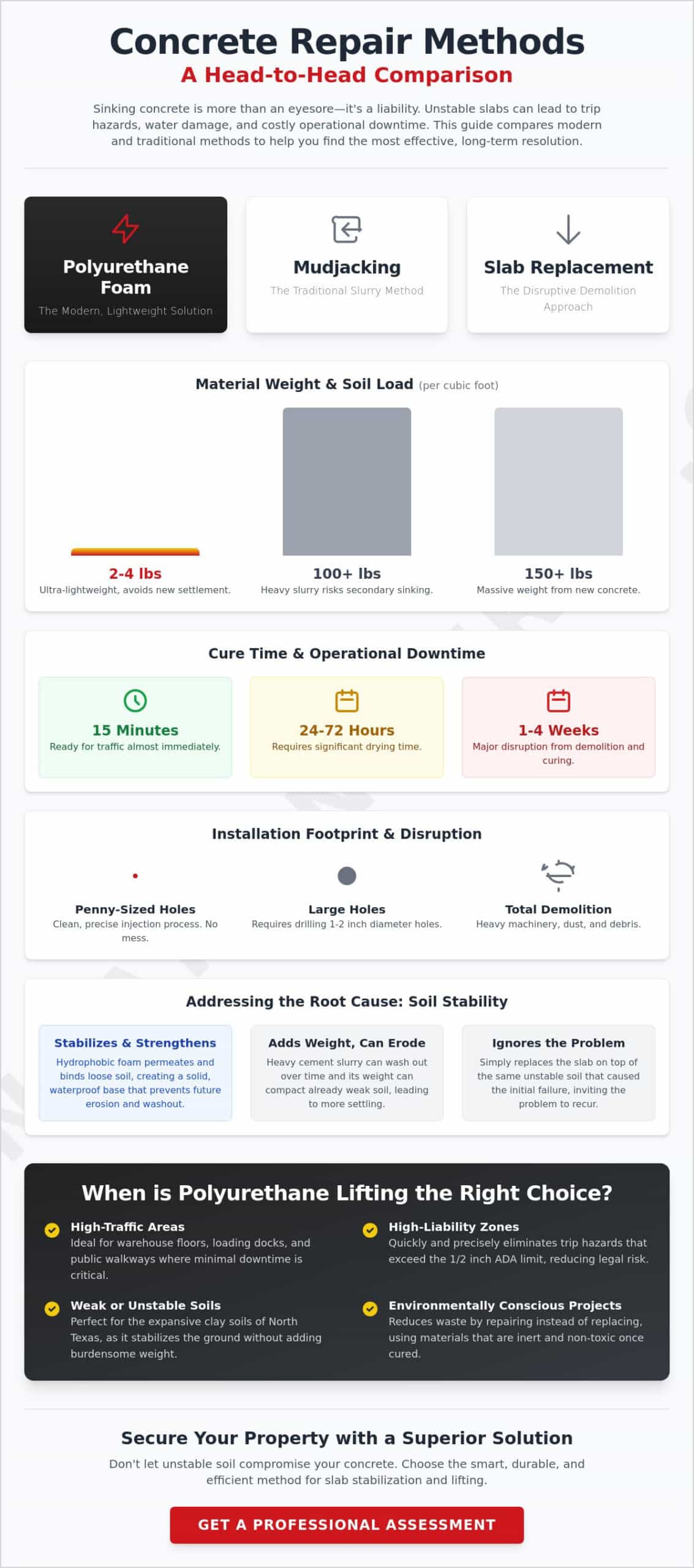
The efficacy of this method begins with a rapid chemical reaction. Once the two-part polymer is injected through small, penny-sized holes, it expands with incredible force. It travels along the path of least resistance to fill every hidden pocket. Within seconds, it hardens into a rigid, structural foam that supports the slab from below. This expansion is so controlled that technicians can achieve a lift precision within 1/32nd of an inch, making it a superior choice for sensitive commercial environments.
When businesses ask is polyurethane foam lifting worth it, they must consider the load placed on the soil. Traditional mudjacking uses a heavy slurry weighing over 100 pounds per cubic foot. In North Texas, where expansive clay is already prone to shifting, adding this much weight often triggers a "secondary sinking" effect. High-density polyurethane foam weighs only 2 to 4 pounds per cubic foot. It provides the necessary lift without overloading the fragile sub-base, ensuring much higher stability in volatile McKinney and Dallas soils.
Material integrity is another key differentiator. Polyurethane is naturally hydrophobic. It doesn’t wash away during the intense North Texas rain cycles that typically erode cement-based slurries. This waterproof nature creates a barrier that helps prevent future erosion beneath your property.
Void Filling vs. Simple Lifting
Lifting a slab is only half the battle. True stability requires filling the voids that caused the settlement in the first place. High-density foam permeates soil pores, binding loose particles together to create a solid foundation. For concrete stabilizing on warehouse floors, this structural reinforcement is vital. It prevents the rocking and cracking that occurs when heavy machinery traverses unsupported gaps.
Longevity and Material Integrity
Durability is a hallmark of modern polymer technology. Unlike traditional materials that can shrink or degrade over time, cured foam remains inert and stable. Most applications offer a lifespan of 10 to 15 years, often outlasting the concrete slab itself. By choosing materials with high recycled content, property owners can achieve a high-quality, eco-conscious resolution for their infrastructure needs.
The Bottom Line: Comparing Lifting, Mudjacking, and Full Replacement
When assessing the financial viability of a project, the total cost of ownership extends far beyond the initial quote. Traditional mudjacking requires drilling large, unsightly holes up to two inches in diameter and involves a messy slurry that takes 24 to 48 hours to cure. Full replacement is even more invasive. It requires total demolition and hauling tons of debris to landfills. In contrast, polyurethane lifting uses penny-sized injection ports and cures in as little as 15 to 30 minutes. This speed allows for immediate traffic return. This is often the deciding factor when determining is polyurethane foam lifting worth it for high-traffic environments.
ROI for Commercial and Industrial Facilities
For a Dallas warehouse or industrial plant, every hour of a closed loading dock or blocked aisle translates to lost revenue. Polyurethane concrete raising typically costs 50% to 70% less than full replacement. It eliminates the labor-intensive removal and disposal process. Beyond the direct savings, maintaining level surfaces reduces the risk of expensive workers’ compensation claims. It also helps property managers meet strict insurance requirements for safety. The ability to perform repairs without shutting down operations provides a level of value that traditional methods simply cannot match. Facility managers overseeing multi-level structures can explore how green concrete lifting for parking garages Dallas properties rely on delivers these same cost and sustainability advantages at scale.
When Replacement is the Only Option
There is a point of no return where lifting is no longer viable. If the concrete is severely shattered with multiple intersecting cracks, the slab lacks the structural integrity needed to be raised safely. We conduct a thorough assessment to ensure the material can withstand the lifting pressure. In many cases, combining Commercial Concrete Crack and Joint Repairs with stabilization can extend the life of a slab that might otherwise need total replacement. This proactive maintenance preserves the existing asset. It also avoids the massive environmental footprint of a new pour, which is a significant priority for eco-conscious businesses.
When is Polyurethane Lifting Worth It? A Decision-Making Framework
Deciding is polyurethane foam lifting worth it often comes down to a balance of safety, cost, and long-term stability. For high-worth assets like warehouse floors, loading docks, or public entryways, the answer is usually found in the risk of inaction. The cost of a single liability claim or a week of lost production far outweighs the investment in professional stabilization. To help you evaluate your property, we recommend a methodical approach to assessing the health of your concrete.
The 5-Point Concrete Health Check
-
Measure the drop: Use a level to check vertical displacement. While 1/2 inch is the ADA threshold for trip hazards, any drop over 1/4 inch can trigger OSHA safety concerns in industrial settings.
-
Listen for voids: Tap the slab with a heavy metal rod. A hollow, drum-like sound indicates significant gaps in the sub-base that require void filling and stabilization.
-
Analyze crack density: Single structural cracks are excellent candidates for lifting. However, "spider-webbing" or shattered concrete usually signals that the slab’s internal reinforcement has failed.
-
Spot soil markers: Look for soil washout near the edges of the slab. Gaps between the concrete and the dirt are clear indicators of active erosion.
-
Check drainage: Ensure water isn’t pooling near the slab. If it is, you’ll need to address the root cause to protect your repair.
Repairing the slab is only part of the resolution. To safeguard your investment, you must manage the water that caused the settlement. Integrating French Drain Installation can divert runoff away from the stabilized soil, preventing future washout. In North Texas, the most effective time for these repairs is during the late spring or early fall. During these windows, soil moisture levels are more predictable, allowing the foam to bond optimally with the sub-grade.
Qualifying Your Contractor
High-density foam injection requires specialized equipment and a deep understanding of Dallas and McKinney soil patterns. A "budget" quote often signals the use of low-density residential foam that lacks the compressive strength required for commercial loads. Watch for contractors who ignore drainage issues or fail to explain the technical specs of their material. If you’re ready to secure your property’s foundation, we invite you to schedule a professional Commercial Foundation Repair assessment to ensure a high-quality, long-term result.
Maximizing Property Value with Foundation Werks’ Eco-Friendly Precision
Foundation Werks approaches every project with a focus on structural longevity and environmental stewardship. By utilizing patented foams that can contain over 40% recycled or bio-based content, we ensure that your repair doesn’t just restore safety but also supports your corporate sustainability goals. When considering is polyurethane foam lifting worth it, the environmental impact of avoiding a full demolition and new pour is a significant factor. Our high-density polymers are inert and safe for the surrounding soil, providing a high-quality resolution that aligns with modern green building standards. Property managers seeking to meet ESG benchmarks can learn more about how green concrete lifting for parking garages in Dallas supports both structural performance and corporate sustainability goals.
A Commitment to North Texas Infrastructure
Our roots in McKinney give us a specialized perspective on the unique challenges of the Dallas metropolitan area. We don’t just lift the concrete; we provide a comprehensive resolution that addresses the underlying soil conditions. This often includes French Drain Installation to manage the heavy runoff that leads to the soil washout discussed earlier. As an Innovative Expert in the field, we utilize digital pressure sensors to ensure every injection provides the maximum possible support for your specific foundation type, ensuring the repair stands up to the heavy loads of commercial traffic.
Your Next Steps for a Level Surface
The path to a safe, level property is designed to be as non-disruptive as the repair itself. It begins with a professional site evaluation where we assess the structural integrity of your slabs and the stability of the sub-grade. Once the plan is set, our crews can often complete the Polyurethane Concrete Raising in McKinney, TX in a single morning, leaving your site clean and ready for immediate use. This efficiency provides the peace of mind that comes from a high-quality, long-term resolution without the logistical headaches of traditional construction. You’ll receive a clear, data-backed justification for your repair budget that focuses on lasting value.
If you’re ready to eliminate trip hazards and restore the value of your property, Schedule your commercial concrete evaluation with Foundation Werks today.
Restoring Stability and Value to Your Property
Choosing a structural resolution for your concrete requires balancing immediate operational needs with long-term financial health. By prioritizing rapid cure times and advanced soil stabilization, you can avoid the high costs and significant disruption of total slab replacement. The shift toward high-density polymers represents a move toward more sustainable, precise infrastructure maintenance that respects your property’s integrity.
When deciding is polyurethane foam lifting worth it for your North Texas business, consider the value of a repair that supports your foundation without the risk of secondary sinking. Our patented eco-friendly foam technology is specifically engineered for complex tasks like commercial warehouse stabilization. Whether you are managing a facility in McKinney or a retail space in Dallas, we provide the technical expertise necessary to address the root cause of settlement. Don’t let unlevel surfaces compromise your safety or your bottom line.
Get a Professional Concrete Lifting Estimate Today
We look forward to helping you achieve a level, safe, and reliable surface that serves your business for years to come.
Frequently Asked Questions
Is polyurethane foam lifting permanent?
Polyurethane foam provides a high-quality, long-term resolution for settled concrete. This method offers remarkable stability and typically provides a lifespan of 10 to 15 years, often outlasting the concrete slab it supports. Because the cured material is inert and waterproof, it doesn’t degrade or wash away, ensuring your property remains stable through many seasons of North Texas weather and shifting clay soils.
How much weight can polyurethane foam support?
Commercial-grade polyurethane foam is engineered for high-intensity loads, often supporting weights exceeding 10,000 pounds per square foot. This makes it an ideal choice for warehouse floors and heavy-duty loading docks. Its compressive strength, typically between 40 and 60 psi, ensures that it can easily withstand the pressure of heavy machinery and constant industrial traffic without losing its structural integrity or sinking into the sub-base.
Is polyurethane foam environmentally friendly?
Modern polyurethane foams are highly eco-conscious, with many formulations containing over 40% recycled or bio-based materials. Once cured, the foam becomes an inert, non-toxic solid that does not leach chemicals into the surrounding soil or groundwater. Many products are even certified to NSF/ANSI 61 standards, meaning they’re approved for contact with drinking water, making them a responsible choice for modern North Texas infrastructure projects.
Can polyurethane foam be used in wet or rainy conditions?
Yes, polyurethane is hydrophobic, meaning it’s designed to displace water during the injection process. It can be successfully applied in wet conditions or even submerged environments to fill voids and stabilize soil. This unique property ensures that the foam expands and hardens effectively regardless of groundwater presence, making it a reliable choice for property owners during the unpredictable rain cycles common in the Dallas metropolitan area.
How soon can I drive on my concrete after foam lifting?
You can typically drive on your concrete within 15 to 30 minutes after the injection process is finished. This rapid cure time is a primary factor when business owners ask is polyurethane foam lifting worth it for their facilities. Unlike traditional replacement or mudjacking, which can require days of curing, our method allows for nearly immediate traffic return, ensuring your loading docks or warehouse floors stay productive.
Does polyurethane foam lifting stop future concrete sinking?
Lifting addresses existing settlement by filling voids, but long-term stability requires managing the underlying soil conditions. While the foam stabilizes the sub-base, it’s essential to address root causes like poor drainage or soil erosion. Integrating services like French drain installation can protect your investment by diverting water away from the stabilized area, ensuring a much more stable foundation for your slabs and preventing recurring washout issues.
Will the foam lift my concrete if it is severely cracked?
Polyurethane foam is highly effective for lifting slabs with single structural cracks, but it’s not a solution for concrete that is severely shattered or crumbling. If the slab lacks internal integrity, it may not withstand the pressure required for a successful lift. In these cases, our technicians evaluate if is polyurethane foam lifting worth it or if a full replacement is the only safe option for your property.