

What if the most effective way to restore your Dallas parking structure was also the most environmentally responsible? You’ve likely realized that traditional concrete demolition is a costly logistical nightmare. Between the massive carbon footprint of new cement production and the weeks of lost revenue while parking levels remain closed, the “rip and replace” method often feels like a lose-lose scenario for modern facility managers who prioritize efficiency and stewardship.
This guide explores how green concrete lifting for parking garages Dallas owners utilize is transforming maintenance through high-performance, recycled polyurethane foam. You’ll learn how to achieve a level, safe surface that satisfies both OSHA safety requirements and your corporate sustainability (ESG) goals. We’ll walk through the technical advantages of stabilization, the cost-saving benefits of avoiding demolition, and why this modern approach is the superior choice for Dallas structures in 2026. By the end, you’ll understand how to protect your property and the planet simultaneously.
Key Takeaways
- Discover how green concrete lifting for parking garages Dallas owners prefer utilizes recycled materials to stabilize slabs without the massive carbon footprint of traditional demolition.
- Learn why choosing stabilization over replacement significantly reduces CO2 emissions and supports corporate ESG initiatives.
- Understand the high-performance engineering behind recycled polyurethane foam, which is purpose-built to support heavy vehicle traffic in commercial environments.
- Identify the critical steps for a successful restoration, starting with a professional site assessment to address underlying soil voids and drainage issues.
- Explore why prioritizing structural stabilization provides a more efficient and less disruptive alternative to the standard demolition and replacement cycle.
The Environmental and Structural Costs of Dallas Parking Garage Failure
Green concrete lifting for parking garages Dallas structures require is a sophisticated stabilization method. It uses eco-conscious injection materials to restore slab levels without the need for total demolition. This approach is a superior alternative to traditional industry standards that rely on heavy machinery and new material production. By choosing restoration over replacement, you’re opting for a high-performance solution that respects both your budget and the environment.
New concrete production is a leading source of global CO2 emissions. When we choose to “rip and replace” slabs, we aren’t just spending money; we’re contributing to North Texas waste stream challenges. Landfills in the DFW area are increasingly burdened by construction debris that could have been avoided through modern concrete leveling techniques. Preserving your existing foundation is a powerful way to reduce your property’s environmental footprint.
To see the precision of this process in action, watch this brief demonstration:
Dallas and McKinney structures face a unique challenge: expansive clay soil. This soil shifts dramatically with moisture changes, leading to the uneven surfaces often found in local parking structures. When implementing green concrete lifting for parking garages Dallas facilities depend on, addressing this soil instability is the first priority. Unlike standard soil, this active clay requires a solution that stabilizes the foundation rather than just adding more weight on top.
Preservation as the Ultimate Sustainable Strategy
Extending the life of an existing slab is the most responsible decision a facility manager can make. It’s a high-quality solution that drastically reduces noise and air pollution. By avoiding heavy demolition machinery, you maintain a quieter, cleaner environment for your tenants and neighbors. This focus on longevity over replacement aligns perfectly with modern ESG goals and demonstrates a commitment to sustainable property management.
Safety and Liability in North Texas Facilities
Maintaining a level surface is essential for OSHA trip hazard compliance. Precision leveling through injection ensures that every transition is smooth, protecting your business from liability and safety concerns. Localized stabilization also addresses the root cause of the issue by preventing further soil erosion beneath massive parking foundations. It’s a methodical way to ensure long-term stability and peace of mind for property owners who value meticulous attention to detail.
High-Performance Stabilization with Recycled Polyurethane Foam
The core of green concrete lifting for parking garages Dallas owners rely on is the specialized material itself. We use a patented polyurethane foam formulated with recycled components, offering a high-performance alternative to virgin plastics. This isn’t just about being eco-friendly; it’s about structural excellence. High-density foam is specifically engineered to support the immense load-bearing requirements of commercial garages, where heavy vehicle traffic is constant and demanding.
Unlike traditional materials, this foam is hydrophobic. It creates a water-resistant barrier that remains stable during the intense North Texas rain cycles. This prevents the “washout” effect that often leads to soil voids. When you consider the environmental impacts of concrete production, preserving your existing structure with this innovative method is a logical step for any sustainable facility. The application is minimally invasive, using penny-sized injection holes that maintain the slab’s integrity while achieving precise lift.
Why Recycled Foam Outperforms Traditional Mudjacking
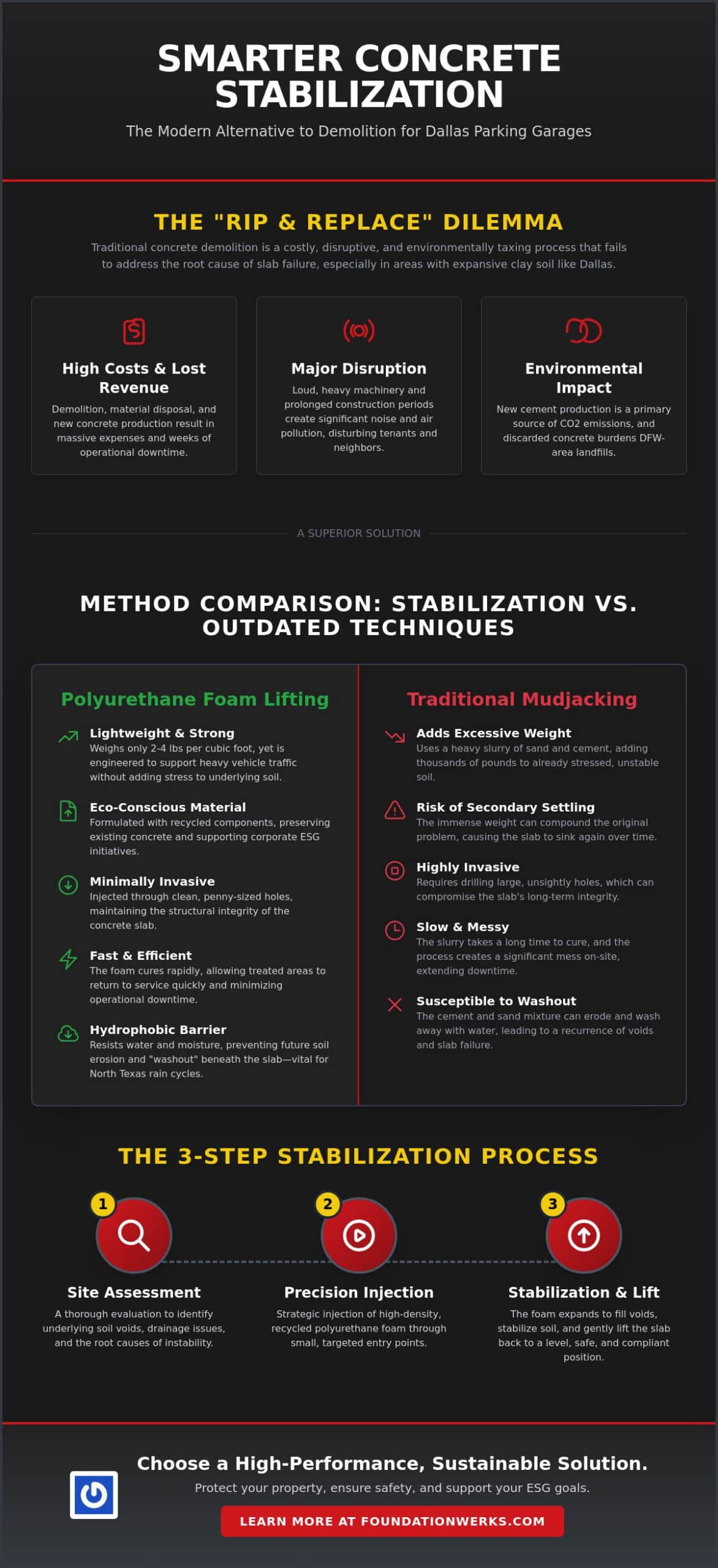
Traditional mudjacking uses a heavy slurry of sand and cement. This adds thousands of pounds of weight to already stressed soil, which often leads to secondary settling. Polyurethane is incredibly lightweight, weighing only about 2 to 4 pounds per cubic foot. This ensures you aren’t compounding the problem you’re trying to solve. For a deeper look at how these two methods compare on performance, cost, and longevity, our comprehensive polyurethane vs mudjacking guide for Dallas concrete leveling breaks down every factor you need to consider. For those looking at long-term facility planning, the ROI and longevity benefits of polyurethane foam far exceed those of outdated methods.
Chemical Stability and Local Ecosystems
Once the foam undergoes its curing process, it becomes chemically inert. It won’t leach into the Dallas or McKinney water table, making it safe for the local ecosystem. This stability ensures a highly effective, long-term resolution for sunken slabs. If you’re ready to see how these modern methods can restore your facility, our team can help you evaluate the best commercial concrete raising strategy for your specific needs. This methodical approach provides peace of mind while supporting your broader corporate sustainability goals.
Implementing Eco-Conscious Concrete Strategies for Your Property
Adopting a strategic maintenance plan is the final step in securing your facility’s future. For property managers in North Texas, this means moving beyond reactive repairs and embracing a proactive, four-step framework for green concrete lifting for parking garages Dallas structures require. This methodical approach ensures that every repair contributes to the overall health and longevity of the asset.
- Professional Site Assessment: We begin by identifying the root cause of settlement, specifically looking for drainage issues or soil voids that lead to instability.
- Prioritizing Stabilization: While a smooth appearance is important, we prioritize securing the foundation to prevent future shifting.
- Execution with Recycled Materials: By using patented polyurethane made from recycled content, the project aligns with modern green building standards and reduces environmental impact.
- Long-term Monitoring: Regular joint maintenance and inspections prevent water infiltration, ensuring the effectiveness of the stabilization for years to come.
Supporting LEED and Corporate Sustainability Goals
Choosing polyurethane concrete raising in McKinney, TX provides more than just a level surface. It contributes directly to LEED points for existing buildings by diverting construction waste from landfills and reducing the demand for high-emission cement production. Documenting these sustainable repairs is essential for ESG reporting, allowing commercial real estate stakeholders to see a clear, data-driven commitment to environmental stewardship.
Comprehensive Maintenance: Crack Sealing and Drainage
A holistic approach to property health involves more than just lifting. Integrating French drain installation is often essential for protecting parking garage foundations from volatile North Texas soil movement. By managing water flow away from the structure, you reduce the risk of future voids forming beneath the slab. Additionally, professional joint repairs and specialized surface cleaning from Poseidon Power Washing LLC create a unified, sustainable surface that resists the elements. This combination of services ensures a highly stable, long-term resolution for your most critical assets without the disruption of total replacement.
Securing the Future of Your Parking Structure
Choosing green concrete lifting for parking garages Dallas owners utilize is a sophisticated way to align your facility’s operational needs with environmental stewardship. You’ve seen how preserving existing slabs avoids the massive carbon footprint of new cement production and keeps construction debris out of North Texas landfills. By utilizing our patented foam made from recycled materials, you gain a high-performance stabilization solution specifically engineered for the heavy traffic of commercial structures.
As local experts serving Dallas and McKinney since our inception, we specialize in commercial parking garage stabilization that prioritizes technical precision and long-term resolution. Our methodical approach ensures your foundation remains secure while supporting your corporate ESG goals. Don’t let sunken slabs become a liability or an environmental burden when a technologically advanced alternative is available.
Ready to transform your maintenance strategy? Request a Sustainable Concrete Assessment from Foundation Werks today. We’re here to help you achieve a safer, more sustainable facility with the meticulous attention to detail your property deserves.
Frequently Asked Questions
Is polyurethane foam concrete repair truly safe for the Dallas environment?
Yes, cured polyurethane foam is generally considered non-hazardous and safe for the local environment. Once the material completes its rapid curing process, it becomes chemically inert, meaning it won’t leach chemicals into the Dallas or McKinney soil or groundwater. This makes it an ideal choice for property managers who are committed to eco-conscious maintenance and protecting North Texas ecosystems while maintaining structural integrity.
How long does eco-friendly concrete lifting last in the North Texas climate?
High-quality polyurethane foam provides a reliable, long-term resolution that often lasts between 10 to 20 years. This durability is a significant improvement over traditional mudjacking, as the foam is resistant to the moisture and temperature fluctuations common in the Dallas area. While we don’t characterize any repair as a final solution, this method offers exceptional stability by addressing the underlying voids that cause settling.
Can recycled foam support the weight of heavy vehicles in a parking garage?
Yes, high-density polyurethane is specifically engineered to handle the intense load-bearing requirements of commercial parking structures. This technology is robust enough for municipal use on highways and airport runways, ensuring it can easily support heavy vehicle traffic in a garage environment. Green concrete lifting for parking garages Dallas facilities utilize provides the necessary structural strength without adding excessive weight to the soil below.
Does green concrete lifting cost more than traditional replacement in Dallas?
No, green concrete lifting is typically much more cost-effective, often saving property owners 50% to 70% compared to the price of full concrete replacement. You’ll avoid the high costs of demolition, debris disposal, and the extensive labor required for pouring new slabs. Additionally, because the cured foam allows for almost immediate use, your facility avoids the significant revenue loss associated with long-term parking level closures.