

In North Texas, your foundation isn’t just sitting on the ground; it’s riding a slow-motion wave of expansive clay soil. If you’ve noticed new cracks in the brick or doors that suddenly stick, you’re likely asking yourself, "Why is my foundation sinking." It’s a stressful realization that brings up fears of massive repair bills and lost property value. We understand that seeing your home shift feels like a crisis. In the DFW area, this movement is often a predictable result of our unique geology rather than a total structural failure.
This guide will help you identify the primary causes of foundation settlement, from the shrink-swell cycle of Houston Black clay to local drainage issues. You’ll discover how to tell the difference between cosmetic settling and serious trouble. We’ll also explore effective long-term solutions, such as polyurethane injection, that allow you to use your property the same day. By understanding these root causes, you can choose a repair method that protects your investment without the high cost of full concrete replacement.
Key Takeaways
- Understand how the unique shrink-swell cycle of North Texas expansive clay soil directly impacts your home’s stability.
- Identify the environmental triggers and drainage problems that answer the common homeowner question: Why is my foundation sinking.
- Learn to distinguish between minor cosmetic settling and serious structural failures to protect your property value and budget.
- Discover why polyurethane concrete raising is a preferred long-term solution that allows for same-day use at a lower cost than replacement.
- Recognize early warning signs like interior cracks or sticking doors before hidden voids lead to more expensive property damage.
Understanding Why Your Dallas Foundation is Sinking in North Texas
Foundation sinking is the downward movement of your home’s structure. It happens when the soil underneath can no longer support the weight of the slab. This process, known as Settlement (structural), is especially common across North Texas. You might notice cracks in the brick or uneven floors and start to wonder, "Why is my foundation sinking." While some initial settling is expected in new construction, problematic sinking occurs when soil volume changes drastically over time.
To see how these shifts can manifest in a structure, watch this helpful video:
The primary driver of movement in our region is the soil itself. We live on the Blackland Prairie, an area famous for its expansive clay. This soil is highly reactive. It expands when wet and shrinks when dry, acting like a massive, underground sponge that never stops moving.
The Role of Expansive Clay in Dallas-Fort Worth
The soil in Dallas County, often a Houston Black-Heiden-Wilson composition, can gain or lose up to 75% of its original volume. During our intense Texas summers, the heat bakes the ground, causing the clay to lose moisture and pull away from your slab. In McKinney and Frisco, where clay deposits are often deep, this shrinkage creates significant voids. When the soil shrinks, the heavy concrete foundation loses its support and begins to drop into those gaps. This cycle of wet winters and dry summers keeps the ground in a constant state of flux.
Settlement vs. Heaving: Knowing the Difference
It’s vital to distinguish between two types of movement to find the right fix. Settlement is the downward drop caused by moisture loss or poorly compacted soil under the slab. Heaving is the opposite; it’s the upward thrust caused by soil absorbing too much water and swelling. If you find yourself asking why is my foundation sinking, you’re likely dealing with settlement rather than heaving. Identifying the direction of this movement is critical for choosing the right long-term solutions. For sinking slabs, the goal is often soil stabilization and void filling to provide the support your home needs.
The Science of Soil: Why Slabs Settle and Sag
Concrete is incredibly strong, but its performance depends entirely on the ground beneath it. When homeowners ask, "Why is my foundation sinking," they are usually witnessing soil failure rather than a defect in the concrete itself. In North Texas, three environmental factors typically trigger this failure: moisture withdrawal, soil erosion, and poor initial compaction. Each of these forces creates a lack of support that eventually forces the slab to move.
Poor site preparation is a common culprit in many developments. If the soil wasn’t compacted to the correct density during construction, it contains microscopic air pockets. Over several years, the weight of the structure and the natural vibration of the earth cause these pockets to collapse. This creates a hidden void. Without solid ground to rest on, the heavy slab sags into the empty space. Similarly, mature tree roots can act as aggressive underground pumps. A single large oak can pull hundreds of gallons of water out of the clay daily. This localized dehydration causes the soil to shrink specifically under one part of the house, leading to uneven sinking.
Evaporation and Soil Shrinkage
Texas summers create a drought effect that is devastating to Expansive Soil and Rock. As the heat intensifies, moisture evaporates from the clay, causing it to contract and pull away from the foundation footings. The perimeter of your home is often the first area to show signs of sinking because it is most exposed to the elements. Moisture loss creates gaps that gravity eventually fills by pulling the slab down. This is why you might notice a physical gap between the soil and your foundation wall during the peak of summer.
Erosion and Washout
While drought causes shrinkage, excessive water causes washout. Heavy North Texas rainstorms can send water rushing under the edges of your concrete, carrying away the supporting soil. This is especially common if you have leaking plumbing or downspouts that discharge too close to the house. If you are wondering "Why is my foundation sinking" after a particularly wet season, erosion is a likely candidate. A French drain installation is often a necessary companion to concrete repair to keep water away from the slab. Managing your property’s drainage is one of the best long-term solutions for maintaining a level and stable foundation.
Sinking Slabs vs. Structural Failure: How to Tell the Difference
Not all foundation movement is created equal. It’s easy to panic when you see a gap in the driveway or a crack in the patio, but understanding the scale of the problem is the first step toward a solution. We categorize these issues into two main types: surface-level slab sinking and deep structural failure. While both involve the downward movement of concrete, the repair methods and urgency differ significantly.
The U.S. Geological Survey on land subsidence explains that geological shifts and moisture changes in Texas often cause the ground to sink. This broad movement affects everything from your main house slab to your garden walkway. At Foundation Werks, we specialize in residential foundation repair through slab stabilization and polyurethane concrete raising. We focus on restoring the support under your concrete to stop the cycle of sinking.
Signs of Sinking Concrete Slabs
Sinking slabs often manifest as cosmetic or safety issues rather than threats to the home’s skeleton. You might notice uneven joints in your driveway, sidewalks, or pool decks. This creates a trip hazard and can cause water to pool in areas that used to drain away from your home. If you walk on the concrete and notice a hollow sound, it’s a clear sign of a void beneath the surface. These issues are ideal candidates for concrete lifting because the slab is still mostly intact, just unsupported.
Signs of Deep Structural Foundation Issues
Deep structural failure involves the footings that support the weight of your entire home. If you are asking "Why is my foundation sinking" and notice interior drywall cracks around door frames or windows, you’re likely dealing with a deeper issue. Doors that stick or no longer latch are common red flags. On the exterior, look for large "stair-step" cracks in the brickwork or masonry. These symptoms suggest the house is settling unevenly, which puts stress on the entire frame.
There is a tipping point where concrete becomes too damaged for lifting. If a slab has shattered into many small pieces, stabilization becomes difficult. Catching the problem early while the concrete is still whole allows for much better results. Our goal is to provide long-term solutions that restore level surfaces and prevent further deterioration without the need for total replacement.
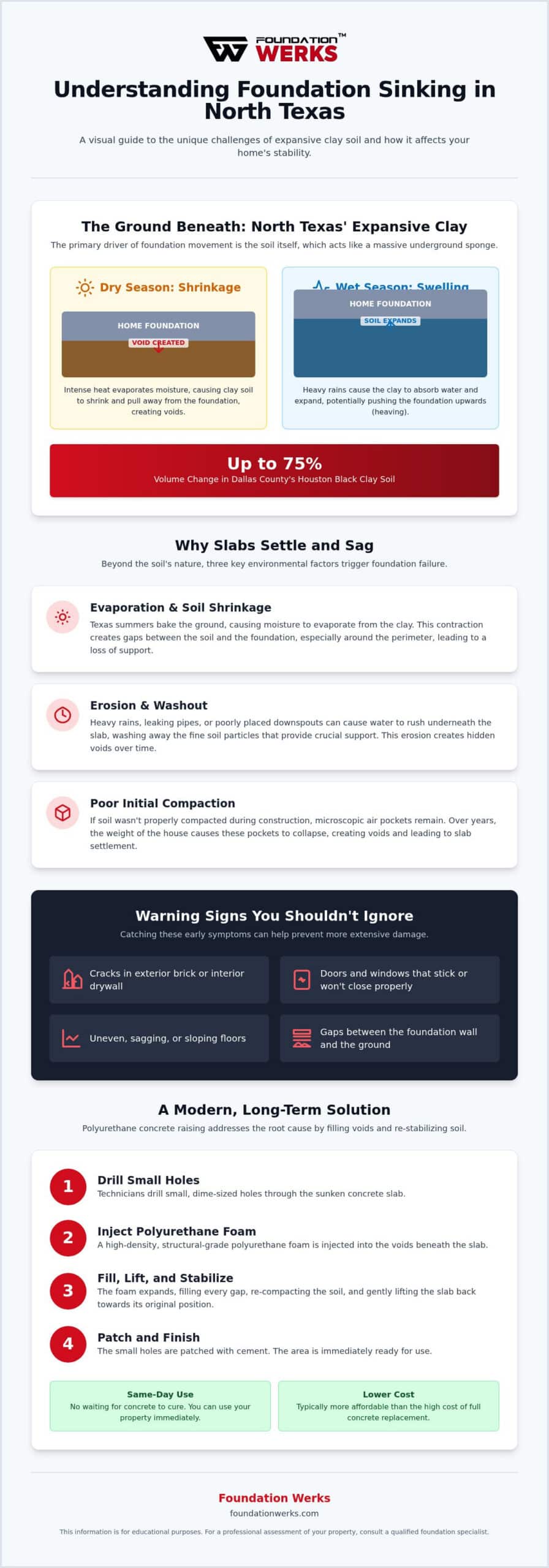
Warning Signs You Shouldn’t Ignore
Foundation issues rarely fix themselves. In fact, they almost always worsen as the North Texas soil continues its cycle of expansion and contraction. If you’ve been asking "Why is my foundation sinking." the worst thing you can do is wait for the next season to see if it levels out. Delaying repairs often turns a simple stabilization job into a complex structural project. Small cracks grow, and doors that stick today may become completely jammed by next summer. Taking early action is the most effective way to secure long-term solutions for your property.
The Hidden Danger of Voids
A slab might look perfectly fine on the surface while actually "floating" over an empty space. These voids occur when the soil beneath the concrete shrinks away or washes out, leaving the slab without support. This is a critical stage. While the concrete may hold its own weight for a while, it can suffer sudden, catastrophic failure under heavy loads, such as a vehicle in a driveway or heavy machinery in a warehouse.
Void filling is the essential first step in providing immediate support and stabilization. We use a specialized, lightweight foam weighing just 2 lb per cubic foot to fill these gaps. We inject this material through 5/8-inch nearly invisible drill holes. The foam expands to find every pocket of air, stabilizing the ground before the concrete has a chance to crack or collapse. By addressing these hidden pockets early, you ensure the slab has the foundation it needs to remain functional.
Trip Hazards and Liability
For commercial property owners in Dallas, sinking concrete isn’t just an eyesore; it’s a legal liability. According to standard safety guidelines, a vertical displacement of 1/4 inch or more is often classified as an OSHA-compliant trip hazard. Property managers must prioritize leveling for sidewalks, entryways, and parking lots to protect both pedestrians and the business’s bottom line. Many business owners ask "Why is my foundation sinking." only after a safety incident has already occurred.
In industrial settings, the risks are even higher. Sinking slabs lead to uneven warehouse floor repair needs, which can damage forklifts and cause safety hazards for personnel. Business owners should consult our Commercial Concrete Crack Repair Guide to understand how to maintain their facilities effectively. Proactive maintenance and targeted improvements are always more cost-effective than emergency repairs or equipment replacement.
Long-Term Solutions: Polyurethane Concrete Raising
Polyurethane concrete raising represents the modern standard for addressing soil instability in North Texas. When you stop asking "Why is my foundation sinking." and start looking for answers, you’ll find that traditional methods often fall short of the unique demands of DFW clay. Our approach uses a patented, eco-friendly foam made from recycled materials to provide a stable base for your concrete. The process involves injecting the material beneath the slab, where it expands to fill voids and lift the structure back to its original position. This isn’t a temporary patch; it’s one of the most effective long-term solutions for maintaining property value in our region.
The Polyurethane Advantage
The material we use is engineered for efficiency and safety. Traditional mudjacking relies on a heavy grout mixture that weighs roughly 100 lb per cubic foot. Adding that much weight to already failing soil can actually accelerate sinking. In contrast, our polyurethane foam weighs just 2 lb per cubic foot. It adds almost no load to the soil while providing superior lifting power. There are several other practical benefits to this method:
- Immediate Usability: You don’t have to wait days for the material to cure. Your driveway, sidewalk, or patio is usable the same day the work is completed.
- Minimal Footprint: We only need to drill 5/8-inch holes to perform the injection. These are nearly invisible once we patch them, preserving the look of your concrete.
Why Lifting Costs Less than Replacement
Choosing to raise your concrete typically costs about half of what you would pay for a full replacement. Beyond the direct price tag, you save money by avoiding collateral damage to your property. We don’t require heavy equipment on your lawn, which is a major benefit for homeowners in McKinney or Frisco who want to protect their landscaping. The work environment remains clean, with no concrete splatter or messy wash-down required after we finish the job. Because we are stabilizing the soil rather than just pouring new concrete on top of a problem, these improvements are designed to last.
Next Steps for Your Property
If you’re tired of wondering "Why is my foundation sinking." every time a new crack appears, a professional inspection is the only way to determine the root cause of your soil issues. For areas with gravel or blacktop, we can also use Deep Foamjection™ to stabilize the ground at various depths. This targeted approach ensures that the underlying soil is ready to support the weight above it. Taking action now is the best way to prevent more expensive repairs later.
Secure Your Property with Expert Soil Stabilization
Understanding the unique challenges of North Texas clay is the first step toward protecting your home. You now know that the answer to "Why is my foundation sinking." usually lies in the soil’s volume changes rather than a failure of the concrete itself. Identifying these issues early prevents minor settlement from turning into a major structural crisis. These long-term solutions focus on stabilizing the ground to provide the support your slab requires.
Our polyurethane concrete raising offers a modern, eco-friendly approach to these repairs. By using a patented foam made from recycled materials, we provide improvements that stabilize your ground without the heavy weight of traditional mudjacking. Our expert crews serve the entire DFW metroplex, ensuring that your driveways, patios, and walkways are usable the same day we finish the work. This efficient process respects your time and your landscaping while delivering reliable results.
Request Your Free Foundation & Concrete Inspection
Don’t let foundation stress weigh you down. These improvements restore both the safety and the value of your property with a clean, professional process. We look forward to helping you stabilize your home and move forward with confidence.
Frequently Asked Questions
Is a sinking foundation always a structural emergency?
Not necessarily. While it’s a priority, many issues involve slab-on-grade surfaces like driveways or patios. These are often safety or cosmetic concerns rather than threats to the home’s skeleton. However, if you’re asking "Why is my foundation sinking" and see cracks in interior drywall or sticking doors, the issue may involve the main footings. Getting a professional assessment helps determine if you need stabilization or deeper structural work.
How much does it cost to fix a sinking foundation in Dallas?
Costs vary based on the severity and method used. For major structural repairs in the DFW area, homeowners often pay between $3,500 and $8,500 depending on the scope of work. When it comes to concrete surfaces like patios or driveways, polyurethane raising is a cost-effective alternative. It typically costs about half of what you would pay for full concrete replacement while providing long-term improvements to your property’s stability.
Can you lift concrete that is severely cracked?
We can lift most solid slabs, but there is a limit. If a section of concrete has shattered into many small, disconnected pieces, it usually lacks the structural integrity to be raised effectively. In those cases, concrete replacement is the better option. We evaluate the condition of your slab during the initial inspection to ensure that polyurethane injection will provide a successful and stable result for your specific situation.
How long does polyurethane concrete raising take to complete?
The process is remarkably fast compared to traditional methods. Most residential projects, such as leveling a sidewalk or a section of a driveway, take only a few hours from start to finish. Because we don’t use heavy equipment or require a lengthy curing time, our crews can complete the work efficiently. This speed makes it a popular choice for busy DFW homeowners who want to address foundation issues without a week-long construction project.
Will the foam lose density or sink again over time?
No, the patented polyurethane foam we use is engineered to maintain its density. Unlike traditional mudjacking slurry, which can wash out or compress over time, our foam remains stable once it has cured. It’s an eco-friendly material made from recycled components that provides a reliable base for your concrete. While no soil-based repair can be called an eternal solution, this method offers one of the most durable long-term solutions available for North Texas clay.
What is the difference between mudjacking and polyurethane foam lifting?
The primary difference is weight and precision. Mudjacking uses a heavy grout mixture weighing about 100 lb per cubic foot, which can actually cause more sinking in weak soil. Our polyurethane foam weighs only 2 lb per cubic foot. Additionally, mudjacking requires large, noticeable drill holes. We use 5/8-inch holes that are nearly invisible once patched. This cleaner, lighter process is far less invasive for your landscaping and provides better soil stabilization.
Can I drive on my driveway immediately after the foam is injected?
Yes, you can walk or drive on the concrete the same day the work is finished. One of the biggest advantages of polyurethane raising is the immediate usability of the surface. Traditional concrete replacement requires days of curing time where the area is completely off-limits. With our method, the foam reaches full strength quickly, allowing you to return to your normal routine without the stress of a blocked driveway or restricted patio.
Do I need a permit for foundation repair in McKinney or Frisco?
Most cities in the DFW metroplex, including Dallas, McKinney, and Frisco, require a building permit for foundation work. This often includes providing a scope of work and a plan signed by a licensed Texas engineer. While specific regulations vary by municipality, we recommend checking with your local development services office. Ensuring your repairs meet the 2021 International Residential Code standards protects your property value and ensures the work is done correctly.