
What if the most expensive part of your foundation repair isn’t the contractor’s bill, but the three weeks your warehouse sits empty? For North Texas facility managers, the traditional "tear it out and start over" approach is often a financial trap. Understanding modern commercial foundation stabilization methods is no longer just a maintenance task; it’s a strategy for protecting your bottom line. You already know that an uneven floor is more than an eyesore. It’s an OSHA trip hazard liability and a bottleneck for your daily operations that grows more dangerous every day the soil shifts beneath your slab.
We understand the pressure of keeping a facility running while facing structural settling that seems to have no end. This guide shows you how to achieve a level, safe floor surface with immediate return to service, often at half the cost of traditional concrete replacement. You’ll discover how lightweight polyurethane injections and Deep Foamjection™ provide a long-term solution for the region’s challenging clay soils. We’ll walk through the latest 2026 efficiency standards and help you choose a path that stabilizes your foundation without halting your business.
Key Takeaways
- Identify early visual indicators like diagonal wall cracks and operational red flags such as sticking warehouse doors before they impact your safety audits.
- Compare different commercial foundation stabilization methods to see how polyurethane injection provides a durable, cost-effective alternative to total concrete replacement.
- Understand the science behind Deep Foamjection™ and how its high-expansion properties stabilize sub-grade soils with minimal disruption to your daily workflow.
- Learn why managing water runoff with French drains is a critical component of maintaining long-term structural stability in the Dallas-Fort Worth area.
- Explore the benefits of using eco-friendly, lightweight materials that allow for same-day usability and nearly invisible repair sites.
Identifying Signs of Commercial Foundation and Slab Failure
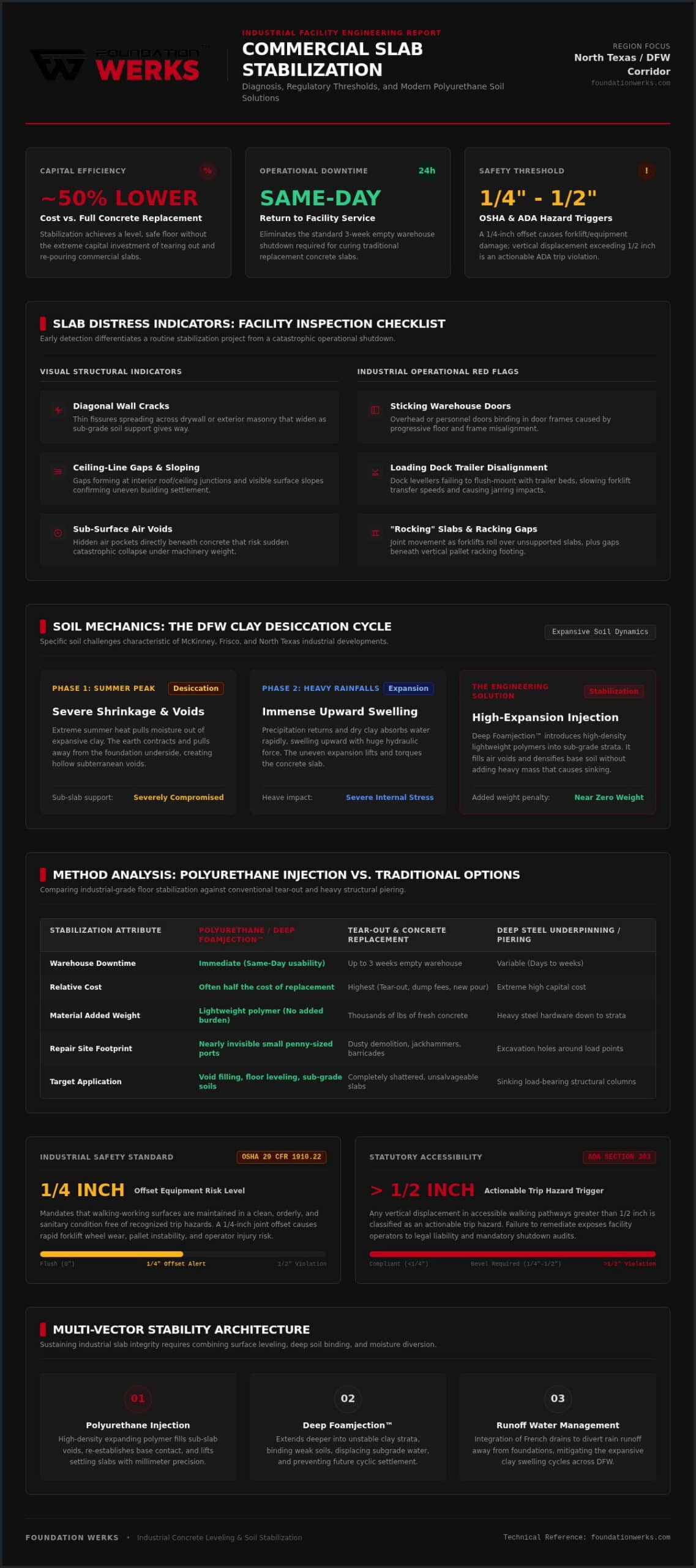
Early detection of structural distress is the difference between a routine maintenance project and a catastrophic operational shutdown. Signs of failure often start small, appearing as thin diagonal cracks in drywall or masonry. Over time, these gaps widen, signaling that the soil beneath your facility can no longer support the weight of the structure. Choosing the right commercial foundation stabilization methods begins with a thorough inspection of these visual cues. Gaps at the ceiling line or sloping floors aren’t just cosmetic issues; they indicate that the building’s weight is shifting unevenly.
Operational red flags are equally critical in an industrial environment. If your warehouse doors stick or loading dock levels no longer align with trailers, the slab has likely settled. While some heavy structural issues require commercial foundation underpinning methods to reach deeper load-bearing strata, many slab issues are caught much earlier through these functional changes. Ignoring these warnings often leads to sub-surface voids, which are hidden pockets of air beneath the concrete. These voids are particularly dangerous because they can cause a sudden slab failure when a heavy forklift or machinery passes over an unsupported area.
To better understand how these structural methods work, watch this helpful video:
Safety compliance is another driver for immediate repair. Under ADA Standards Section 303, any vertical displacement greater than 1/2 inch is an actionable trip hazard. OSHA standards under 29 CFR 1910.22 also mandate that walking-working surfaces remain free of recognized hazards. In a fast-paced commercial setting, a 1/4 inch offset is enough to cause equipment damage or employee injury. Addressing these displacements early ensures you maintain a safe work environment while avoiding the high costs associated with workplace accidents and legal liabilities.
Common Symptoms in Warehouse and Industrial Settings
In high-traffic facilities, you’ll often notice joint separation or "rocking" slabs. This happens when a forklift crosses a joint and the concrete visibly moves because of a void underneath. You might also see gaps forming beneath heavy racking systems, which compromises the stability of your inventory storage. Proactively managing uneven warehouse floor repair in Dallas is essential for maintaining equipment longevity and facility safety. When slabs lose contact with the subgrade, the internal stress on the concrete increases, leading to rapid cracking and further settlement.
The Role of Soil Desiccation in North Texas
The expansive clay soils found in McKinney and Frisco are notoriously unstable. During the extreme heat of a North Texas summer, the soil loses moisture and shrinks, creating gaps between the earth and your foundation. When the rains return, the clay expands with immense force. This constant cycle of swelling and shrinking is the primary cause of foundation movement in the DFW area. Effective commercial foundation stabilization methods must account for this soil behavior by filling voids and improving the load-bearing capacity of the ground without adding excessive weight that could cause further sinking.
Comparing Commercial Foundation Stabilization Methods
While some contractors argue that deep steel piering is the only answer for every building, this often ignores the specific needs of warehouse floors and commercial slabs. Choosing between different commercial foundation stabilization methods requires understanding whether your issue is structural or slab-related. Structural underpinning is necessary when load-bearing columns sink into deep, unstable soil. However, for most industrial facilities, the problem is a void directly beneath the concrete floor. Addressing these voids through stabilization prevents the slab from cracking under the weight of heavy machinery without the extreme cost of deep piering.
Traditional mudjacking was once the standard, but it has significant drawbacks for modern facilities. Mudjacking involves pumping a heavy cementitious slurry into the ground. This material weighs roughly 100 lbs per cubic foot, which can actually accelerate further settling by adding a massive deadload to already compromised soil. High-density polyurethane is a more advanced alternative. At only 2 lbs per cubic foot, it provides the necessary lift without the weight burden. It also requires much smaller drill holes, only 5/8 inch in diameter, compared to the 2 inch holes needed for older methods.
Slab Jacking and Void Filling Explained
The process of slab jacking works by injecting material into the empty spaces created by soil shrinkage or erosion. This pressure gently lifts the concrete back to its original position. For businesses in North Texas, warehouse floor joint repair in Dallas is a vital part of this process. It preserves the existing slab and restores a level surface for forklift traffic. This approach typically costs about 50% less than a full concrete tear-out and repour, making it a highly efficient choice for facility managers watching their budgets.
High-Density Polyurethane Injection
Polyurethane injection is often the preferred choice for high-traffic commercial zones because of its rapid cure time. While a concrete repour might take days or weeks to reach full strength, polyurethane foam reaches load-bearing capacity in 15 to 30 minutes. This speed is essential for maintaining operational flow. Modern commercial foundation stabilization methods also follow geotechnical subgrade stabilization and drainage guidelines to ensure the soil beneath the slab is properly reinforced. If you’re seeing signs of a sinking floor, reach out to the team at foundationwerks.com to evaluate your options.
The Science of Deep Foamjection™ for Soil Stabilization
Deep Foamjection™ is a specialized method that targets the root cause of settlement: unstable sub-grade soils. Unlike surface-level repairs, this process involves injecting high-density polyurethane at multiple depths to create a solid foundation base. When the liquid components meet, a chemical reaction occurs, causing the material to expand up to 20 times its liquid volume. This expansion fills every micro-void and compacts the surrounding soil, effectively increasing the ground’s load-bearing capacity without the need for massive excavation or dirt replacement.
This technology is versatile enough for diverse commercial environments. It’s effectively used on gravel lots, blacktop, and pavers, as well as heavy industrial slabs that support massive racking systems. By following FHWA ground improvement and soil modification guidelines, our technicians ensure that the soil is reinforced according to established engineering standards. This is one of the most effective commercial foundation stabilization methods for facilities that handle heavy dynamic loads, such as warehouses with constant forklift traffic and heavy machinery.
The Injection Process and Precision Leveling
The process begins with drilling 5/8-inch holes, which is roughly the size of a dime. This minimal footprint ensures the repair is nearly invisible once the holes are patched with matching grout. Technicians use sensitive laser levels to monitor the lift in real-time, allowing for precision adjustments within 1/10th of an inch. Because the high-density foam is hydro-insensitive, it won’t wash away, rot, or lose its density over time. It actively displaces subterranean water during the injection process, ensuring the structural support remains consistent despite the volatile moisture cycles common in North Texas.
Immediate Return to Service
Downtime is the enemy of any supply chain. One of the biggest advantages of Deep Foamjection™ is the 15-minute cure time. Traditional concrete pours require a 28-day wait to reach full structural strength, which can paralyze a loading dock, warehouse aisle, or retail floor. With high-density polyurethane, you can drive forklifts or heavy trucks over the repaired area on the same day the work is completed. This rapid return to service allows you to maintain operational momentum and avoid the logistical nightmare of a long-term facility closure. It’s a pragmatic, quietly innovative approach for managers who need results that don’t compromise their production schedule.
Integrating Drainage and Joint Maintenance for Long-Term Stability
Stabilization projects often fail when managers ignore the root cause of soil movement. In the Dallas-Fort Worth area, that cause is almost always water management. Highly expansive clay soils react violently to moisture changes. If you don’t control how water enters and leaves the ground around your facility, the soil will continue its cycle of shrinking and swelling. Integrating proper drainage with modern commercial foundation stabilization methods ensures your investment is protected against the volatile North Texas climate.
The Impact of French Drains on Foundation Health
DFW clay soils exhibit a "sponge effect," absorbing water during spring storms and drying into deep fissures in summer. French drains are critical for mitigating this movement. By installing a perforated pipe system in a gravel-filled trench, we intercept groundwater before it reaches the foundation. Strategic placement is key. We focus on areas where water pools against the building or parking transitions. A comprehensive plan isn’t complete without diverting water away from the stabilized sub-grade.
Mastic and Joint Sealing for Facilities
Concrete joints are direct pathways for water to reach the soil beneath your slab. When water infiltrates these openings, it erodes the sub-soil, creating the voids that lead to settlement. Proper concrete crack repair commercial services stop this cycle of erosion before it causes "slab curl" or edge failure. Mastic and joint sealing act as a barrier, keeping the sub-grade dry and the polyurethane support intact. This protection is essential for maintaining the integrity of your warehouse floors and loading docks.
Maintaining sealed joints also prevents debris from filling expansion gaps. When joints are packed with dirt and rocks, the concrete can’t expand during hot days, which leads to spalling and further structural stress. By combining void filling with proactive moisture control, you create a stable environment for your industrial floors. This dual approach addresses both the current settlement and the environmental factors that caused it in the first place.
The Foundation Werks Approach: Sustainable Commercial Repair
Foundation Werks operates with a quiet pride in delivering high-quality results across McKinney, Dallas, and the greater DFW metroplex. We don’t just lift slabs; we provide a durable resolution that respects your facility’s environment. Our process uses a patented polyurethane foam made from recycled materials, which addresses the growing need for sustainable construction practices. Unlike traditional grout, this eco-friendly material provides the same structural support while reducing the carbon footprint of your repair. It’s a quietly innovative way to manage your facility’s structural health without contributing to the waste of a total replacement.
We maintain a clean work environment by avoiding heavy equipment that damages landscaping or leaves unsightly tracks on your property. Our trailers stay parked in designated areas, and our delivery hoses reach exactly where the work is needed. This precision is a hallmark of our approach to commercial foundation stabilization methods. We focus on efficiency so you can focus on your business. You won’t have to deal with concrete splatter or the dust associated with major demolition and haul-off.
Why Choose Polyurethane Over Replacement?
Total concrete replacement is often a wasteful process. It involves heavy demolition, hauling away tons of debris, and the high energy cost of producing new concrete. Polyurethane injection offers a sustainable alternative. It achieves a level, safe floor surface at approximately half the cost of a full repour. The material is also hydro-insensitive and moisture-resistant, meaning it won’t degrade when exposed to the fluctuating water tables common in North Texas. It’s a reliable, long-term solution that stays structural for years without losing density or volume. This approach keeps your existing concrete out of landfills while restoring its original utility.
Getting Your Commercial Estimate
Every industrial facility has unique load requirements. A professional site evaluation is the first step in creating a tailored stabilization plan. During a Foundation Werks consultation, we act as educators rather than salespeople. We assess the depth of voids, the condition of the sub-grade, and the specific weight burdens of your machinery or racking systems. We explain the process clearly, empowering you with the knowledge to make the best decision for your property. We provide a transparent breakdown of the necessary steps to restore your floor’s safety and functionality. Moving forward with a long-term plan protects your building’s value and ensures your operations remain uninterrupted.
Protecting Your Commercial Asset in North Texas
Managing a commercial facility in North Texas requires balancing safety with operational efficiency. You’ve seen how identifying early signs of settlement and choosing modern commercial foundation stabilization methods can save your business from the high costs of total concrete replacement. By utilizing high-density polyurethane and integrating proper drainage, you address the root causes of instability while ensuring a level, safe floor surface for your team. This proactive approach keeps your warehouse or retail space compliant with ADA and OSHA standards without the waste of a full tear-out and repour.
Our team at Foundation Werks is proud to serve Dallas, McKinney, and the entire DFW metroplex with patented eco-friendly foam solutions. These methods offer same-day usability, meaning you can return to full service within minutes of the repair. We focus on providing durable, moisture-resistant results that work with the unique clay soils of our region. We’re here to help you navigate these structural challenges with transparency, innovation, and a commitment to your facility’s long-term health. Don’t let shifting soil stall your momentum.
Get a Free Commercial Estimate from Foundation Werks
We look forward to helping you restore the safety and stability of your facility with a plan tailored to your specific load requirements. Let’s get your floors back on level ground today.
Frequently Asked Questions
How long does commercial polyurethane stabilization last?
Polyurethane stabilization provides a durable, long-term solution because the material does not degrade or lose density over time. It’s hydro-insensitive, meaning it won’t wash away or rot when exposed to moisture in the North Texas soil. This material stays structural for the life of the concrete slab. It remains a reliable way to maintain level floors in high-traffic commercial environments across the Dallas metroplex without the need for recurring adjustments.
Can I drive heavy machinery on the concrete immediately after injection?
You can return your facility to full service almost immediately after the injection process is complete. High-density polyurethane foam reaches its full load-bearing capacity within 15 to 30 minutes of application. This rapid cure time allows you to drive forklifts, trucks, and other heavy machinery on the concrete the same day. It’s an ideal choice for busy warehouses in Frisco and McKinney that can’t afford the long downtime of traditional concrete repours.
How much does commercial foundation stabilization cost compared to replacement?
Choosing commercial foundation stabilization methods like polyurethane raising typically costs about half as much as a full concrete replacement. You save money by avoiding the labor-intensive costs of demolition, hauling away old debris, and pouring new material. This approach also prevents the indirect costs of operational downtime. For most DFW facility managers, this represents a significant budget saving while achieving a level, safe working surface that meets all safety standards.
What size are the holes drilled for the polyurethane injection?
The drill holes used for our injection process are only 5/8 inch in diameter, which is roughly the size of a dime. Because the holes are so small, they require significantly less patchwork than older methods. Once the project is finished, our technicians fill the holes with matching grout, making the repair site nearly invisible. This clean, non-invasive process is perfect for maintaining the professional appearance of retail spaces and industrial floors.
Is polyurethane foam environmentally friendly?
The polyurethane foam we use is a quietly innovative, eco-friendly material made from recycled components. It’s designed to be environmentally stable and does not leach harmful chemicals into the surrounding North Texas soil. By opting for stabilization instead of replacement, you also reduce the environmental impact associated with concrete production and landfill waste. It’s a sustainable choice for businesses in McKinney and Dallas looking to maintain their infrastructure responsibly.
Will the foam lose density or settle over time?
High-density polyurethane is specifically engineered to retain its structural integrity under heavy commercial loads. Unlike cementitious grouts that can shrink or crack, our foam never loses its density or volume once it has cured. It remains a stable support system for your slab even in the volatile moisture cycles common to the DFW area. This reliability ensures that your warehouse floors stay level and safe for employees and equipment for years to come.
What is the difference between slab stabilization and structural piering?
Slab stabilization focuses on filling voids directly beneath the concrete to restore support and level the surface. Structural piering is a different method used to support a building’s entire weight by reaching deep, stable soil strata. Foundation Werks specializes in slab-level stabilization and void filling, which is often the most efficient way to repair sinking warehouse floors. We don’t offer structural piering, but we can help determine if your issue is slab-related.
Do you offer services for warehouse floors in Frisco and McKinney?
We provide expert warehouse floor stabilization and concrete raising services throughout the entire DFW metroplex, including Frisco and McKinney. Our team is familiar with the specific challenges posed by the expansive clay soils in these areas. Whether you’re managing a distribution center in Dallas or a retail facility in Allen, we offer local expertise and reliable scheduling. We’re committed to helping North Texas businesses maintain safe, productive environments with minimal disruption to their operations.