
The traditional method you’ve relied on for years to level your warehouse floor might actually be the very thing causing it to sink again. Facility managers across North Texas know the frustration of watching a trip hazard reappear just months after a expensive repair. It’s stressful to manage OSHA compliance while trying to keep operations moving. Finding viable alternatives to mudjacking for commercial properties has become a priority for businesses that can’t afford the heavy weight of traditional slurry.
We understand that you need a solution that lasts without shutting down your loading dock for a week. This guide explores why modern polyurethane foam has replaced outdated methods as the gold standard for industrial concrete. You’ll discover how these advanced materials provide a long-term solution by addressing soil instability without adding unnecessary stress to the slab. We will break down the differences in weight, downtime, and cost-effectiveness to ensure your facility stays safe and functional without the need for total concrete replacement.
Key Takeaways
- Understand why traditional mudjacking often fails in North Texas because the heavy slurry adds too much weight to already unstable clay soils.
- Learn how polyurethane foam provides a long-term solution by offering high lifting strength at only 2 pounds per cubic foot.
- Discover the most cost-effective alternatives to mudjacking for commercial properties that allow for same-day traffic and immediate operational usability.
- Identify critical OSHA trip hazards on warehouse floors and loading docks that can be resolved without the high cost of full concrete replacement.
- See how eco-conscious, patented foam technology specifically tailored for DFW soil conditions protects your facility and your sustainability goals.
Why Traditional Mudjacking Often Fails Commercial Standards
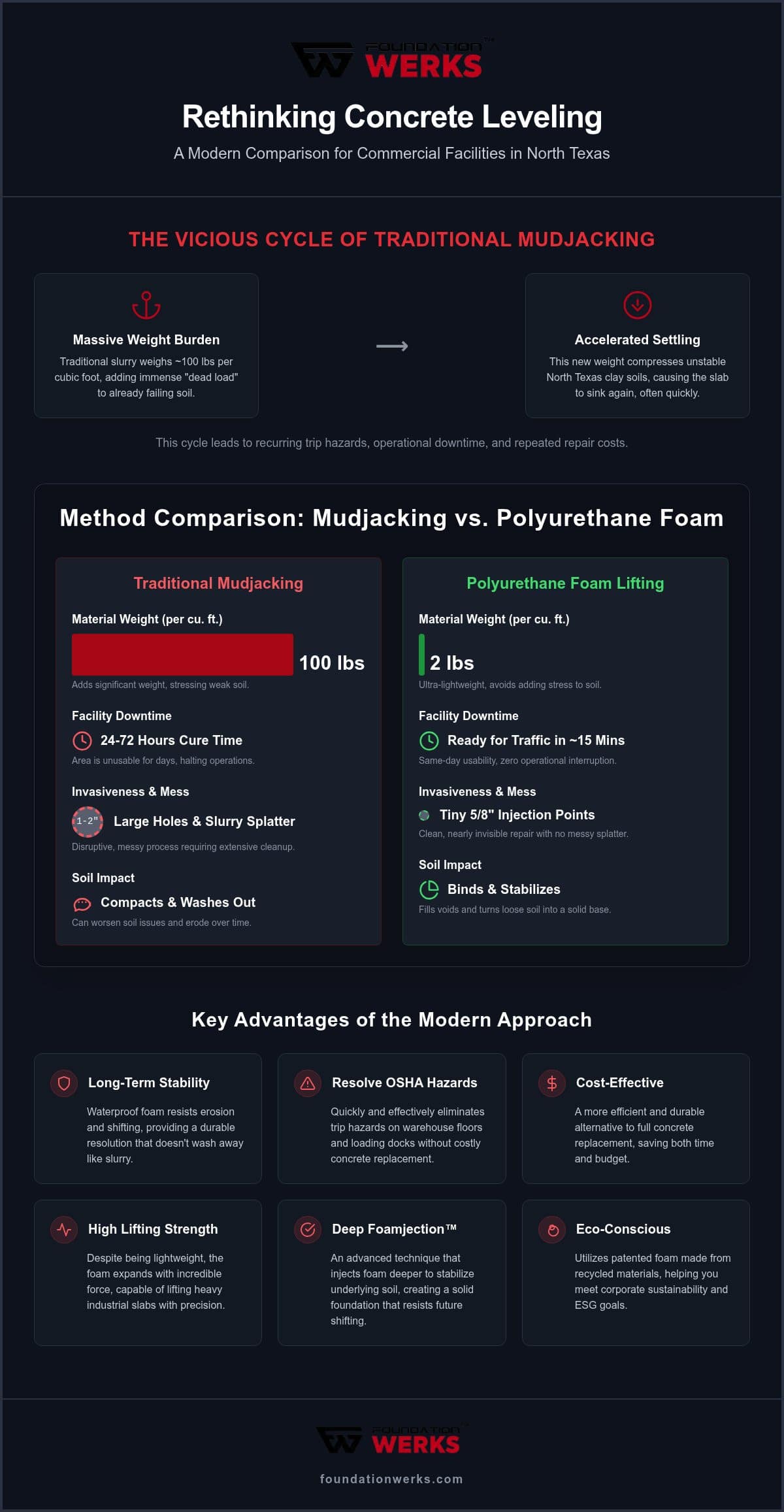
Traditional mudjacking has been the go-to method for decades, but it often falls short of the rigorous standards required for modern industrial facilities. The primary issue lies in the material itself. Mudjacking relies on a heavy slurry composed of sand, water, and cement, which typically weighs roughly 100 lbs per cubic foot. In a commercial environment, where slabs are already supporting heavy machinery or inventory, adding this much “dead load” can be counterproductive.
Managers looking for alternatives to mudjacking for commercial properties often realize that the very solution they hired is accelerating the problem. When this heavy mixture is pumped under a slab resting on unstable North Texas clay, the soil often compresses further under the new weight. It’s a fundamental physics problem that traditional contractors sometimes overlook, leading to repeated settling shortly after the repair is finished.
The Vicious Cycle of Concrete Settling
The geological makeup of the DFW metroplex presents unique challenges. Our expansive clay soils shrink and swell with the seasons. When a contractor uses mudjacking, they aren’t just filling a void; they’re placing a massive weight on top of soil that is already prone to shifting. During DFW spring storms, the “wet” nature of the slurry can become a liability. Water can infiltrate the repair site and wash out the slurry, leading to secondary sinking and the creation of even larger voids.
This cycle is especially dangerous near heavy warehouse racking. The concentrated pressure from pallet jacks and forklifts combined with 100-pound slurry can cause the soil to give way much faster than expected. While researching concrete leveling techniques, it becomes clear that modern engineering favors lighter, more stable materials that don’t fight against the soil’s natural properties.
Impact on Facility Aesthetics and Integrity
The physical process of mudjacking is inherently disruptive. It requires drilling large holes, often 1 to 2 inches in diameter, directly through your concrete. In a polished retail space or a high-end office lobby, these large patchwork circles act as a visual deterrent. They’re difficult to hide and often look like a series of scars across the floor, compromising the professional look of your property.
Cleanup is another significant hurdle. Because mudjacking is a “wet” process, the slurry can easily splatter onto nearby equipment, warehouse inventory, or walls. It requires extensive washing and a long cure time before the area is ready for heavy traffic. For a facility manager, this means extended downtime and a messy environment that doesn’t align with professional standards. Mudjacking is increasingly seen as an outdated approach that fails to provide the durable resolution modern facilities require.
Polyurethane Concrete Raising: The Superior Industrial Alternative
Polyurethane concrete raising represents a significant leap forward in engineering. Often referred to as “polyjacking,” this method involves injecting high-density, specialized foam through tiny access points to lift and level sinking slabs. It has quickly become the preferred choice among alternatives to mudjacking for commercial properties because it eliminates the massive weight burden of traditional slurry. By choosing foam, you address the symptom of sinking concrete without exacerbating the underlying soil issues.
The technical difference is stark. While mudjacking adds 100 lbs of weight for every cubic foot of material, our polyurethane foam weighs only 2 lbs per cubic foot. This allows us to achieve precise lifting strength without overloading the fragile North Texas clay below. We take pride in using a patented, eco-friendly foam made from recycled materials. This is a key advantage for companies prioritizing corporate sustainability and ESG targets. Because the injection sites are only 5/8-inch wide, the repair is nearly invisible once we finish the patchwork. If you’re looking for a team that respects your operational schedule, you can learn more about our specialized process.
Deep Foamjection™ for Soil Stabilization
Standard repairs often only address the surface level. Deep Foamjection™ goes further by stabilizing the underlying gravel, blacktop, or pavers. The foam expands rapidly to fill the “micro-voids” that traditional mudjacking simply cannot reach. By binding soil particles together, this process creates a durable resolution for long-term slab stability. It effectively turns loose soil into a solid, load-bearing foundation that resists future erosion and shifting, even under heavy industrial loads.
Speed of Operations: Immediate Usability
In a busy industrial setting, every minute of downtime costs money. Traditional cementitious grouts require 24 to 48 hours to cure before they can support weight. In contrast, polyurethane foam cures in about 15 minutes. This means heavy trucks and forklifts can roll over the slab immediately after we pack up our gear. This speed is a total game changer for warehouse floor stabilization Texas managers who need to maintain 24/7 operations without logistical bottlenecks or extended lane closures.
Comparing Mudjacking, Foam Lifts, and Full Concrete Replacement
Choosing the right repair method involves balancing your budget, your timeline, and the long-term stability of your facility. While mudjacking was once the only game in town, modern managers now look for alternatives to mudjacking for commercial properties to avoid the pitfalls of heavy slurry. A full concrete replacement is often the most expensive route, frequently costing double what a professional foam lift would. You aren’t just paying for the new material; you’re paying for demolition, disposal, and the labor of a large crew over several days.
Time is your most valuable asset in a commercial environment. Replacing a slab can take weeks when you factor in demolition and the necessary cure time for new concrete. Mudjacking typically requires a few days of restricted access due to the “wet” nature of the slurry. Polyurethane foam requires only hours. Because it’s a dry process, there’s no need for high-pressure wash-downs or heavy demo equipment that might damage your property’s exterior. The foam material itself is hydrophobic, meaning it won’t lose density or wash out when the North Texas water table rises.
The ROI of Choosing Foam Lifts & Levels
For a retail center or logistics hub, closing a loading dock or a main entrance for a week is a logistical nightmare that impacts the bottom line. Foam stabilization allows you to keep your doors open and your trucks moving. You also avoid the “hidden costs” often associated with heavy machinery, such as torn-up landscaping or cracked adjacent slabs from vibration. By lifting the existing concrete, you preserve the structural history of the site while providing a durable resolution that resists the shifting nature of DFW soil.
When Replacement is the Only Option
We believe in being educators first, which means being honest about when a slab is too far gone. If your concrete looks like a spiderweb of deep, “alligator” cracks, it likely can’t be safely lifted. Polyurethane foam needs a cohesive slab to push against. If the concrete is in dozens of small, disconnected pieces, it won’t rise evenly or stay level. When structural damage exceeds stabilization capabilities, a new pour is the only responsible path forward. Consulting with a professional can help you avoid wasting your budget on concrete that is physically un-liftable.
Assessing Your Facility: When to Choose Foam Stabilization
Identifying exactly when to intervene can save your facility from expensive emergency repairs. OSHA requirements aren’t suggestions; they’re strict safety standards designed to protect your workforce. A 1/4-inch offset in a walkway or warehouse floor is enough to trigger a liability claim or a safety citation. If you’re noticing these trip hazards, it’s time to explore alternatives to mudjacking for commercial properties. Smart managers choose these alternatives to mudjacking for commercial properties because they target the root cause of the settling without the mess of traditional methods.
Void filling is another critical application. When a slab sounds hollow under foot traffic or rolling carts, it means the supporting soil has washed away or settled. This lack of support is a precursor to structural cracking. Polyurethane injection fills these hidden gaps, providing a durable resolution that prevents the slab from snapping under pressure. In some cases, the settling is caused by poor water management. We often recommend French drain installation alongside our leveling services to divert water away from the foundation and protect the soil integrity over time.
Warehouse and Logistics Hub Solutions
Loading docks and heavy equipment pads endure constant punishment from high-impact loads. A rocking slab isn’t just a nuisance; it’s a safety risk that can damage forklift tires and lead to inventory spills. We focus on uneven warehouse floor repair Dallas to ensure these high-traffic zones remain stable and level. By injecting high-density foam, we create a solid base that stops the movement. We often pair this with concrete crack repair commercial services to seal the surface and prevent moisture from reaching the subgrade again.
Retail and Office Perimeter Safety
First impressions matter in retail and office environments. Sunken sidewalks, uneven stoops, or leaning porches tell your clients that the building isn’t well-maintained. Polyurethane raising allows us to level these areas quickly and quietly during business hours. Since we don’t use heavy slurry or loud, disruptive machinery, your tenants and customers won’t be disturbed. Maintaining a clean work environment is part of our commitment to professional service. We also specialize in warehouse floor joint repair Dallas for mixed-use properties where safety and aesthetics must go hand in hand.
Foundation Werks: Specialized Polyurethane Solutions for DFW
Foundation Werks isn’t just another contractor; we’re your neighbors in the technical trade. We take a quiet pride in delivering “Top Quality” service across McKinney, Frisco, and Dallas. Our team understands that North Texas soil presents unique challenges that require more than a one-size-fits-all approach. The expansive clay in our region is notorious for shifting, which is why we’ve pioneered the use of patented, eco-conscious foam technology. This material is specifically tailored to handle the heavy industrial loads of our local warehouses and retail centers. By focusing on advanced alternatives to mudjacking for commercial properties, we provide a durable resolution that respects the integrity of your existing concrete.
Serving the Dallas-Fort Worth Metroplex
Our local expertise extends from the growing industrial hubs in McKinney and Allen to the established business districts of Prosper and Southlake. We’ve spent years observing the specific erosion patterns that plague DFW facility lots, especially during our intense spring storm seasons. Local business owners trust our “People-first” approach because we treat every project like it’s our own property. We aren’t here to give you a sales pitch; we’re here to be educators. Our technicians explain the science behind our methods so you can make an informed decision for your facility’s future. It’s this commitment to transparency that has made us a trusted name in the metroplex.
Get Your Free Commercial Estimate
Securing your property starts with a simple conversation. You can call us at 800-464-9684 to schedule your professional site assessment. During this visit, we’ll perform a thorough evaluation of your concrete’s condition and identify the root causes of any settling. We’ll walk you through how our process works and what you can expect on the day of the repair. Most commercial projects are completed in a single shift, allowing you to transition from an OSHA trip hazard to a stabilized facility in just one day. We’re committed to providing long-term solutions for commercial foundation repair that keep your operations running smoothly without the stress of repeated settling.
Secure Your Facility’s Future with Modern Stabilization
Managing a commercial property in North Texas requires a proactive approach to concrete maintenance. You’ve seen how traditional mudjacking often fails because its massive weight sinks further into our local clay. By switching to high-density polyurethane, you’re choosing a method that offers same-day usability for heavy commercial traffic. Our eco-conscious foam is made from recycled materials, helping you meet corporate sustainability goals while providing a durable resolution for your warehouse or retail space.
The process is designed to be as non-disruptive as possible. With nearly invisible 5/8-inch drill holes and a 15-minute cure time, your operations can continue without the headache of a construction zone. Finding the right alternatives to mudjacking for commercial properties doesn’t have to be complicated. It’s about choosing a long-term solution that protects both your budget and your facility’s safety standards.
We’re here to help you navigate these repairs with confidence and clarity. Let’s get your concrete back on solid ground today.
Frequently Asked Questions
How much does polyurethane concrete raising cost compared to mudjacking?
Polyurethane concrete raising typically costs more than traditional mudjacking upfront, but it often saves money over time. Mudjacking uses a heavy slurry that can cause the slab to sink again, leading to repeat repair costs. When you factor in the reduced downtime and the fact that foam is a more durable resolution, it is a very cost-effective choice. It is also significantly cheaper than full concrete replacement and disposal fees.
How long does polyurethane foam concrete lifting last in Texas soil?
Polyurethane foam is designed as a long-term solution that resists the shifting nature of North Texas clay. Unlike mudjacking slurry, the foam is hydrophobic and will not wash out during heavy rain or flood events. It maintains its density and lifting strength for decades. While no soil-based repair is immune to extreme geological shifts, this material provides a durable resolution for facility managers looking for reliable alternatives to mudjacking for commercial properties.
Can I drive heavy machinery on the slab immediately after foam injection?
Yes, you can drive forklifts and heavy trucks on the slab just 15 minutes after the injection is complete. The foam cures almost instantly, reaching nearly 90% of its full strength within that short window. This is a massive advantage over cement-based grouts that require 24 to 48 hours of downtime. It allows your logistics hub or warehouse to maintain full operational capacity without logistical delays or lane closures.
What size are the drill holes for commercial polyurethane leveling?
We use nearly invisible 5/8-inch drill holes for our commercial projects. This is significantly smaller than the 1 to 2-inch holes required for traditional mudjacking. These small entry points are much easier to patch and blend into your existing concrete, which is crucial for maintaining the aesthetics of retail floors or office lobbies. The process is clean and minimally invasive, leaving your facility looking professional and well-maintained after we finish.
Is the foam material environmentally safe for food-grade warehouses?
Our patented foam is eco-conscious and safe for use in food-grade environments and warehouses. It is made from recycled materials and does not leach chemicals into the surrounding soil or groundwater once it has cured. Because it is an inert material, it meets the strict sustainability and safety standards required by many corporate ESG targets. It provides a clean, non-toxic way to stabilize floors without risking contamination of your inventory or workspace.
What happens if the soil beneath the slab continues to erode?
If soil erosion is an ongoing issue, we often recommend installing French drains alongside our stabilization services. While the foam fills existing voids and binds soil particles together, it cannot stop water from flowing where it shouldn’t. Diverting water away from the foundation is a critical step in maintaining a durable resolution. We assess the drainage patterns of your lot to ensure the soil remains as stable as possible after the lift.
Can all commercial concrete slabs be raised with foam?
Most slabs can be raised, but those with severe alligator cracking may require replacement instead. Polyurethane foam needs a cohesive slab to provide the necessary leverage for a level lift. If the concrete is broken into many small, disconnected pieces, the foam cannot lift the section uniformly. We provide professional assessments to determine if your facility is a good candidate for foam or if other alternatives to mudjacking for commercial properties are needed.
Does Foundation Werks provide a warranty for commercial projects?
We do provide warranties for our commercial projects to give facility managers peace of mind. Our team stands behind the quality of our work and the durability of our patented foam material. We pride ourselves on being accountable and promise-keeping, ensuring that the project is done right the first time. During your site assessment, we will explain the specific terms of the warranty so you know exactly how your investment is protected.