

What if you could fix your sinking concrete steps in the time it takes to eat lunch, without a single heavy machine touching your flower beds? Most homeowners feel a sense of dread when they notice that gap between their porch and the top step getting wider. You’re tired of warning guests to “watch their step,” but you’re equally afraid of the cost and mess that comes with a full concrete replacement. It’s a stressful position to be in, especially when you take pride in your home’s appearance.
We’re here to show you that the best way to fix sinking concrete steps isn’t a sledgehammer; it’s science. In this 2026 guide, we’ll explain how polyurethane foam provides a lightweight, non-invasive, and long-term solution for North Texas soil settling. We’ll compare traditional repair options against modern foam leveling, which uses tiny, 5/8-inch holes to lift your steps back into place. You will learn how to achieve level, safe stairs that are ready for use immediately, all while avoiding the property disruption that traditional construction crews often leave behind.
Key Takeaways
- Identify the underlying causes of soil erosion and poor compaction that lead to uneven, hazardous stairs.
- Compare the weight and efficiency of mudjacking versus polyurethane foam to understand which method protects your landscaping best.
- Learn why polyurethane injection is the best way to fix sinking concrete steps for homeowners seeking a durable, long-term solution.
- See how a non-invasive process using tiny 5/8-inch holes can restore safety to your entryway without the mess of heavy equipment.
- Understand the cost benefits of concrete lifting, which typically costs about half as much as tearing out and pouring new slabs.
Why Concrete Steps Sink: The Root of the Problem
Concrete steps don’t move on their own. They are at the mercy of the ground beneath them. When you’re looking for the best way to fix sinking concrete steps, you have to look at the soil first. Most issues start with soil erosion. Rainwater from a misdirected downspout or poor yard grading can easily carve out empty spaces, or voids, under a heavy slab. Without soil to rest on, the concrete has nowhere to go but down.
New construction is another common culprit. Builders often excavate soil around a home’s foundation to build the structure. If that backfilled soil isn’t compacted perfectly, it will naturally settle over the first few years. When you add the sheer weight of a concrete staircase, which can weigh several thousand pounds, the pressure accelerates this compression. Even a shift as small as 1/2 inch is enough to change the rhythm of a person’s stride, creating a significant trip hazard for your family and guests.
The Role of North Texas Soil
In the Dallas-McKinney corridor, we deal with expansive clay soil that behaves like a sponge. During a wet spring, the clay swells; during a long, hot Texas summer, it shrinks and pulls away from the concrete. This constant movement creates gaps where the soil used to be. Many homeowners try to patch these gaps by top-filling cracks with caulk or mortar. While this might look better for a few weeks, it doesn’t address the empty space underneath. It’s a cosmetic band-aid that fails to stop the sinking because the weight of the steps is still unsupported.
Signs Your Steps Need Professional Attention
Identifying the problem early can save you from more extensive property damage. You don’t need to be an engineer to spot the warning signs. Keep an eye out for these specific red flags around your entryway:
- The Threshold Gap: A visible space opening up between the top step and your porch or front door threshold.
- Cracked Mortar: Mortar joints between the steps and the house wall starting to crumble, pull apart, or show “stair-step” cracking.
- Water Pooling: Puddles forming at the base of the stairs after a light rain, which indicates the concrete has tilted and changed the drainage path.
- Uneven Risers: If the first step feels significantly higher or lower than the others, the slab has likely migrated from its original position.
Recognizing these signs is the first step toward a safer home. Once you understand that the soil is the issue, you can move toward a solution that addresses the root cause rather than just the surface symptoms.
Comparing Repair Methods: Mudjacking vs. Polyurethane Foam
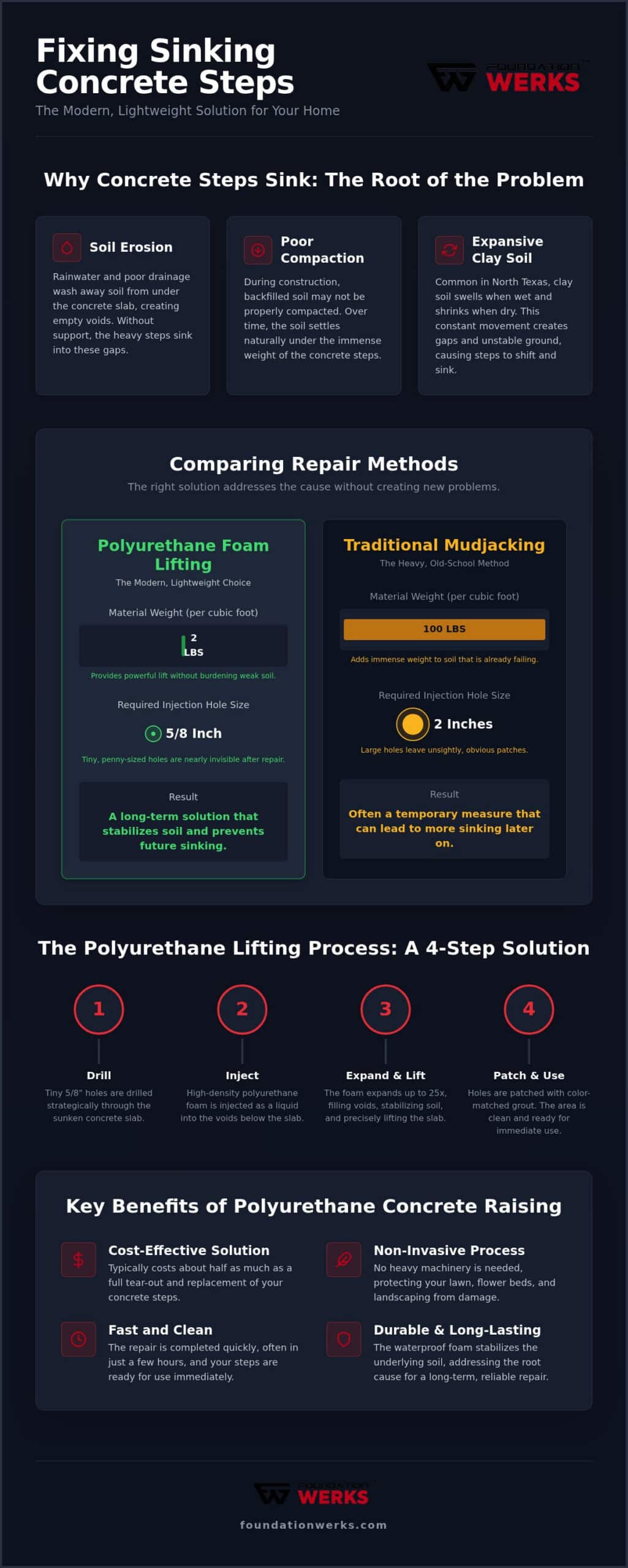
For decades, mudjacking was the only real option for homeowners. This traditional method involves pumping a heavy slurry of sand, cement, and soil under the slab to force it upward. While it works initially, mudjacking has a significant drawback: weight. A single cubic foot of mudjacking slurry weighs about 100 pounds. When you add that much mass to soil that is already struggling to support your steps, you often end up with more sinking a few years down the road. In contrast, polyurethane foam weighs only 2 pounds per cubic foot. It provides the same lifting power without the heavy burden on the ground.
The physical footprint of the repair is also vastly different. Mudjacking requires drilling large, 2-inch holes through your concrete to accommodate the thick slurry. These patches are difficult to hide and often look like polka dots on your porch. Polyurethane concrete raising uses tiny, 5/8-inch holes, which are about the size of a penny. Once the job is done, these holes are filled with a color-matched grout, making the repair nearly invisible to the naked eye. When looking for the best way to fix sinking concrete steps, the choice usually comes down to whether you want a heavy, invasive patch or a lightweight, surgical lift.
Why Weight Matters for Long-Term Stability
Adding heavy material to failing soil is often counterproductive. If your steps sank because the clay soil in North Texas couldn’t handle the weight of the concrete, adding thousands of pounds of “mud” only compounds the problem. Polyurethane foam is a long-term solution because it fills the voids and stabilizes the base without adding significant mass. The foam expands to 25 times its liquid volume, finding every empty pocket and compressing the loose soil to create a firm foundation. This allows for a durable repair that doesn’t restart the settling cycle. If you want to avoid future headaches, choosing polyurethane concrete raising is the most logical path forward.
Aesthetics and Cleanliness
Homeowners in Frisco and McKinney spend a lot of time and money on their landscaping. Traditional mudjacking often involves heavy trucks and messy hoses that can leave concrete splatter on your siding or ruin your lawn. The polyurethane process is much cleaner. The equipment is minimal, and the foam is contained entirely beneath the slab. There is no slurry to wash away and no heavy machinery to leave ruts in your grass. You get a level, safe entryway without the construction-site mess, allowing you to maintain your home’s curb appeal throughout the entire process.
The Benefits of Polyurethane Concrete Raising for Stairs
Choosing the best way to fix sinking concrete steps involves looking at more than just the initial lift. You need a solution that stands up to the elements and fits into a busy schedule. Polyurethane foam is a modern marvel in this regard. Unlike traditional mudjacking slurry, which can eventually wash away or erode, high-density foam is hydrophobic. It resists water and maintains its shape even in the wettest conditions. This durability ensures that the void beneath your stairs remains filled, providing a stable foundation for years to come.
Innovation doesn’t have to come at the cost of the environment. The polyurethane materials used today often incorporate recycled components, making this a greener choice for homeowners who care about their carbon footprint. Because the process is so efficient, it requires less fuel and fewer resources than a massive demolition project. You’re not just fixing a trip hazard; you’re choosing a responsible, eco-conscious method that respects your property and the planet.
Speed of Implementation
One of the most frustrating parts of home repair is the downtime. When you pour new concrete, you might wait days before you can safely walk on it. Polyurethane raising changes that timeline completely. A typical residential stair project takes only a few hours from start to finish. The foam cures to nearly 95% of its full strength in about 15 to 20 minutes. This means you can walk on your steps the same hour the job is finished. There is no long “curing time” to manage, and you won’t have to worry about the neighborhood cat leaving paw prints in wet cement. It is the fastest way to restore safe access to your front door.
Cost vs. Replacement Value
Budget is always a factor when maintaining a home. When you analyze the concrete replacement vs lifting cost, the financial advantage of foam is clear. Raising your existing steps generally costs about half as much as a full replacement. You also avoid the hidden costs associated with demolition, such as debris removal fees and the risk of damage to your siding or lawn from heavy machinery.
Preserving your original concrete is also an aesthetic win. New concrete rarely matches the color or texture of the existing slabs on your driveway or porch. By lifting what you already have, you maintain a consistent look across your entire entryway. You get a level, safe result without the “patchwork” appearance that often follows a partial replacement project.
How the Process Works: Professional Lifting Step-by-Step
Professional concrete lifting is a calculated, surgical procedure designed to restore your home’s entryway with minimal disruption. It is far more sophisticated than simply “pumping foam” under a slab. Our technicians use specialized equipment to deliver high-density polyurethane exactly where it’s needed. Unlike DIY attempts using canned foam that lacks the structural integrity to move heavy slabs, our professional-grade material provides the lifting force required to move several tons of concrete back to its original position. This methodical approach is widely considered the best way to fix sinking concrete steps while protecting your property’s long-term value.
- Strategic Drilling: We begin by drilling tiny 5/8-inch holes in the sunken sections of the steps. These holes are roughly the size of a penny and are placed specifically to maximize lifting efficiency.
- Foam Injection: A specialized nozzle is inserted into these holes, and high-density polyurethane foam is injected into the void beneath the slab.
- Real-Time Monitoring: As the foam expands, we carefully monitor the lift. We watch for precise leveling and ensure the top step aligns perfectly with your porch or door threshold.
- Clean Finishing: Once the steps are level, we remove the equipment and patch the holes with a color-matched concrete grout. This ensures a seamless finish that blends into your existing concrete.
Void Filling and Soil Stabilization
Before the stairs can move upward, the empty space beneath them must be filled. The foam enters as a liquid and expands into every corner of the void. In cases where the base soil is particularly loose or eroded, we use Deep Foamjection™ to reach deeper layers and stabilize the ground itself. This process doesn’t just lift the concrete; it improves the soil’s load-bearing capacity. By creating a solid, reinforced foundation, we ensure the steps don’t just return to their original height but remain supported against future North Texas soil shifts.
Precision Leveling Techniques
Achieving a safe, level surface requires extreme control. Our technicians use short, controlled bursts of foam to lift the steps in increments as small as 1/8 of an inch. This precision allows us to eliminate trip hazards and re-align the stairs with the rest of your porch structure. We finish by testing for stability and ensuring no “hollow” spots remain. You’re left with a durable, safe entryway that is ready for immediate use, allowing you to host guests or receive deliveries without worrying about a dangerous stumble at your front door.
Choosing a Local Expert in the Dallas-Fort Worth Metroplex
North Texas soil isn’t like the rest of the country. If you live in McKinney, Frisco, or the surrounding corridor, you’re likely sitting on expansive Blackland Prairie clay. This specific soil requires a contractor who understands how it breathes and shifts with the seasons. A general handyman might offer to patch your stairs with a bit of mortar, but they often lack the specialized high-pressure equipment needed for precise foam injection. When searching for the best way to fix sinking concrete steps, local expertise is the difference between a repair that lasts and one that fails after the next big rainstorm.
Professional property assessments should be thorough. A reputable expert will look at more than just the sunken slab; they will examine your drainage patterns and soil health. It’s also helpful to understand that quality residential service requires a certain level of investment. To ensure we can provide the high-grade materials and specialized crew your home deserves, residential projects must meet an $1800 minimum. This threshold ensures your project isn’t just a quick patch but a professional restoration performed with the right tools and attention to detail.
Foundation Werks: Your North Texas Partner
We pride ourselves on being more than just a contractor; we’re your neighbors. We’ve spent years helping homeowners in Allen, Prosper, Southlake, and throughout the DFW area protect their property value. Our team approaches every job as an educator first, making sure you understand exactly why your steps moved and how we plan to lift them. While we love helping families, our technical background also includes commercial concrete crack repair for large-scale facilities. This high-level industrial experience allows us to bring the same precision and accountability to your front porch.
Preventing Future Sinking
Lifting your steps is only one part of the equation. To protect your investment, you must manage the water that caused the erosion in the first place. This often involves French drain installation to redirect runoff away from your foundation. Managing your gutters is equally vital. Ensure your downspouts aren’t dumping water directly at the base of your stairs, as this is the fastest way to wash away the soil we just stabilized. Regular inspections of your concrete joints and mortar will help you catch new voids early, allowing for minor adjustments before they become major trip hazards. Taking these proactive steps ensures your entryway remains safe and level for the long haul.
Restore Your Entryway with Confidence
Sinking steps don’t have to mean a messy construction site or a drained savings account. By choosing polyurethane concrete raising, you’re opting for a long-term solution that protects your landscaping and your budget. This method is over 50% cheaper than replacement and uses eco-friendly recycled foam to stabilize the ground beneath your stairs. It addresses the root cause of the shift without adding the destructive weight of traditional mudjacking slurry.
It’s the most efficient choice for busy North Texas homeowners. Because the material cures so quickly, you’ll have same-day usability of your front door. When you look at the speed, cleanliness, and precision of the lift, it’s clear that this modern approach is the best way to fix sinking concrete steps in 2026. You can restore your home’s safety and curb appeal in just a few hours.
Don’t let a trip hazard linger at your front door. Take the first step toward a safer, more attractive home today. We’re ready to help you level the path forward with expert service and reliable results.
Frequently Asked Questions
Is polyurethane concrete lifting a long-term solution?
Polyurethane concrete lifting provides a durable, long-term solution for uneven surfaces around your home. The high-density foam we use is hydrophobic, meaning it won’t wash away during heavy North Texas rainstorms or lose its structural integrity over time. While the soil around your house may continue to shift due to environmental factors, the material itself remains stable. It effectively fills the voids that cause settling, ensuring your steps stay supported and safe for years.
How much does it cost to fix sinking concrete steps?
The cost to lift and level concrete is typically about 50% of the price of full replacement. This makes it an incredibly cost-effective choice for homeowners. At Foundation Werks, our residential projects must meet an $1800 minimum to ensure we can provide the specialized equipment and high-grade materials required for a professional result. Every project is unique, so we evaluate the size of the void and the degree of the lift needed during our assessment.
Can I walk on the steps immediately after they are lifted?
You can use your steps immediately after the project is finished. One of the primary advantages of this method is the rapid cure time. The polyurethane foam reaches nearly 95% of its full strength within 15 to 20 minutes of injection. Unlike traditional concrete pours that require days of drying time, our process allows for same-day usability. You won’t have to block off your front door or worry about guests stepping on wet material.
How large are the holes drilled into my concrete?
We drill tiny, 5/8-inch holes into the concrete, which are roughly the size of a penny. This is a significant improvement over traditional methods that require much larger openings. Because the holes are so small, they are nearly invisible once we patch them with color-matched grout. We strategically place these holes to maximize the lift while minimizing the impact on your stairs’ appearance, ensuring your home’s curb appeal remains intact throughout the entire process.
Will the foam material lose density or rot over time?
The high-density foam used by Foundation Werks never loses its density and will not rot or decay over time. It’s an inert, eco-conscious material that is completely resistant to water and underground pests. Because it is hydrophobic, it won’t break down even if it’s submerged in water during a flood. This durability is why many professionals consider foam injection the best way to fix sinking concrete steps compared to organic or cement-based fillers.
Can all concrete steps be raised, or are some too far gone?
Most solid concrete slabs can be successfully raised and stabilized using our polyurethane injection process. However, if the concrete is severely crumbled or has multiple cracks, it might be too structurally compromised to lift safely. In those rare cases, replacement might be the only viable path. During our professional property assessment, we’ll inspect the condition of your masonry to determine if lifting is the right choice for your specific situation and safety needs.
How does polyurethane foam compare to mudjacking for stairs?
Polyurethane foam is significantly lighter than mudjacking material, weighing only 2 pounds per cubic foot compared to 100 pounds for traditional slurry. This lightweight nature prevents the repair from adding extra stress to the already failing soil. Additionally, the process is much cleaner and requires fewer, smaller holes. While mudjacking can take days to cure, our foam allows for immediate use, making it a much more convenient and efficient option for modern North Texas homeowners.
Does Foundation Werks offer free estimates in the Dallas area?
Yes, Foundation Werks provides free estimates for homeowners throughout the Dallas-Fort Worth Metroplex. We serve a wide range of local communities, including McKinney, Frisco, Prosper, and Allen. Our team will visit your property to evaluate the soil conditions and the extent of the sinking before providing a detailed plan. This assessment helps you understand the underlying issues and empowers you to make an informed decision about restoring your home’s safety and long-term value.