

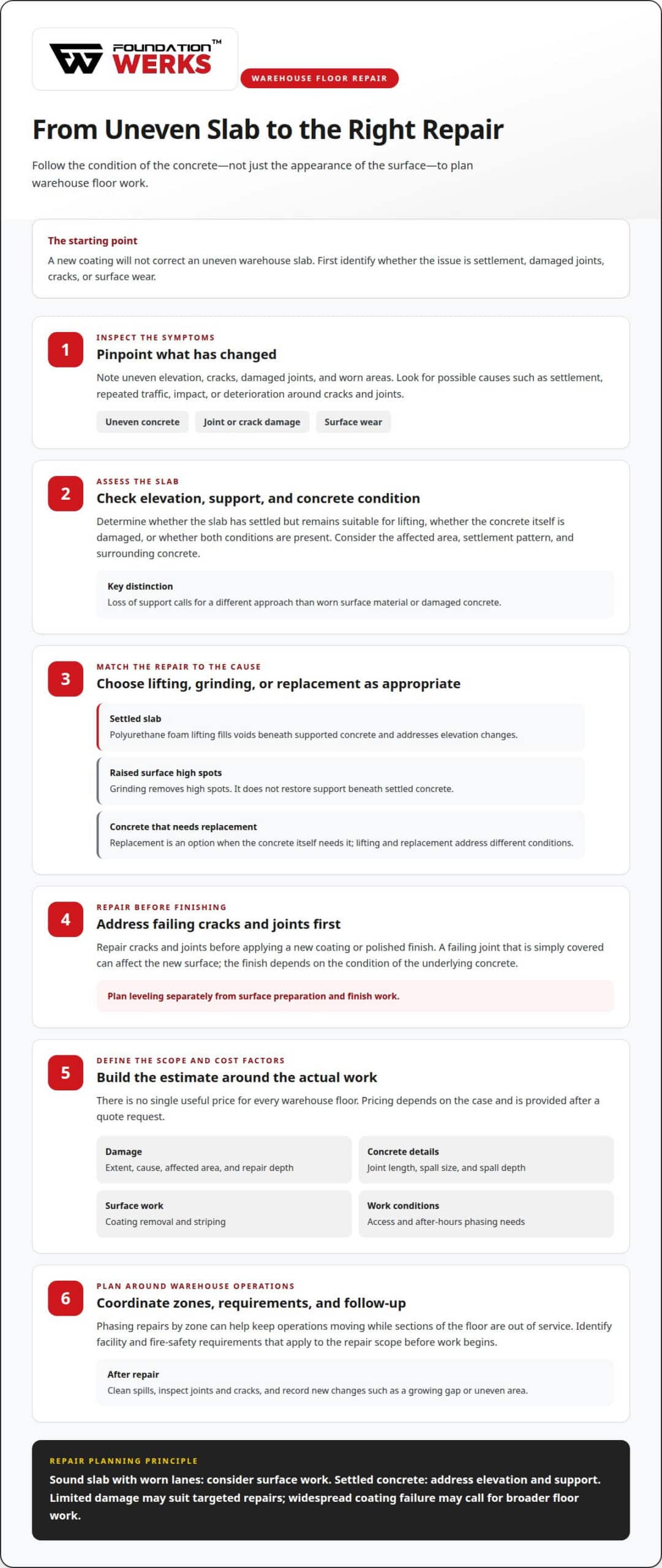
A new coating won’t correct an uneven warehouse slab. Professional warehouse floor repair starts by identifying whether the issue is settled concrete, damaged joints, cracks, or surface wear, then matching the repair to the cause. If the slab has settled, polyurethane concrete raising can address the change in elevation. Cracks and joints may need repair before a new coating or polished finish.
It makes sense to want a clear cost and a workable plan that won’t disrupt daily operations. Repair costs depend on the extent and cause of damage, joint length, spall size and depth, coating removal, striping, and how work is phased around operations. Foundation Werks explains how warehouse floor leveling and other repairs work, what affects project cost, and when targeted repairs may be enough versus when broader floor work is appropriate.
Key Takeaways
- Identify whether the issue is uneven concrete, damaged joints, cracks, or surface wear; the cause guides the repair approach.
- Project costs depend on the damage and the work involved, including joint length, spall depth, coating removal, and striping.
- Repair failing cracks and joints before applying a new coating or polished finish to help prevent the underlying damage from disrupting it.
- Targeted repairs may be suitable when the slab is sound and damage is limited, while widespread coating failure may call for broader floor work.
- Phasing repairs by zone can help keep warehouse operations moving while sections of the floor are out of service.
How much do concrete repair & resurface contractors typically cost?
Concrete repair pricing in the Dallas area depends on what failed and how much of the slab needs attention. For a warehouse, the estimate can change with the cause of settlement, affected floor area, access, joint length, and repair depth. A surface-only issue differs from a section that has lost support. For example, a worn traffic lane and a sunken dock approach require different scopes of work.
There isn’t one useful price for every warehouse floor. The price depends on the case and is provided after a quote request. Key cost factors include the extent and cause of damage, joint length, spall size and depth, coating removal, striping, and after-hours phasing needs. An assessment should separate concrete repairs from resurfacing, since a new surface treatment won’t correct a slab that has settled.
When choosing a concrete repair service, look for experience with commercial concrete, warehouse slabs, joints, cracks, or leveling. These details help show whether the service addresses your floor’s needs. A description of warehouse aisle work, for instance, is more relevant to a commercial slab project than a household interior renovation.
Vinyl floor repair addresses a finish layer, while concrete repair addresses the slab beneath it. A torn vinyl plank in an office and a sunken warehouse aisle are different problems, even if both create an uneven walking surface. This distinction matters in facilities with mixed spaces, such as a concrete loading bay beside an office with vinyl flooring.
Dallas, Frisco, McKinney, Prosper, Allen, Fairview, Southlake, Irving, North Dallas, and the wider DFW area have varied commercial and residential concrete needs. Coating, polishing, striping, or replacing a finish is not the same as slab leveling or joint repair. A sound slab with worn lanes may need surface work; settled concrete needs attention to elevation and support. Foundation Werks serves commercial concrete projects in the Dallas area.
Define the project before comparing repair options: identify the affected area, visible cracks or joint damage, the coating’s condition, and whether the floor has settled. A warehouse manager might point out a low section beside a dock, while a homeowner might describe a sunken patio slab. Clear details help determine whether the work concerns concrete repair, leveling, or a surface finish.
Questions to consider before repairing or resurfacing concrete
Before choosing a finish, determine whether the problem affects the concrete slab, its surface, or both. For a Texas warehouse, that distinction helps guide the repair method, project scope, and cost considerations.
Foam Lifting and Slab Leveling
Ask whether the slab has settled but remains suitable for lifting, or whether damage calls for replacement. Polyurethane foam lifting raises supported concrete by filling voids beneath the slab; it addresses elevation changes rather than worn coatings or a polished finish. A contractor assesses the affected area, settlement pattern, and surrounding concrete before recommending slab leveling or another repair.
Concrete repair pricing depends on the case and is provided after a quote request. The estimate reflects factors such as the cause and extent of damage, the area involved, and the repair method. For example, a localized settled section presents a different scope from a slab with widespread cracking or damaged concrete that needs replacement. Ask for the proposed work to distinguish lifting from surface repair.
Foam lifting can suit a concrete slab that needs elevation correction. Replacement is another option when the concrete itself needs it. These methods address different conditions, so the key question is whether the issue involves loss of support, damage to the concrete, or both.
Warehouse Leveling and Grinding
Leveling addresses changes in slab elevation; grinding removes high spots from the concrete surface. In a warehouse aisle, a low settled area and a raised edge call for different solutions. An assessment should identify the uneven area, adjoining joints, cracks, and coating condition before selecting a method. Grinding alone does not restore support beneath settled concrete.
Consider the intended finish after the slab work. A polished surface or new coating depends on the condition of the underlying concrete, including its joints and cracks. If a failing joint is simply covered, movement or damage there can affect the new coating. Plan repairs before coating or polishing, and identify which areas need leveling versus surface preparation.
Texas warehouse work must account for the building and fire-safety requirements that apply to the facility and repair scope. Identify applicable requirements in the project plan before work begins, especially where repairs affect an operating interior area.
Damage Causes, Warranties, and Maintenance
Warehouse concrete damage can result from settlement, repeated traffic, impact, or deterioration at cracks and joints. An uneven aisle with a visible joint failure, for example, may involve both surface damage and lost support. Identifying the cause matters: resurfacing alone may not address settlement, while lifting does not renew a worn finish.
Review warranty terms for the specific repair, including what work and conditions they cover. No single warranty or maintenance schedule applies to every warehouse floor. After repair, use a practical routine: clean spills, inspect joints and cracks, and record new changes such as a growing gap or uneven area. Those observations help distinguish ordinary surface wear from a developing slab issue.
For a facility weighing repair options, commercial concrete repair guidance can help clarify how slab condition, joints, and the desired finish shape the scope.
How Do You Repair a Warehouse Floor?
Warehouse repairs begin by identifying the concrete problem and mapping affected zones. That assessment shapes the repair scope, floor costs, and operating plan.
Warehouse Floor Repair Costs
Warehouse repair scope depends on the damage and the work needed to address it. Consider the cause and extent of damage, joint length, spall size and depth, coating removal, striping, and work phasing. A short joint repair differs from correcting settlement across an aisle or preparing a large surface for a new coating.
For warehouse concrete repair, the price depends on the case and is provided after a quote request. A useful estimate separates slab repairs from finish work. For example, repairing a cracked joint before installing a coating has a different scope from removing a failing coating across several zones. The price should reflect the actual repair area and preparation required, not just the visible surface.
Flooring installation costs are separate from concrete slab repair. Interior flooring installation may include materials and finish labor, while warehouse concrete work may involve joints, cracks, leveling, coating removal, or striping. A scratch in a finished surface also differs from damage to the slab beneath it. Define which layer needs work before comparing project scopes.
Distinguish repairs from replacement and surface upgrades. A sound slab with isolated joint or spall damage may need targeted work. Widespread coating failure can call for a full recoat or new flooring system. The chosen scope should match the floor’s condition, traffic pattern, and intended finish.
Repair Timeline and Business Downtime
Timeline planning starts by identifying which racks, aisles, or docks need to close. Repairs can be phased zone by zone, taking one section out of service at a time so other operations can continue. The sequence should account for traffic routes, work-area access, coating removal, and striping after repairs.
Most concrete leveling jobs take 1-2 hours, but that isn’t a complete warehouse project timeline. It doesn’t account for assessment, additional crack or joint work, surface preparation, coatings, or phased operations. A distribution center’s striping and flooring work took about two weeks, showing how broader project scope can extend beyond an individual leveling task.
Warehouse floor work may be scheduled at night or on weekends to keep busy operating hours clear. That timing can affect phasing and project costs. For example, a team might isolate one aisle, complete its planned work, and then move to the next section. The sequence depends on the work area and operating needs.
Before work begins, establish which zones will close and how traffic will be redirected. Tie the repair sequence to the scope: complete joint repairs before a new coating, and plan striping after the floor work. This gives facility teams a clear way to coordinate repairs with daily warehouse activity.
Commercial warehouse floor leveling
Commercial leveling addresses changes in concrete elevation that affect warehouse movement and use. In Plano, a settled aisle, raised joint, or uneven loading area each needs a distinct assessment. Identify where the slab changes height and whether the issue is surface wear or lost support beneath the concrete. That distinction guides the repair scope.
A practical assessment begins with a floor map. Mark the affected aisle, dock, or rack area, then note nearby cracks, joints, and changes in floor finish. A low spot beside a joint, for example, may need a different approach from a raised edge on stable concrete. Include warehouse traffic details, since busy routes can help determine which sections need attention first.
Leveling and grinding solve different problems. Leveling raises settled concrete; grinding reduces high spots on the surface. If an aisle has both a low section and a raised edge, the repair plan should address each condition rather than treating the floor as uniform. Grinding alone won’t restore support beneath a settled slab.
Pricing depends on the case and is provided after a quote request. The scope can depend on the extent and cause of damage, repair area, joint length, spall size and depth, coating removal, striping, and phasing needs. A focused repair to one aisle differs from work across several warehouse zones. An excellent scope explains which areas need leveling, which need surface preparation, and how those tasks fit together.
Floor use also shapes the plan. A concrete warehouse aisle needs a different finish strategy from carpet in an office. If the warehouse floor will receive a coating or polished finish, repair cracks and joints first. Covering a failing joint with coating can allow underlying movement or damage to affect the new surface.
Site logistics matter across Plano and nearby communities such as Lewisville, Frisco, and Dallas. A facility location helps define access and work sequencing, while rack layouts and dock activity determine which zones can be taken out of service. Repairs can be phased by section, keeping unaffected areas available for operations as the work advances.
Before work starts, establish the repair boundaries, task order, and traffic plan. For example, isolate an affected aisle, complete its concrete repairs, then move to the next zone. Coordinate striping after floor work is complete. A clear sequence helps facility teams plan around each section’s temporary closure.
Warehouse concrete floor leveling and grinding services Plano TX
A warehouse floor can look uneven for different reasons. A settled slab, a raised joint, and a worn surface each need a distinct assessment. For a Plano facility, start by mapping affected aisles, docks, and work zones. Record visible cracks and elevation changes so the repair scope distinguishes slab movement from surface wear.
Leveling and grinding address different conditions. Leveling raises settled concrete; grinding reduces high spots on the surface. A low aisle beside a raised joint may need both approaches, while a worn but level floor may need surface preparation instead. Treating these conditions as one problem can leave the underlying cause untouched.
Concrete leveling focuses on restoring the elevation of a section that has settled. The work plan should identify the affected slab area and how it connects to adjacent concrete. A narrow settled strip beside a loading area differs from a broad low zone through an aisle. This detail helps define repair boundaries and tie the scope to the condition.
Grinding is useful where high spots interrupt the floor surface or create an uneven transition. It removes concrete from raised areas rather than lifting a low section. Consider the intended finish after grinding, too. If the next step is a coating or polished finish, plan surface preparation and repairs to cracks and joints before applying that finish.
Warehouse traffic shapes how crews can work through a building. A busy aisle may need to be isolated while an adjacent route remains available. Repairs can be phased zone by zone, with racks, aisles, or docks taken out of service in sections. Completing one aisle before moving to the next, for example, can help facility teams plan around active operations.
Repair scope and pricing depend on the damage’s cause and extent, joint length, spall size and depth, coating removal, striping, and after-hours phasing. A useful scope separates leveling, grinding, joint work, and finish preparation, so each task and affected area is clear.
Before work begins, align the repair boundaries with the floor’s intended use. Mark which aisles need elevation correction, which areas need grinding, and where coating or striping follows. This plan gives the warehouse team a clear sequence for coordinating access and returning each completed section to service.
Foundation Werks: Commercial Concrete Crack and Joint Repairs
Foundation Werks provides commercial concrete crack and joint repairs for warehouse floors. Repairing damaged joints and cracks before resurfacing helps prepare the slab for a coating or polished finish. Where a section has settled, polyurethane concrete raising can address the elevation change. Foundation Werks also offers concrete replacement when that is the appropriate repair.
Consider this work when cracks, failed joints, or uneven concrete affect warehouse use or complicate plans for a new surface. The right scope depends on the condition and location of the damage. To discuss a warehouse floor assessment and repair options in the Dallas area, contact Foundation Werks.
Plan the next step for your warehouse floor
Before scheduling work, turn the floor assessment into a practical operating plan. Map the affected areas, note how each space is used, and identify the routes that need to stay open. This gives your facility team a shared reference for coordinating access, sequencing repairs, and tracking changes after the work is complete.
For warehouse floor repair in Plano, TX, a focused conversation about your building’s needs can help clarify which sections need attention and how the work fits your operations. Note where the floor is uneven or damaged, how it affects daily movement, and what the facility needs from the repaired area.
A clear plan is a practical starting point for keeping your facility moving forward.
Frequently Asked Questions
Which contractors handle warehouse floor repair in Plano, TX?
Foundation Werks handles commercial concrete work for warehouse floors, including crack and joint repairs, concrete raising, and replacement. The right service depends on the floor’s condition: a damaged joint differs from a settled slab or concrete that needs replacement. When discussing the project, identify affected areas, such as active loading zones.
What warehouse concrete floor repair services are available in Plano?
Warehouse concrete repair can address cracked concrete, damaged joints, and sections that need raising or replacement. Foundation Werks offers commercial crack and joint repairs, polyurethane concrete raising, and concrete replacement. For warehouse floor repair in Plano, TX, first identify whether the issue affects a joint, the slab’s elevation, or the concrete itself. That distinction helps clarify the suitable service.
What is the warehouse floor repair cost per square foot in Plano, TX?
A per-square-foot figure may not reflect the work a warehouse actually needs. A small area with a long damaged joint can require a different scope from a larger area with limited surface damage. The estimate should relate to the repair type and affected areas rather than treating all floor space alike.
What are the options for warehouse floor crack and joint repair?
Options include commercial concrete crack and joint repairs, with the repair scope based on the damaged area and the floor’s condition. For example, a crack crossing a warehouse aisle presents a different repair location from a damaged joint beside a dock. Foundation Werks offers commercial concrete crack and joint repairs. If concrete damage extends beyond repair, concrete replacement is another available service.
How should I choose a warehouse floor repair contractor in Plano, TX?
Choose a service that addresses the concrete issue, not just the visible finish. A warehouse with settled concrete needs a different repair from one with damaged joints or concrete that needs replacement. Foundation Werks offers polyurethane concrete raising, commercial crack and joint repairs, and concrete replacement. Explain which floor areas are affected and how they’re used to clarify the project.
Where can I find warehouse floor repair reviews and ratings in Plano, TX?
Foundation Werks has a Google rating of 4.9 out of 5, based on Trustindex-verified reviews. Ratings offer one reference point, while review details can show what customers say about communication and completed work. For a warehouse project, look for comments that relate to commercial concrete needs, such as floor leveling or slab repair, rather than relying on a rating alone.