

Seeing the concrete slabs around your pool begin to sink and pull away from the coping is a frustrating sight for any McKinney homeowner. What starts as a small gap or a minor uneven spot can quickly become a serious trip hazard and a threat to your pool’s structural integrity. You’re right to be concerned, but the solution is often simpler and less disruptive than you might think. You don’t have to tear out your entire backyard to restore safety and beauty to your pool area.
In McKinney, a sinking pool deck is rarely a problem with the concrete itself. It’s a direct result of our unique North Texas environment—specifically, the unstable soil beneath the slab. The key to a lasting solution lies in understanding and addressing this root cause.
This guide explains the specific geological reasons your pool deck is sinking and details how modern polyurethane foam injection provides a clean, durable, and eco-friendly way to lift and stabilize it. We will cover the science of our local soil, how to spot the early warning signs, and what you can expect from a professional concrete raising process that allows you to use your pool the very same day.
The Science of Sinking: Why McKinney Soil Settles
The ground beneath your feet in McKinney isn’t just dirt; it’s a dynamic and reactive geological formation. Understanding its behavior is the first step in diagnosing why your pool deck is failing. The primary culprit is the soil’s relationship with water, driven by the dramatic weather cycles of North Texas.
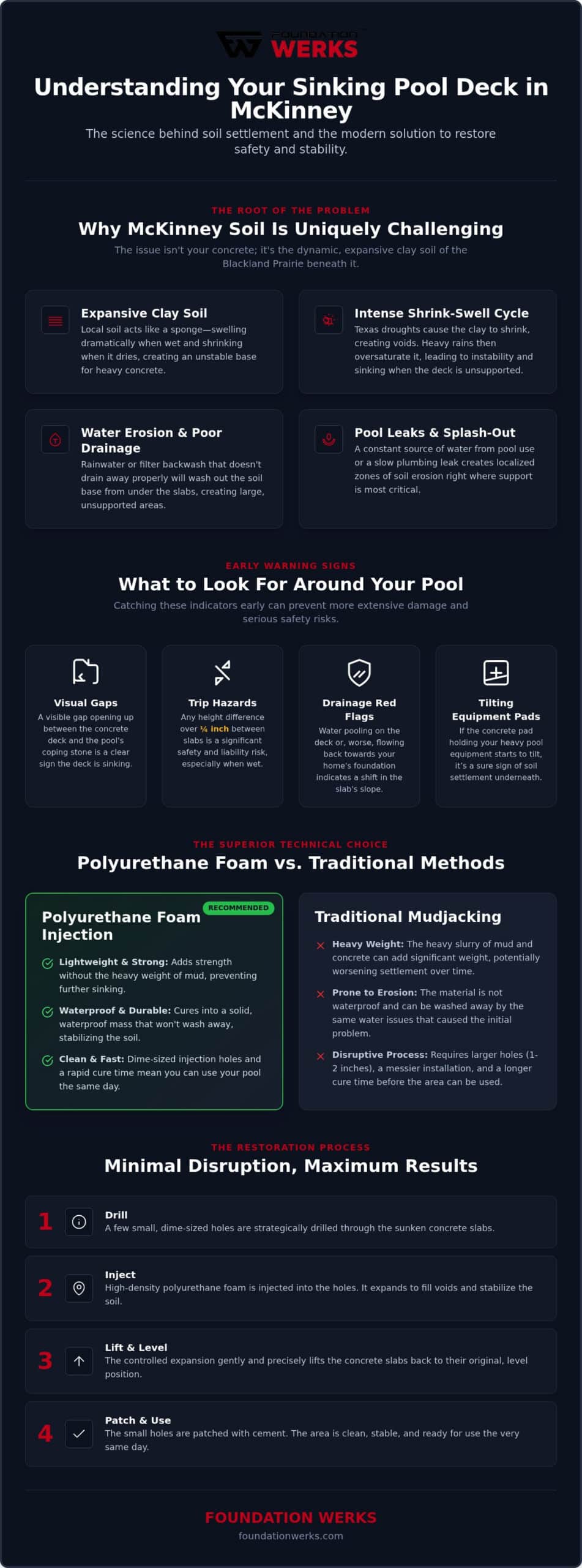
- Understanding the Blackland Prairie: McKinney is located in the heart of the Blackland Prairie, a region known for its highly expansive clay soil. This soil acts like a dense sponge. When it’s saturated with water, it swells and expands. When it dries out, it shrinks, cracks, and pulls away from any structure it supports, like your concrete pool deck.
- The Shrink-Swell Cycle: During intense North Texas heatwaves and summer droughts, the clay soil loses moisture and shrinks significantly. This shrinkage creates voids, or empty spaces, directly beneath your concrete slabs. The deck, now unsupported, settles or sinks into these new gaps.
- Hydrostatic Pressure and Erosion: Conversely, the heavy spring rains common in the DFW area can oversaturate the soil. This creates hydrostatic pressure, where water is forced under the slabs. If drainage is poor, this moving water can erode the soil base, washing it away and creating even larger voids.
– Pool Splash-Out and Leaks: Water from your pool—whether from splashing, a leaky filter, or faulty plumbing—can accelerate this process. This constant, targeted source of water can create a localized zone of soil erosion right where your deck needs the most support, leading to rapid and uneven settlement.
McKinney’s Geological Challenge
The specific geology of Collin County presents a unique challenge for concrete structures. The layer of expansive clay soil is often relatively thin before hitting more stable rock formations. If the original pool builders did not properly compact the sub-base soil before pouring the concrete, they left behind a foundation that was destined to settle over time.
This gradual compression and shifting of poorly prepared soil is a leading cause of voids. In this context, soil subsidence is defined as the downward movement of the ground surface caused by the loss of underlying support, a process dramatically accelerated by McKinney’s climate and clay composition. Even a small, poorly compacted area can eventually lead to a significant sinking slab.
The Role of Water Erosion
Water is the primary force that turns a minor soil issue into a major structural problem. Poor drainage is the number one enemy of a level pool deck. When rainwater or backwash from your pool filter doesn’t have a clear path to drain away from the deck, it will inevitably find its way underneath. This “washout” effect carries away fine particles of soil, enlarging voids and compromising the stability of the entire structure.
Furthermore, a slow leak in your pool’s plumbing can be a silent destroyer. A constant drip underground can completely liquefy the supporting soil in one area, causing a dramatic drop in that section of the deck. This is why addressing the root cause of water intrusion is just as important as lifting the concrete itself.
Identifying the Signs of Pool Deck Settlement
A sinking pool deck rarely happens overnight. It begins with subtle signs that gradually worsen. Catching these indicators early can help you address the problem before it leads to more extensive damage. Here are the key things to look for:
- Visual Gaps: The most obvious sign is a gap opening between the edge of your concrete deck and the pool’s coping stones. This indicates the deck is pulling away or sinking.
- Trip Hazards: When one concrete slab drops lower than the adjacent one, it creates an uneven “trip point.” These are significant safety hazards, especially in a wet, high-traffic area.
- Drainage Red Flags: Notice water pooling on the concrete where it used to drain properly? Or worse, is water now flowing back toward your home’s foundation? This change in drainage patterns is a clear signal that the slab has shifted.
- Tilting Equipment Pads: Your heavy pool pump, heater, and filter are often placed on a dedicated concrete pad. If this pad starts to tilt, causing the equipment to vibrate excessively, it’s a sure sign of soil settlement beneath it.
Coping vs. Deck Gaps
A gap between your pool coping and the deck is more than just a cosmetic flaw. This opening becomes a direct channel for water to flow into the soil that supports both the deck and the pool shell itself. Every time it rains or water splashes out of the pool, that gap funnels moisture to the exact area where you need stability the most, creating a vicious cycle of erosion and further settlement.
You may also notice the flexible sealant, or “mastic,” in the joint between the coping and deck is cracking, peeling, or pulling away. This mastic failure is a secondary sign that the concrete slabs are moving independently of the pool shell, placing stress on the joint.
The Trip Hazard Threshold
Even a small height difference of a quarter-inch between concrete slabs can create a dangerous trip hazard. According to safety standards, any uneven edge over ¼ inch is considered a potential liability risk, especially in public or commercial spaces. For a residential pool deck where children are running and playing, that risk is magnified.
Uneven, wet concrete is a recipe for falls and injuries. Addressing these trip points isn’t just about aesthetics; it’s about ensuring a safe environment for your family and guests. For facility managers concerned about meeting safety compliance, understanding the standards for commercial concrete crack and trip hazard repair can provide valuable context.
Polyurethane Foam vs. Mudjacking: The Technical Choice
When it comes to lifting and leveling a sunken pool deck, homeowners in McKinney have two main options: traditional mudjacking or modern polyurethane foam injection. While both aim to achieve the same goal, their methods, materials, and long-term effectiveness are vastly different, especially on our reactive clay soil.
- Weight Comparison: Mudjacking pumps a heavy slurry of mud, cement, and water under the slab. This mixture can weigh 100-120 pounds per cubic foot. Polyurethane foam, by contrast, is incredibly lightweight, weighing only 2-4 pounds per cubic foot. Adding significant weight to already weak soil can cause further settlement over time.
- Drill Hole Size: The mudjacking process requires drilling large, invasive holes—typically 1.5 to 2 inches in diameter—into your concrete. Polyurethane injection uses small 5/8-inch ports, about the size of a dime. These are far less noticeable and easier to patch seamlessly.
- Material Longevity: Mudjacking slurry is a natural material that can erode, shrink, or wash away over time if exposed to moisture—the very problem that likely caused the sinking in the first place. High-density polyurethane foam is a structural-grade polymer that is waterproof and inert. It will not break down or change its form once cured.
- The Eco-Friendly Edge: Foundation Werks uses a patented polyurethane foam that is environmentally friendly and made from recycled materials. This sustainable approach ensures no harmful chemicals leach into your soil or groundwater, protecting your backyard ecosystem.
Why Weight Matters in North Texas
The “lightweight lifting” principle is critical for durable repairs in McKinney. The last thing you want to do is add more weight to the unstable clay soil that is already failing to support your pool deck. The heavy slurry used in mudjacking adds a significant burden to the sub-base. In many cases, this extra weight can accelerate future sinking, defeating the purpose of the repair.
Polyurethane foam works differently. It lifts the concrete through chemical expansion, not brute force. The foam expands to fill every void, compacting and stabilizing the loose soil around it without adding any meaningful weight. The cured foam is a high-density, waterproof material that maintains its structural integrity and supports the slab for years to come. For a deeper dive into this technology, consider reading about the ultimate guide to polyurethane concrete raising in North Texas.
Sustainable Concrete Raising
Your backyard is a personal sanctuary, and the materials used in it matter. Foundation Werks is committed to using advanced, eco-conscious solutions. Our patented foam is engineered not only for superior performance but also for environmental responsibility. It is made with recycled components and is manufactured through a process that reduces waste and energy consumption.
Choosing a sustainable repair method means you can restore your pool deck without compromising the health of your lawn, garden, or local groundwater. This commitment to green technology provides peace of mind alongside a technically superior repair. Learn more about how these modern methods are changing the industry by exploring the topic of foundation repair with recycled materials.
The Restoration Process: What McKinney Homeowners Can Expect
One of the biggest concerns for homeowners facing a major repair is the disruption to their property and daily life. The polyurethane foam injection process is designed to be as clean, quick, and non-invasive as possible. There is no heavy machinery tearing up your lawn or messy slurry splattered across your patio. Here’s a simple breakdown of the process:
- Step 1: Precision Drilling. Our technicians begin by drilling a series of small, 5/8-inch holes through the sunken concrete slabs. The placement of these injection ports is strategically planned to ensure a controlled and even lift.
- Step 2: Controlled Injection. We connect our injection gun to the ports and slowly pump the two-part polyurethane liquid beneath the slab. The components mix and undergo a chemical reaction, causing the foam to expand. Our team monitors the lift in real-time, raising the slab fractions of an inch at a time until it is perfectly level with the surrounding surfaces.
- Step 3: Port Sealing. Once the lifting is complete, the injection ports are cleaned and patched with a fast-setting, color-matched concrete mortar. The small size of the holes makes the patch marks nearly invisible, blending seamlessly with your existing deck.
- Step 4: Immediate Cleanup. Because the process is self-contained within the injection equipment, there is no mess to clean up. No slurry, no concrete dust, and no heavy equipment tracks. We leave your pool area cleaner than we found it.
The ‘Same-Day’ Advantage
Perhaps the most significant benefit of polyurethane foam is its rapid curing time. The foam reaches 90% of its final strength and rigidity within about 15-30 minutes of being injected. This is a stark contrast to new concrete, which can take days or even weeks to cure fully.
What does this mean for you? It means you can use your pool deck almost immediately after the job is done. If we finish in the afternoon, you can be hosting a pool party that same evening. There’s no need to rope off your backyard for days or cancel your weekend plans. This immediate usability is a game-changer for busy families who want to get back to enjoying their summer.
Minimal Disruption to Landscaping
A traditional concrete replacement job requires heavy equipment, including concrete trucks and demolition machinery, which can destroy your lawn, flower beds, and sprinkler systems. The Foundation Werks process is entirely different. Our equipment is housed in a self-contained trailer, and we use long, flexible hoses to reach the repair area.
This portable setup means we never have to drive heavy vehicles across your prized McKinney lawn or disrupt your carefully planned landscaping. We can access even tight or hard-to-reach pool decks without causing collateral damage. The entire process is designed to respect your property and leave it in pristine condition.
Beyond the Lift: Long-Term Soil Stabilization and Drainage
Lifting your sunken pool deck is the crucial first step, but for a truly durable result, it’s important to address the root cause of the problem: water. If poor drainage or soil erosion caused the deck to sink in the first place, those issues must be corrected to protect your investment. A comprehensive approach often involves managing water movement around the pool area.
- The Role of French Drains: For yards with significant drainage challenges, a French drain is an effective solution. This is a subsurface trench containing a perforated pipe and gravel, designed to collect and divert groundwater and surface runoff away from the pool deck’s foundation.
- Joint Sealing and Mastic: The joints between your concrete slabs are vulnerable points for water intrusion. Applying a high-quality, flexible sealant (mastic) to these joints and the gap around the pool coping prevents water from seeping underneath and starting the erosion cycle again.
- Deep Foamjection™: In some cases, the instability lies not just under the slab but deeper in the sub-base soil. Deep Foamjection™ is a process where polyurethane foam is injected at various depths to bind loose soil particles together, creating a stronger, more stable foundation for the entire area to rest on.
Implementing French Drains in McKinney
In McKinney, where heavy rains can quickly oversaturate the clay soil, managing water flow is essential. A professionally installed French drain system can be a proactive measure to ensure the long-term stability of your newly lifted pool deck. Especially for sloped backyards where water naturally runs toward the pool, a drainage system intercepts that water and channels it safely away. This prevents the soil from becoming supersaturated and losing its load-bearing capacity, protecting both your pool deck and your home’s foundation.
Joint Sealing for Moisture Control
Think of joint sealing as the final line of defense. After your deck is lifted and level, sealing every crack and joint is critical. This simple step prevents water from “splash-out” and rain from penetrating beneath the slab. By keeping the underlying soil at a more consistent moisture level, you help mitigate the damaging shrink-swell cycle that is so prevalent in our North Texas soil. It’s an essential part of a holistic approach to concrete longevity.
If you’re ready to restore safety and stability to your pool area without the mess and expense of replacement, the next step is a professional assessment. Schedule your free pool deck inspection and estimate with Foundation Werks to get a clear, honest evaluation from our local experts.
Frequently Asked Questions (FAQ)
Is pool deck lifting safe for my pool’s plumbing and liner?
Yes, it is very safe. The polyurethane injection process is extremely controlled. Our technicians monitor the lift in real-time and raise the slab slowly and evenly, often just fractions of an inch at a time. This gentle, precise method avoids placing sudden stress on the pool shell, coping stones, plumbing lines, or vinyl liners.
How much does it cost to level a sinking pool deck in McKinney?
The cost of polyurethane concrete raising is typically 50-70% less than the cost of demolishing and replacing the same section of concrete. The final price depends on the total area of the sunken slabs and the size of the voids underneath. The best way to get an accurate figure is to schedule a free, no-obligation inspection and estimate.
Can you lift a pool deck that is severely cracked?
In many cases, yes. As long as the concrete pieces are still relatively large and intact, they can be lifted back into place. The lifting process will stabilize the underlying soil, which is the cause of the cracking. After the slabs are level, the cracks themselves can be sealed with a flexible sealant to prevent water intrusion and improve the appearance.
How long do the results of polyurethane concrete raising typically last?
The high-density polyurethane foam we use is a highly durable, waterproof material that will not break down, shrink, or wash away underground. It provides a stable, long-lasting base for your concrete. The durability of the repair is primarily dependent on controlling the underlying soil and water conditions. By addressing drainage issues, you help ensure the soil base remains stable for many years.
What happens if I ignore my sinking pool deck?
Ignoring a sinking pool deck allows the underlying problem to get worse. The voids beneath the slab will grow larger, causing the deck to sink further. This increases the severity of trip hazards, puts more stress on your pool’s plumbing and structure, and can eventually lead to cracks in the pool shell itself. Addressing the issue early is always safer and more cost-effective.
Can you fix the gaps between my pool coping and the concrete deck?
Absolutely. Closing the gap between the coping and the deck is one of the primary goals of the lifting process. By raising the sunken slab back to its original height, we bring it flush with the pool’s edge, eliminating that unsightly and hazardous gap.
Does the foam lose its density or wash away over time?
No. The material used is a closed-cell structural polymer. This means it is completely waterproof and will not absorb water or be affected by moisture. Unlike mudjacking slurry, which can erode, our polyurethane foam is inert and will maintain its shape, density, and strength indefinitely once cured underground.
Will I be able to use my pool the same day the work is done?
Yes. The foam cures to 90% strength in about 15-30 minutes and is fully traffic-ready (including foot traffic and patio furniture) within an hour. You can safely walk on the deck and use your pool and backyard on the very same day the repair is completed.